Summary
Yes, you can wear a leather jacket in the snow, but it depends on the type of leather, the jacket’s finish, the snowfall intensity, and how well you protect and maintain it. Leather jackets can handle light snow and cold weather surprisingly well, especially if they are made from high-quality full-grain or top-grain leather and treated with a water-resistant conditioner or protector. However, leather is not naturally waterproof. In wet snow, slush, freezing rain, or prolonged exposure to moisture, an untreated leather jacket can absorb water, stiffen, lose shape, develop stains, or crack over time.
The real answer is practical: a leather jacket works in snow when the conditions are moderate and when you style it correctly with warm layers, a scarf, gloves, and winter-friendly footwear. If you are dealing with harsh winter storms, heavy snowfall, or repeated exposure to road salt and moisture, a leather jacket should not be your primary outerwear. In those conditions, it is better to switch to a parka, puffer, or technical winter coat.
This article covers every angle of the topic, including whether leather jackets are warm enough for snow, what happens when leather gets wet, which leather types perform best in winter, how to protect leather from snow damage, how to style a leather jacket in snowy weather, common mistakes to avoid, and when a leather jacket is or is not a smart winter choice.
Outline:
- What is the short answer?
- Are leather jackets good for snow and winter weather?
- What happens if leather gets wet in the snow?
- Which leather jackets perform best in snowy conditions?
- How to wear a leather jacket in the snow without getting cold
- How to protect a leather jacket from snow damage
- Common mistakes people make with leather jackets in winter
- Leather jacket vs puffer vs wool coat in snow
- Is a leather jacket worth wearing in the snow?
- Final verdict
Can You Wear Leather Jackets in Snow?
Leather jackets have a timeless winter appeal. They look sharp, feel premium, and instantly elevate cold-weather outfits. But one common question keeps coming up in winter fashion, outerwear care, and seasonal styling conversations: Can you wear leather jackets in the snow?
The answer is yes, but with conditions. A leather jacket can work well in snowy weather when the snowfall is light, the leather is good quality, and the jacket is properly maintained. At the same time, leather is a natural material with a porous structure, which means it reacts differently to snow, moisture, slush, and freezing temperatures than synthetic outerwear.
For style-conscious shoppers, winter commuters, and anyone researching cold-weather fashion, this topic sits at the intersection of winter outerwear performance, leather durability, water resistance, insulation, layering strategy, and garment care. If you want the complete answer, not just a quick yes or no, this guide covers all aspects.
Can leather jackets be worn in the snow? The short answer
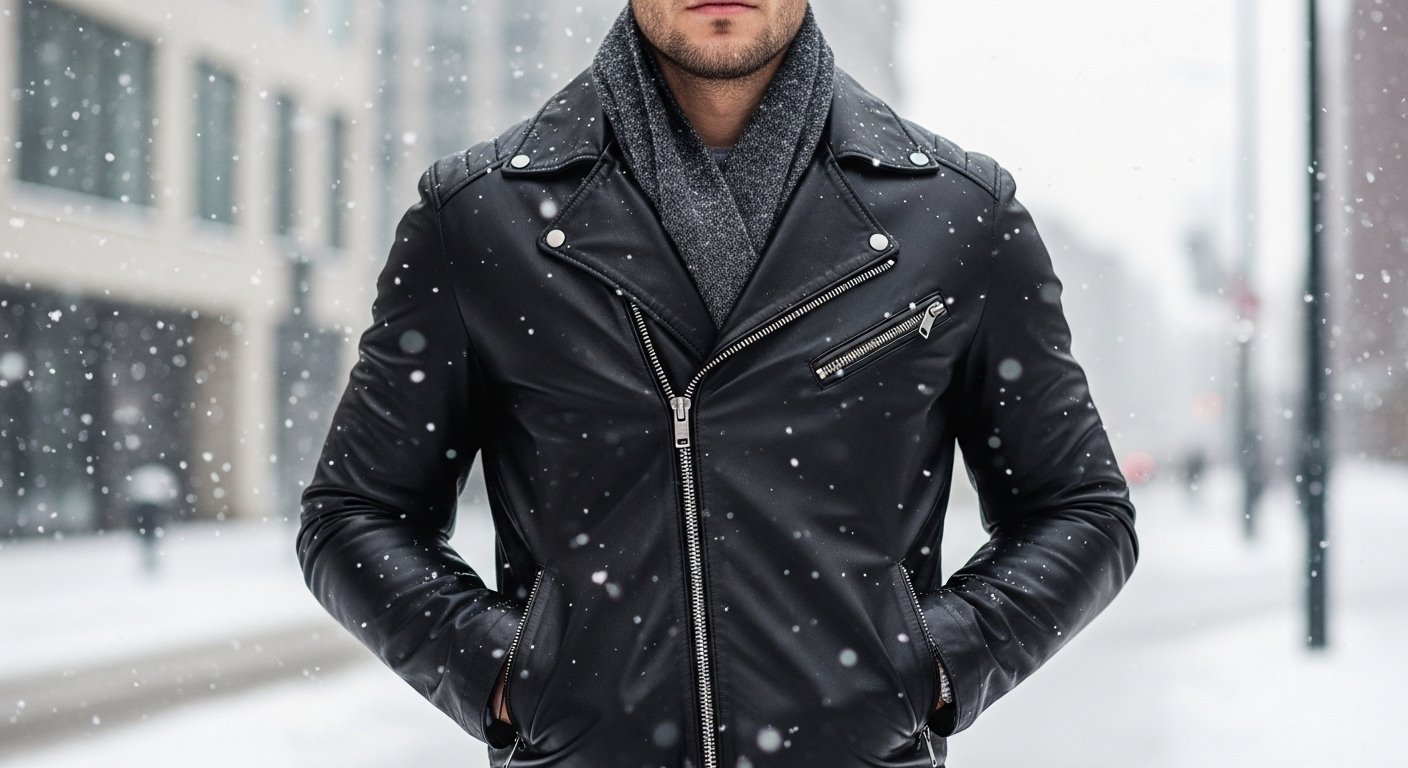
Yes, you can wear a leather jacket in snow, especially in light snowfall, dry cold, and short outdoor exposure. A leather jacket is often suitable for urban winter wear, casual outings, date nights, dinners, and short commutes in cold weather. It can keep you warm when paired with smart layers such as a knit sweater, thermal base layer, hoodie, or scarf.
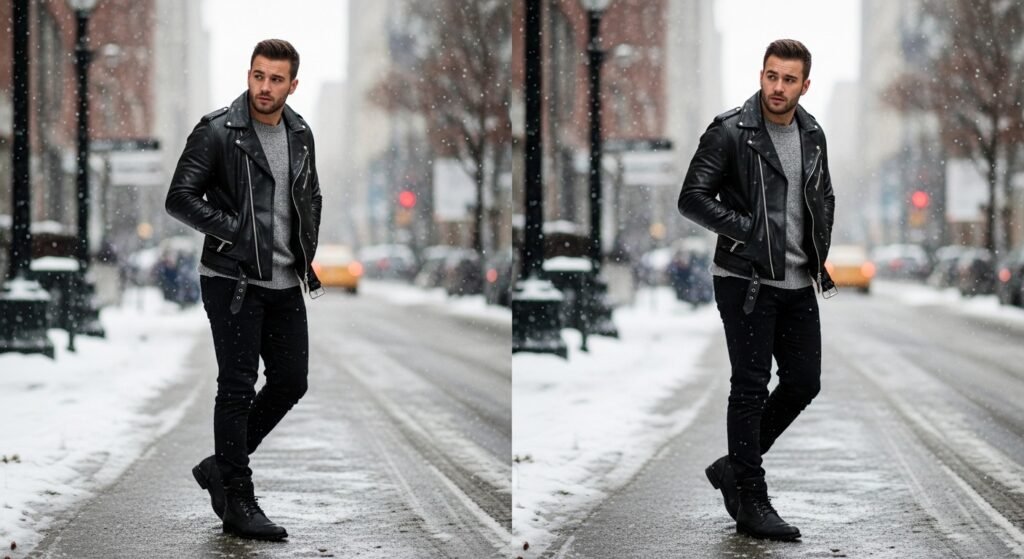
However, leather jackets are not ideal for heavy snow, wet snow, sleet, or long hours outdoors. Leather is water-resistant to a point, but it is not naturally waterproof. If the jacket becomes saturated, the material may stiffen, spot, lose oils, or show surface damage over time.
So the more accurate answer is this: a leather jacket is snow-compatible, not snowproof.
Are leather jackets good for snow and winter weather?
Leather jackets can perform well in winter, but their effectiveness depends on three major factors: material quality, insulation, and weather intensity.
Leather naturally blocks wind better than many lightweight fabrics
One of the overlooked benefits of leather outerwear is wind resistance. Leather acts as a barrier against cold air better than many thin cotton or fashion fabrics. This makes leather jackets especially useful in dry winter climates where the main challenge is wind chill rather than constant precipitation.
Warmth depends more on lining and layering than on leather alone
A common misconception is that leather itself is always warm. In reality, the warmth of a leather jacket depends on:
- thickness of the hide
- inner lining
- fit and room for layering
- neck coverage
- sleeve closure and hem design
A lightweight fashion leather jacket may not be enough for snow on its own. But a lined leather trucker, bomber, or shearling-style jacket can work much better in winter conditions. If you want a stylish option that transitions well between city wear and cold-weather layering, you can also explore this product page.
Light snow is very different from wet snow
Not all snow is the same. This matters for leather performance.
Light, dry snow
This is the safest type of snow for leather. It usually brushes off easily and does not soak in quickly.
Wet, heavy snow
This is more dangerous for leather because it melts faster on contact and increases moisture absorption.
Slush and road spray
This is often worse than snowfall itself. Dirty water, road salt, and grime can stain or dry out leather faster than clean snowflakes.
What happens if leather gets wet in the snow?
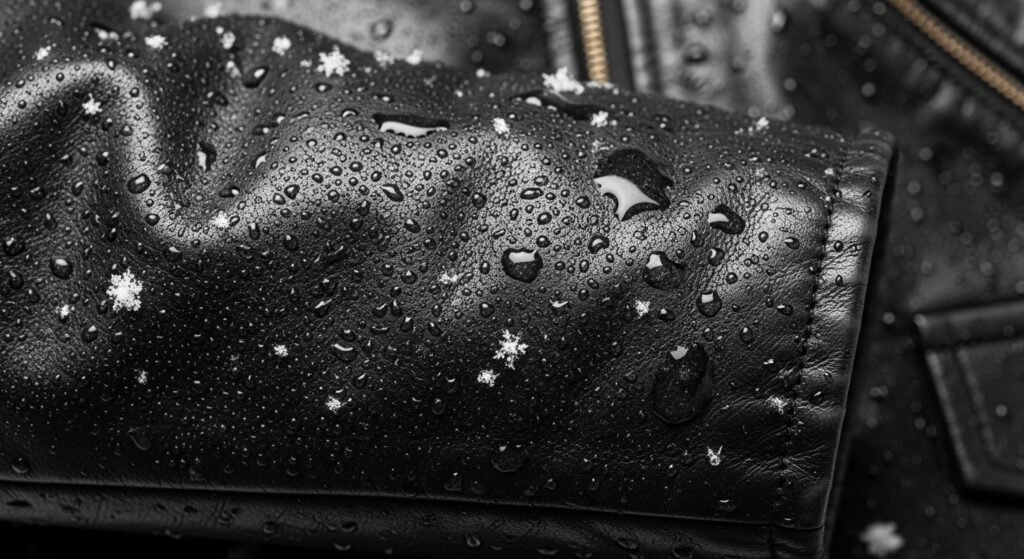
Leather is a natural material made from animal hide, which means it has fibers, oils, and a structure that can react to moisture. When snow lands on a leather jacket, it may look harmless at first, but once it melts, the water can begin affecting the surface.
Temporary darkening
One of the first things you may notice is temporary dark spots where moisture hits the leather. In many cases, this dries evenly and causes no long-term problem if exposure is minimal.
Stiffness after drying
If the jacket gets too wet and then dries too fast, the leather may become stiff. This happens because moisture can strip away some of the natural flexibility and oils in the hide.
Surface marks or water spots
Untreated leather may develop visible marks after repeated snow exposure, especially if you do not dry it properly.
Cracking over time
This is usually not caused by one snowy day. It is caused by repeated wetting, poor drying habits, skipped conditioning, and long-term neglect.
Salt damage
In snowy cities, the biggest risk is not always snow. It is road salt. Salt residue can dry the leather, dull the finish, and cause edge damage if not wiped away.
Which leather jackets perform best in snowy conditions?
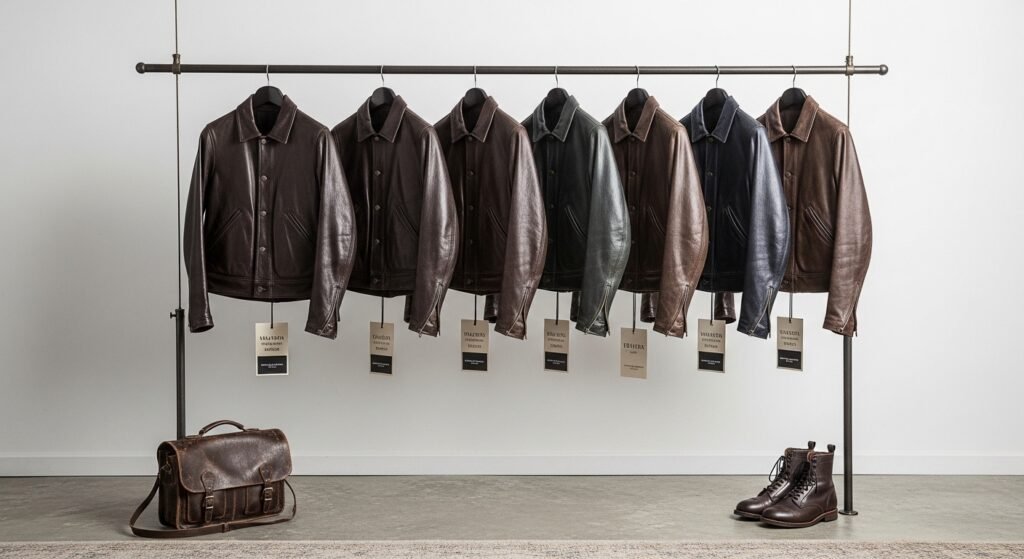
Not all leather jackets are equally winter-friendly. Some are purely fashion pieces, while others are much more practical for cold weather.
Full-grain leather jackets
Full-grain leather is often the most durable and resilient type. It retains the natural grain and usually ages well. It can perform better in winter if maintained properly.
Top-grain leather jackets
Top-grain leather is also a solid option. It is smoother, refined, and common in premium outerwear. It often balances style and practicality well.
Treated or waxed leather
If a leather jacket has been treated with a protective finish or wax-based coating, it will usually handle light snow better than untreated leather.
Shearling or insulated leather jackets
These are among the best options for cold climates. The added insulation improves thermal performance significantly.
Faux leather jackets
Faux leather may resist water differently than real leather, but it often lacks the breathability, longevity, and cold-weather comfort of quality genuine leather. Some faux leather jackets can also become brittle in very low temperatures.
How to wear a leather jacket in the snow without getting cold
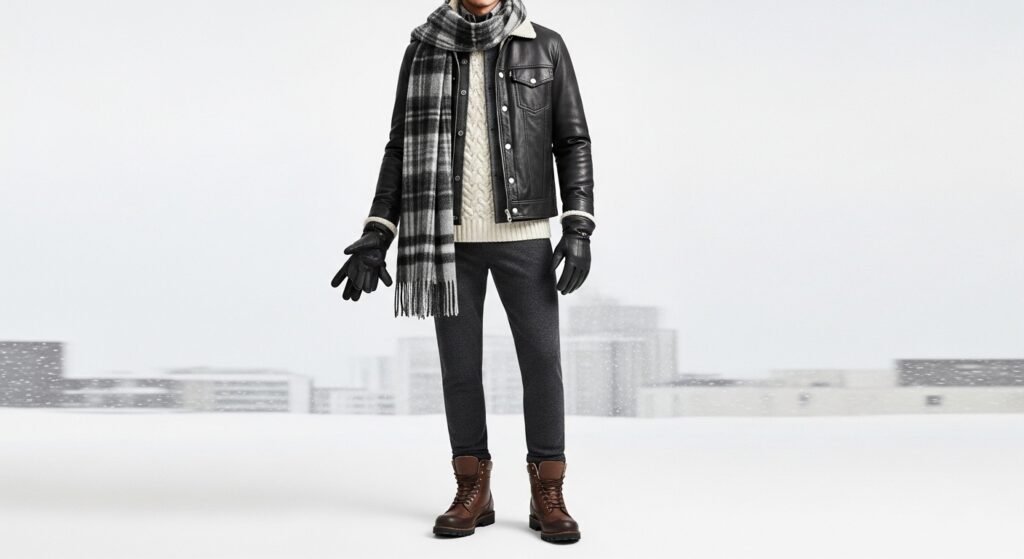
If you want to wear a leather jacket in the snow comfortably, the key is layering logic. Think of your outfit as a system rather than a single garment.
Start with a thermal or moisture-managing base layer
A fitted thermal top helps retain body heat without adding bulk. This is especially useful if your leather jacket has a slim silhouette.
Add a mid-layer for insulation
This could be:
- a wool sweater
- a fleece-lined hoodie
- a knit turtleneck
- a quilted vest under the jacket
The mid-layer traps heat and makes a major difference.
Use accessories strategically
Scarf
A scarf seals the neck area, which is one of the biggest heat-loss zones.
Gloves
Cold hands make your whole body feel colder. Leather gloves or insulated winter gloves work well.
Beanie
A beanie adds warmth and balances the winter look visually.
Boots
Do not pair a snow outfit with shoes that cannot handle slush. Waterproof or snow-ready boots are a better match.
Choose the right fit
An overly tight leather jacket limits layering and reduces winter usability. A slightly structured but layer-friendly fit is ideal for snowy weather.
How to protect a leather jacket from snow damage
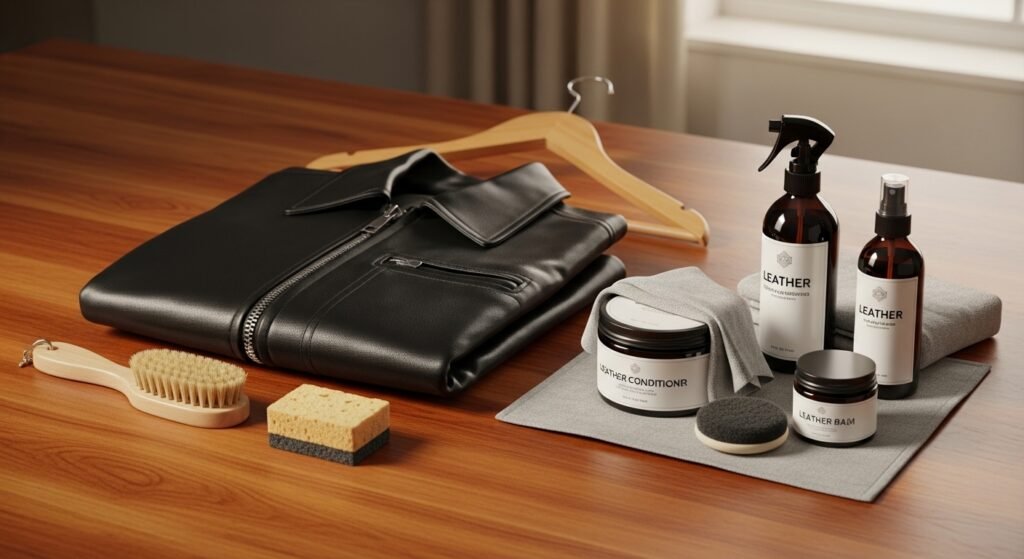
If you plan to wear leather in winter regularly, protection and aftercare are essential.
Apply a leather protector before the season starts
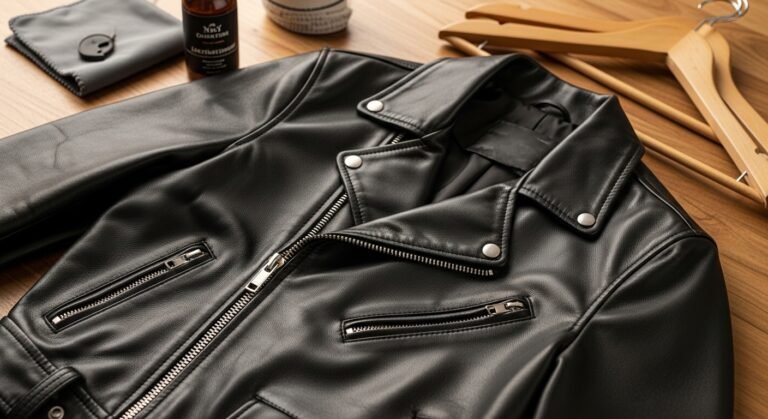
Use a leather-safe protector or conditioner designed to add light moisture resistance. This helps reduce water absorption and preserve flexibility.
Test products first
Always test on a hidden area before applying to the full jacket.
Reapply as needed
If you wear the jacket often in winter, reapply periodically based on use and exposure.
Wipe off snow and moisture quickly
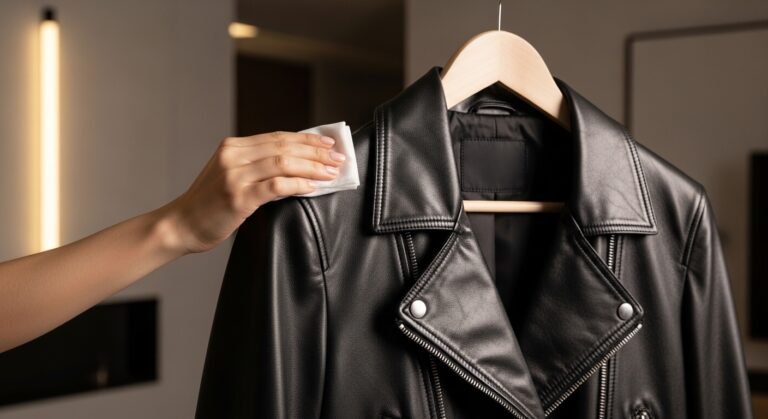
Do not let melted snow sit on the surface too long. Use a soft, dry, or slightly damp cloth to remove excess moisture and residue.
Dry naturally
This is one of the most important rules.
Do not use direct heat
Avoid radiators, hair dryers, heaters, or placing the jacket too close to a heat source.
Let it air dry at room temperature
Hang it on a wide, supportive hanger and allow it to dry naturally.
Condition the leather after exposure
If the jacket has been out in the snow several times, use a leather conditioner to restore softness and prevent dryness.
Clean salt residue early
If you notice white marks, especially near the hem or sleeves, clean them promptly. Salt buildup is harsh on leather and should not be left sitting on the surface.
Common mistakes people make with leather jackets in winter
Many people assume leather damage happens only in extreme weather, but most damage actually comes from bad habits.
Wearing untreated leather in repeated wet snowfall
A single light snow outing may be fine. Repeated exposure without protection is where problems begin.
Drying the jacket with direct heat
This is one of the fastest ways to dry out and stress leather fibers.
Ignoring road salt and grime
Snow in cities is rarely clean. Moisture mixed with salt, dirt, and pollution is much harder on leather than fresh snow alone.
Choosing style over function
A very thin cropped leather jacket may look great, but it may not provide enough coverage or insulation for real winter use.
Skipping seasonal maintenance
Leather needs care. Winter is not the time to forget conditioning and protective treatment.
Leather jacket vs puffer vs wool coat in snow
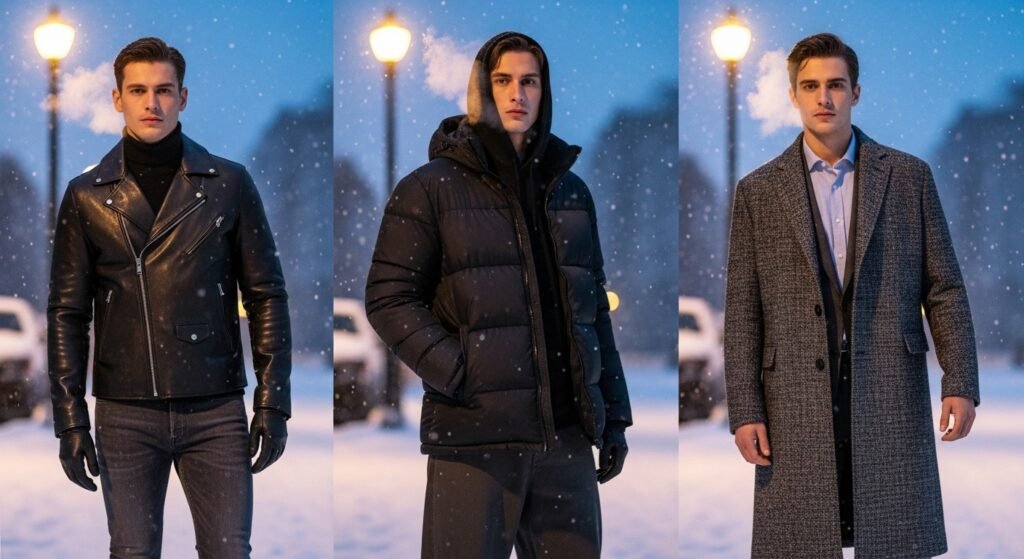
To answer this topic fully, it helps to compare leather jackets with other winter outerwear categories.
Leather jacket
Best for: light snow, city wear, style-first winter outfits, short commutes, moderate cold
Strengths:
- timeless style
- wind resistance
- strong structure
- elevated look
Weaknesses:
- not waterproof
- needs maintenance
- less suitable for heavy snowstorms
Puffer jacket
Best for: harsh cold, heavy snow, outdoor activity, long exposure
Strengths:
- superior insulation
- often water-resistant
- practical for extreme winter
Weaknesses:
- bulkier silhouette
- less refined look in some settings
Wool coat
Best for: dry cold, office wear, dressy winter outfits
Strengths:
- elegant appearance
- warm in dry conditions
- ideal for formal styling
Weaknesses:
- performs poorly in wet snow
- can get heavy when damp
In semantic search terms, leather jackets belong to the fashionable cold-weather outerwear category, while puffers sit in the performance winter outerwear category. That distinction matters when deciding what to wear in the snow.
Is a leather jacket worth wearing in the snow?
For many people, yes. A leather jacket is worth wearing in the snow when your priorities include:
- personal style
- city-ready winter outfits
- smart casual layering
- moderate cold protection
- versatile day-to-night wear
It is especially useful in climates where winter is cold but not constantly stormy. If most of your winter exposure involves walking from the car to a restaurant, commuting in a city, or spending short periods outside, a leather jacket can be a stylish and functional choice.
But if you live in a place with heavy snowfall, frequent slush, subzero wind chill, and long outdoor exposure, then leather should be treated as an occasional style piece rather than your main snow jacket.
When should you avoid wearing a leather jacket in the snow?
There are situations where leather is simply not the best tool for the job.
During heavy snowstorms
Too much moisture exposure increases risk.
In freezing rain or sleet
This combination is more damaging than soft snowfall.
During long outdoor activities
If you are hiking, shoveling snow, watching outdoor sports, or spending hours outside, technical winter outerwear is safer.
When the jacket is delicate or untreated
If your jacket is made from delicate fashion leather or has not been conditioned, snow exposure is riskier.
Style tips for wearing leather jackets in the snow
If you want the visual appeal of a leather jacket in winter while still staying practical, focus on balanced styling.
Pair dark leather with winter textures
Think wool scarves, ribbed knits, denim, suede boots, and structured trousers.
Choose winter-friendly tones
Black, dark brown, oxblood, and deep charcoal work especially well in snowy settings.
Go for clean silhouettes
A trucker jacket, bomber, or shearling-lined style tends to look seasonally appropriate and easy to layer.
Avoid overexposure
Even the best winter outfit needs context. If the weather turns severe, swap to snow gear instead of forcing the look.
Final verdict: Can you wear leather jackets in the snow?
Yes, you can wear leather jackets in the snow, but only when you understand the limits of the material. Leather jackets are a strong option for light snow, cold, dry weather, urban winter fashion, and short outdoor exposure. They offer excellent style, decent wind protection, and reliable versatility when layered correctly.
They are not the best choice for heavy snowfall, slush, freezing rain, or prolonged moisture exposure. Leather is water-resistant to a degree, not waterproof. That is the core distinction.
The smartest approach is to treat a leather jacket as stylish winter outerwear for moderate snowy conditions, not as extreme-weather gear. Protect it, dry it properly, condition it regularly, and use it where it makes sense. Do that, and your leather jacket can remain both functional and stylish throughout the winter season.
For additional care guidance and material standards, you can reference the Leather Working Group’s educational resources on leather production and care.