Summary
Leather jackets are a timeless wardrobe investment — but they’re also surprisingly vulnerable to shrinkage, warping, and stiffening when exposed to heat, moisture, or improper care. This in-depth guide covers every aspect of leather jacket shrinkage prevention: the science behind why leather contracts, the most common triggers (water, heat, wrong storage), how to condition and waterproof your jacket correctly, and what to do if shrinkage has already occurred. Whether you own a full-grain biker jacket or a suede bomber, this guide gives you actionable, expert-level strategies to protect your leather for years to come.
Outline
- Why Leather Jackets Shrink — The Science Behind It
- Common Causes of Leather Jacket Shrinkage
- How to Choose the Right Leather Jacket to Minimize Shrinkage Risk
- How to Properly Clean a Leather Jacket Without Causing Shrinkage
- Conditioning Your Leather Jacket — The Most Important Step
- Waterproofing Your Leather Jacket to Prevent Moisture Damage
- Proper Storage Techniques to Prevent Shrinkage
- How to Unshrink a Leather Jacket That Has Already Shrunk
- Leather Types and Their Shrinkage Vulnerability
- Professional Care vs. DIY — When to Call an Expert
- Quick-Reference Leather Care Do’s and Don’ts
- Final Thoughts
Why Leather Jackets Shrink — The Science Behind It
To effectively prevent leather jacket shrinkage, it helps to understand what leather actually is at a molecular level. Genuine leather is derived from animal hide — a biological material composed of tightly interwoven collagen fiber networks. These fibers give leather its strength, suppleness, and shape retention. However, this same organic structure makes leather inherently reactive to environmental conditions.
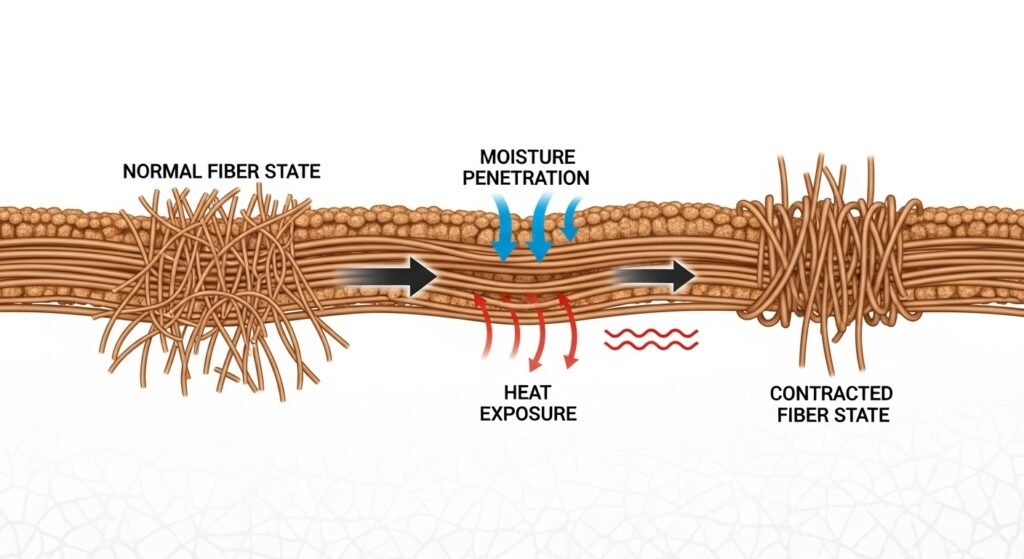
When leather is exposed to excessive heat or moisture, its collagen fibers undergo a process called hydrothermal shrinkage — a contraction of the fiber network that is often irreversible without professional intervention. Think of it like cooking an egg: once the proteins denature, you cannot return them to their original state easily.
The critical temperature threshold for most leathers is between 50°C–60°C (122°F–140°F). Above this range, fiber contraction accelerates dramatically. Even moisture alone — without heat — can cause the fibers to swell unevenly and then contract as the jacket dries, especially if it dries too quickly near a direct heat source.
Additionally, the tanning method used to process the hide matters significantly. Vegetable-tanned leathers tend to be more sensitive to moisture than chrome-tanned leathers, though both can shrink under the wrong conditions. Understanding your jacket’s leather type is the first step in preventing damage.
Common Causes of Leather Jacket Shrinkage
Understanding the root causes of shrinkage helps you eliminate risks proactively. Here are the most prevalent triggers:
Heat Exposure
Heat is the number one enemy of leather. This includes:
- Machine drying — tumble dryers generate temperatures that easily exceed leather’s safe threshold
- Radiators and space heaters — placing a wet jacket near a direct heat source to dry it faster is one of the most common mistakes owners make
- Direct sunlight — prolonged UV exposure not only fades color but also desiccates leather fibers, making them brittle and prone to contraction
- Car interiors — leaving a leather jacket in a hot parked car during summer can cause localized shrinkage and cracking
Moisture and Improper Drying
Water doesn’t just shrink leather — it disrupts the oils and waxes that keep fibers lubricated and flexible. When leather gets saturated and then dries without conditioning:
- Fibers clump and contract
- The outer surface may crack
- Shape distortion occurs, especially in structured areas like shoulders and collars
Machine Washing
This is perhaps the single most destructive act for leather. Washing machines subject leather to agitation, heat, prolonged water immersion, and harsh detergents — all simultaneously. Even a “delicate” cycle can cause catastrophic and irreversible shrinkage.
Incorrect Cleaning Products
Household cleaners, alcohol-based products, acetone, and generic soaps strip the natural oils from leather, leaving it dry and contracted. Desiccated leather not only shrinks but also loses tensile strength, leading to cracking.
Poor Storage Conditions
Storing leather in damp basements, sealed plastic bags, or overly humid closets creates a microenvironment where mold growth and fiber degradation accelerate — both of which contribute to long-term distortion and shrinkage.
How to Choose the Right Leather Jacket to Minimize Shrinkage Risk
One of the most underrated aspects of leather jacket care starts before you even make a purchase. Selecting a jacket made from high-quality, properly tanned leather dramatically reduces your long-term maintenance burden and shrinkage risk.
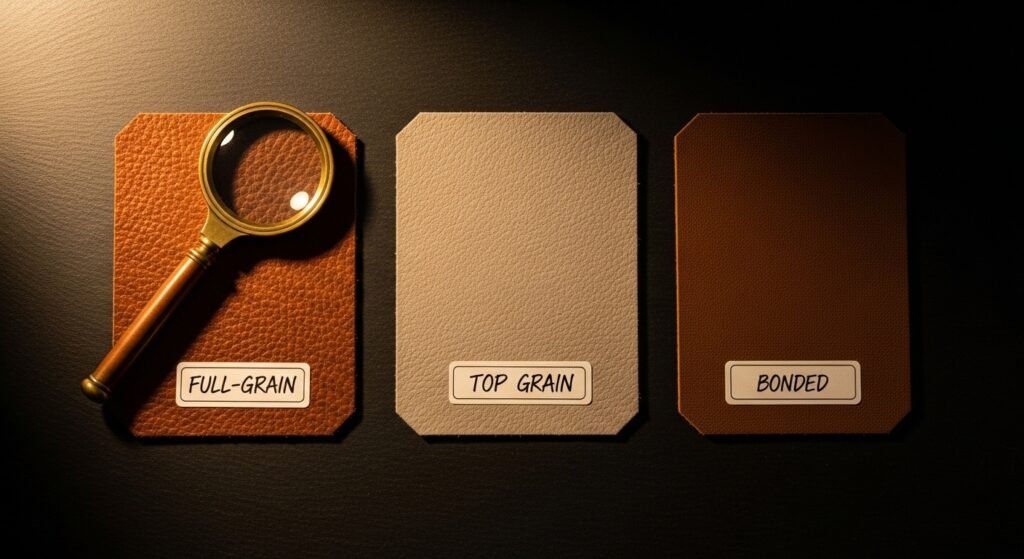
Full-grain leather — the top layer of the hide with intact grain — is the most durable and naturally resistant to environmental damage. Split-grain and bonded leathers, while more affordable, are far more susceptible to moisture penetration and shrinkage because they lack the dense fiber structure of full-grain hides.
When selecting your jacket, pay attention to the lining, stitching density, and hardware quality — these are all indicators of overall build quality that correlate with how well the leather itself was sourced and processed.
If you’re new to leather jackets and unsure what to look for, it’s worth reading a detailed buying guide. For a comprehensive breakdown of what to look for, check out this guide to Choose the Right Leather Jacket for Beginners — it covers everything from leather grades to fit considerations that impact long-term wearability.
For an excellent example of a properly constructed full-grain leather jacket that resists shrinkage and environmental stress, the Jacketra Rider Luxury Black Leather Biker Jacket is built with quality-grade leather and a construction that stands up to daily wear without the vulnerability to distortion that cheaper alternatives exhibit.
How to Properly Clean a Leather Jacket Without Causing Shrinkage
Cleaning is where most leather damage occurs. The key principle is gentle, targeted, and infrequent cleaning — leather does not need to be washed like fabric.
Spot Cleaning (Recommended for Most Situations)
For everyday dirt, dust, and minor stains:
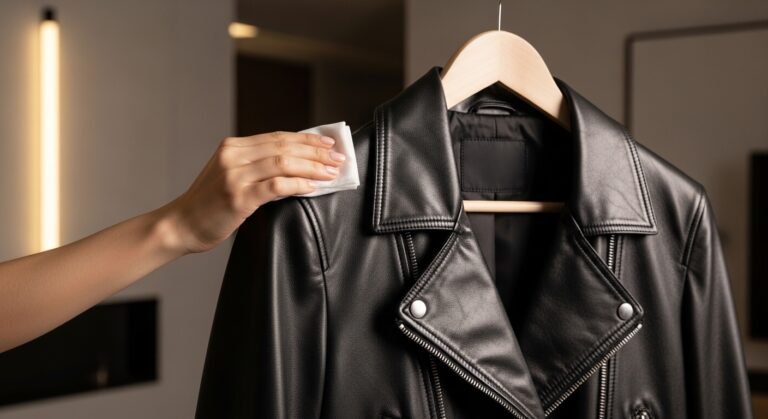
- Use a clean, slightly damp microfiber cloth — not soaking wet, just barely moistened
- Wipe in gentle circular motions
- Never scrub aggressively — this can abrade the grain surface
- Allow to air dry at room temperature, away from heat sources
- Follow immediately with a leather conditioner once dry
Dealing with Stains
- Ink stains: Dab (never rub) with a leather-specific ink remover
- Oil/grease stains: Sprinkle cornstarch or talcum powder, leave for several hours to absorb the grease, then brush gently
- Water stains: Surprisingly, the best fix for water stains is to lightly dampen the entire panel evenly and allow it to dry uniformly — spot drying causes tide marks
What to Absolutely Avoid
- Never submerge in water
- Never machine wash or machine dry
- Never use dish soap, laundry detergent, or bleach
- Never use alcohol wipes or hand sanitizer
- Never wring or twist the jacket to remove moisture
For deeper cleaning, use a pH-balanced leather cleaner specifically formulated for the type of leather you own (smooth, suede, or nubuck each requires different products).
Conditioning Your Leather Jacket — The Most Important Step
If there is one single practice that prevents leather jacket shrinkage above all others, it is regular conditioning. Leather conditioner replenishes the natural oils and fats that tanning processes introduce into the hide — oils that gradually evaporate with use, washing, and exposure to dry environments.
When these oils are depleted, leather fibers lose their lubrication, become brittle, and are far more susceptible to contraction when exposed to moisture or heat.
How to Condition Your Leather Jacket
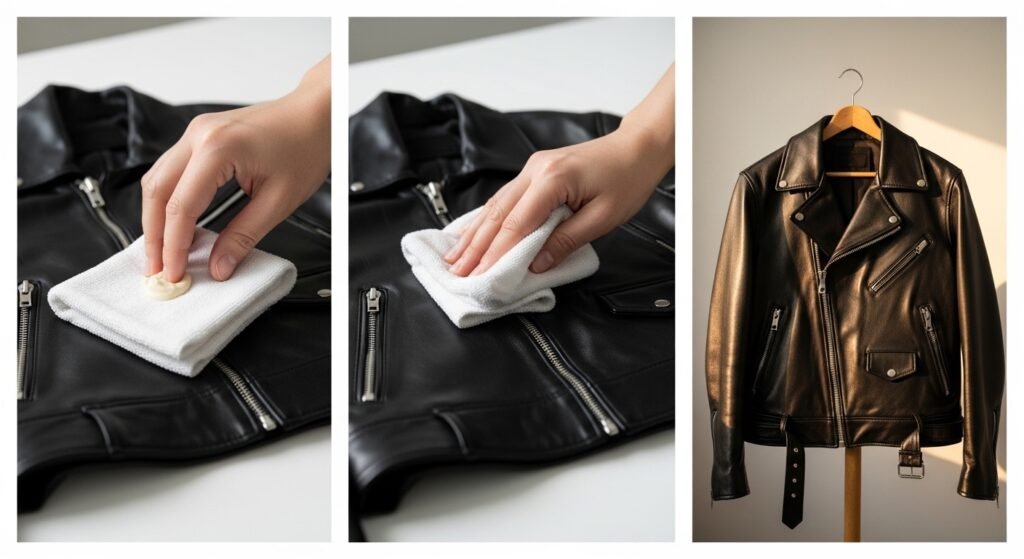
- Clean the jacket first — conditioning over dirt traps contaminants in the leather
- Choose the right conditioner — beeswax-based conditioners are excellent for full-grain leathers; mink oil is deeply penetrating for thicker hides; avoid petroleum-based products that can darken leather unpredictably
- Apply sparingly — use a small amount on a soft cloth and work it in gently using circular motions
- Allow full absorption — 20–30 minutes minimum before buffing off excess
- Buff lightly with a dry cloth to restore surface sheen
Conditioning Frequency
- Heavy daily wear: Condition every 1–2 months
- Occasional wear: Condition every 3–4 months
- Stored jackets: Condition before storing and before bringing them out of storage
A well-conditioned jacket will resist moisture penetration far better than a dry one, dramatically reducing the risk of hydrothermal shrinkage. According to the Leather Working Group, proper conditioning and maintenance significantly extend the lifespan and structural integrity of leather goods — making it not just a cosmetic step but a structural one.
Waterproofing Your Leather Jacket to Prevent Moisture Damage
Waterproofing and conditioning are related but distinct steps. While conditioning nourishes the fibers internally, waterproofing creates a protective barrier on the surface that repels moisture before it can penetrate.
Types of Leather Waterproofing Products
- Wax-based sealants (e.g., Sno-Seal, Otter Wax): Excellent for full-grain leather; slightly darkens the surface; very durable protection
- Silicone spray sealants: Easy to apply and invisible on the surface; less durable; may need reapplication after every few wears in wet conditions
- Nano-coating sprays: Modern water-repellent technology that forms a near-invisible molecular barrier; works well on smooth and nubuck leather alike
Application Process
- Clean and condition your jacket first
- Apply the waterproofing product in a well-ventilated area
- Allow full curing time as directed (typically 24 hours for wax-based products)
- Test in an inconspicuous area first to check for color change
When to Reapply
A simple test: sprinkle a few drops of water on your jacket’s surface. If they bead and roll off, your protection is intact. If they soak in within seconds, it’s time to reapply.
Proper Storage Techniques to Prevent Shrinkage
How you store your leather jacket during the off-season has a profound impact on its long-term shape and dimensional stability.
The Right Hanger
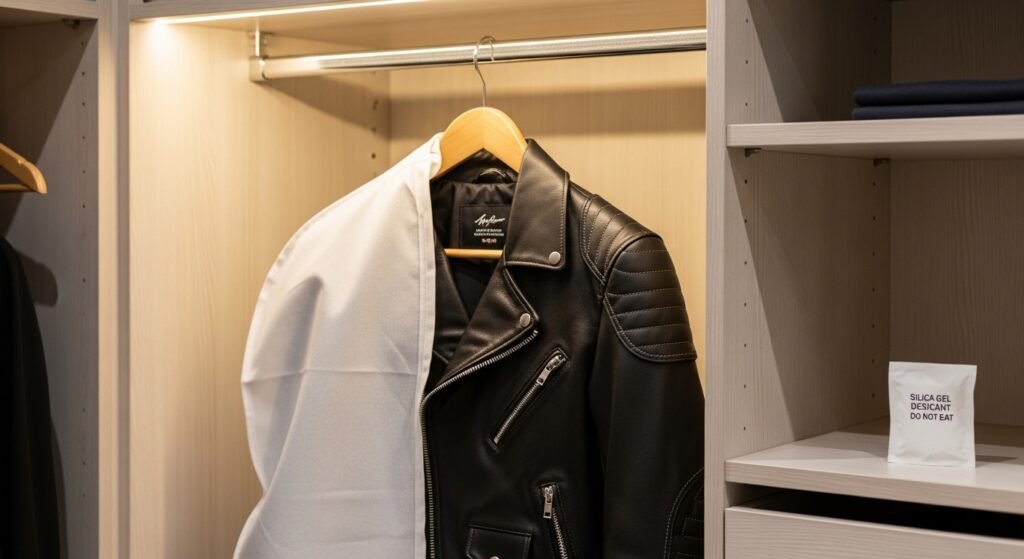
Always use a wide, padded, or wooden shoulder hanger that matches the natural width of your jacket’s shoulders. Wire hangers cause shoulder distortion over time, and narrow hangers create stress points in the leather that can lead to permanent creasing and shape loss.
Climate and Humidity Control
Leather thrives in environments with 40–60% relative humidity and temperatures between 15°C–20°C (59°F–68°F). Extremes in either direction are harmful:
- Too dry: Fibers desiccate and become prone to cracking and shrinkage
- Too humid: Mold growth, fiber swelling, and eventual breakdown of the tanning agents
If you live in a highly humid climate, consider placing a silica gel packet (not in direct contact with the leather) inside the storage garment bag. In very dry climates, a small humidifier in the closet helps maintain appropriate moisture levels.
Storage Bags
- Use: Breathable fabric garment bags — these allow air circulation while protecting from dust
- Avoid: Plastic bags and airtight containers, which trap moisture and accelerate mold growth
Never Compress
Avoid folding leather jackets for storage. If you must pack one for travel, roll it loosely rather than folding — folding creates permanent crease lines that weaken fiber structures at the fold point.
How to Unshrink a Leather Jacket That Has Already Shrunk
If shrinkage has already occurred, don’t panic — mild shrinkage can often be reversed with careful stretching and conditioning. Severe shrinkage may require professional restoration.
The Damp-Stretch Method (For Mild Shrinkage)
- Lightly dampen the shrunken areas using a spray bottle of lukewarm water — never soak
- While the leather is slightly damp and pliable, gently stretch it by hand in the affected directions
- Put the jacket on (if it fits) and wear it while it dries at room temperature — your body heat and shape will guide the leather back toward its original dimensions
- Once dry, apply conditioner immediately to lock in the restored flexibility
The Stuffing Method (For Localized Shrinkage)
For sleeves or collars that have shrunk:
- Lightly dampen the area
- Stuff firmly with rolled towels or foam inserts to hold the stretched shape
- Allow to dry completely at room temperature
- Condition thoroughly after drying
When to Seek Professional Help
If a jacket has shrunk more than one full size, or if the shrinkage is accompanied by cracking or delamination, professional leather restoration is the safest route. A skilled leather craftsman can use industrial stretching equipment and restoration compounds to recover much of the original size and shape.
Leather Types and Their Shrinkage Vulnerability
Not all leather responds to environmental stress in the same way. Understanding your specific leather type helps you tailor your care routine.
Full-Grain Leather
The densest and most durable type. The intact grain surface offers natural moisture resistance. Shrinkage risk: Low to moderate with proper care.
Top-Grain Leather
Sanded to remove imperfections. Still high quality but slightly more porous than full-grain. Shrinkage risk: Moderate.
Genuine Leather (Split-Grain)
Lower layers of the hide, often with an artificial grain coating. More porous and less structurally resilient. Shrinkage risk: Moderate to high.
Bonded Leather
Reconstituted leather fibers bonded with polyurethane. Reacts poorly to moisture and heat. Shrinkage risk: Very high — can also peel and delaminate.
Suede and Nubuck
Buffed inner surfaces — extremely sensitive to water stains and moisture-induced shrinkage. Require specialized waterproof sprays and should never get wet. Shrinkage risk: Very high.
Professional Care vs. DIY — When to Call an Expert
Most routine leather jacket maintenance — cleaning, conditioning, waterproofing, storage — is entirely manageable at home. However, certain situations warrant professional leather care:
- Significant shrinkage (more than one size)
- Deep-set stains that don’t respond to gentle cleaning
- Cracking or peeling across large surface areas
- Mold growth that has penetrated beyond the surface
- Color fading that requires re-dyeing
A professional leather cleaner and restorer has access to industrial-grade conditioners, stretching equipment, and pigment-matched dyes that allow for restoration that home methods simply cannot achieve. The cost is often far less than replacing a quality jacket.
Quick-Reference Leather Care Do’s and Don’ts
DO:
- Condition regularly with a pH-balanced leather conditioner
- Waterproof with appropriate sealant before the wet seasons
- Store on wide, padded hangers in breathable garment bags
- Spot clean with a barely damp microfiber cloth
- Air dry at room temperature away from heat sources
- Apply conditioner immediately after any contact with water
- Check humidity levels in your storage area
DON’T:
- Machine wash or tumble dry leather
- Dry near radiators, hair dryers, or in direct sunlight
- Use household cleaners, alcohol, or acetone
- Store in plastic bags or airtight containers
- Fold leather for extended periods
- Ignore early signs of dryness or cracking
- Leave a wet jacket in a cold or hot car
Final Thoughts
Leather jacket longevity is almost entirely a function of how well you care for it. The physics are straightforward: leather is an organic material with collagen fibers that contract when stressed by heat and moisture. Every prevention strategy in this guide — from choosing a quality jacket to conditioning it regularly to storing it correctly — works to protect those fibers from the conditions that trigger shrinkage.
The investment in proper care pays off exponentially. A well-maintained leather jacket doesn’t just avoid shrinkage — it develops a rich patina, softens to your body shape, and genuinely improves with age. That’s a quality no synthetic alternative can replicate.
If you’re starting your leather jacket journey, begin with the right purchase. Quality leather from the outset means fewer problems down the road — fewer instances of unexpected shrinkage, less sensitivity to moisture, and a garment that rewards your care with decades of wear.