
Summary
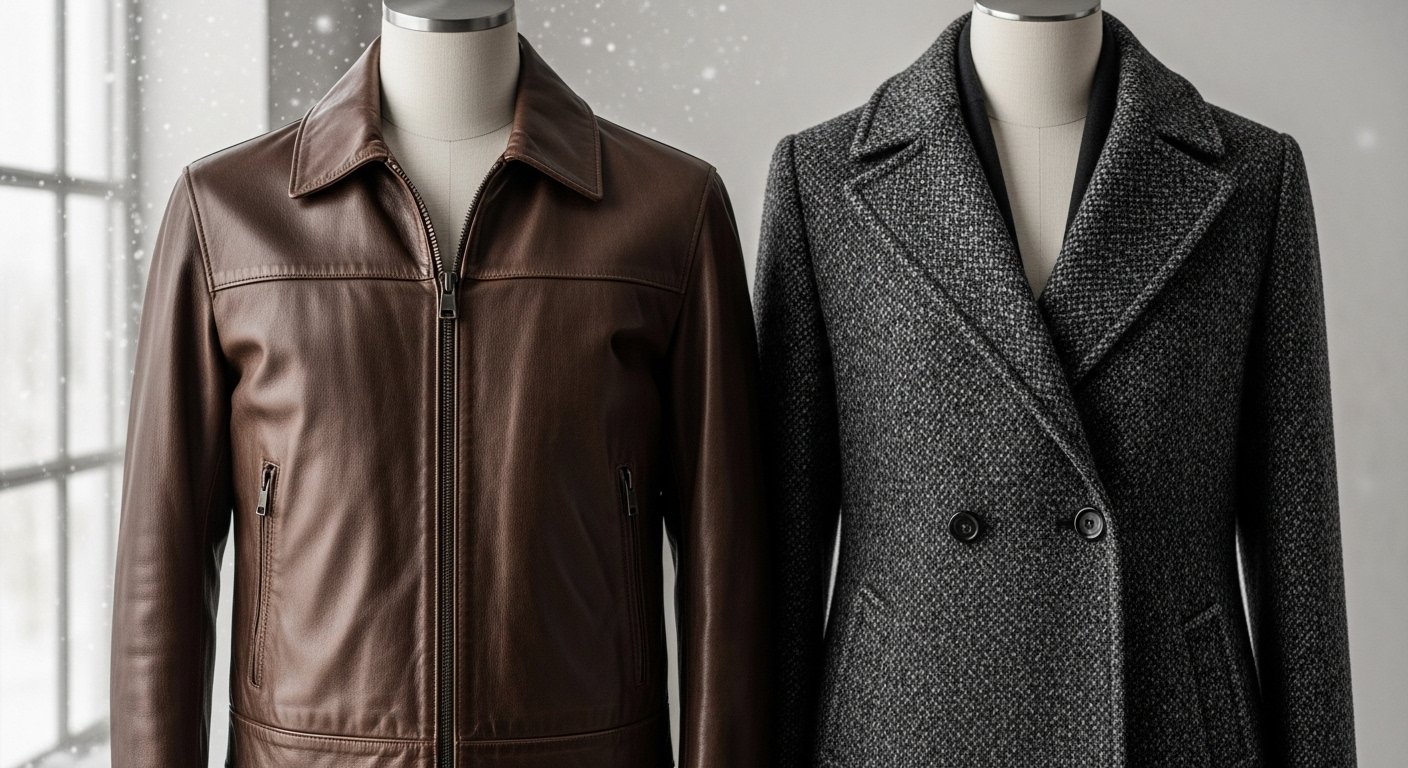
When comparing a leather jacket vs a wool coat for warmth, the answer depends on weather conditions, garment construction, insulation strategy, and how each fabric manages heat retention, wind resistance, and moisture. In general, a high-quality wool coat is often warmer in cold, dry conditions because wool has strong thermal insulation, natural loft, and excellent heat-trapping properties. A leather jacket, however, can feel warmer in windy weather because leather acts as a dense barrier against cold air penetration.
The real deciding factor is not just the outer material but the full warmth system: lining, thickness, fit, layering potential, coat length, and intended use. Wool coats usually outperform standard fashion leather jackets in sustained winter cold, especially when they are long, heavy, and well-structured. Leather jackets can perform very well in cold urban environments when they include shearling, quilted linings, or insulated interiors, but many lightweight leather styles are built more for style than for thermal efficiency.
This article explores the semantic comparison between leather and wool through factors such as insulation, breathability, windproofing, water response, winter layering, comfort, and practical wear scenarios. It also helps readers understand which outerwear choice is best for commuting, snow, freezing temperatures, and transitional weather.
Outline
- Understanding Warmth in Outerwear
- What “warmer” really means
- The role of insulation, wind resistance, and layering
- Leather Jacket vs Wool Coat – Core Fabric Comparison
- How leather retains and blocks heat
- How wool insulates in cold weather
- Which Is Warmer in Different Weather Conditions?
- Dry cold
- Windy conditions
- Damp or snowy weather
- Extreme winter temperatures
- Key Factors That Affect Warmth Beyond Fabric
- Lining and inner construction
- Garment length and body coverage
- Fit and air trapping
- Layering compatibility
- Leather Jacket Pros and Cons for Winter
- Wool Coat Pros and Cons for Winter
- Best Use Cases: When to Choose Leather and When to Choose Wool
- Final Verdict
- FAQs
Understanding Warmth in Outerwear
What “warmer” really means
In outerwear terminology, “warmth” is not a single-variable concept. It is a combination of thermal insulation, heat retention, breathability, weather protection, and body coverage. Many shoppers search phrases like “is a leather jacket warmer than a wool coat” or “best coat for cold weather,” but the semantic intent behind these queries usually includes multiple concerns: wind chill, snow protection, comfort during commuting, and how well a jacket performs over time.
Warmth depends on how effectively a garment reduces heat loss. The human body loses heat through convection, conduction, radiation, and evaporation. A warm coat needs to reduce these losses while staying wearable. That is why a heavy wool coat and a slim leather biker jacket may feel completely different even if both are considered winter fashion staples.
The role of insulation, wind resistance, and layering
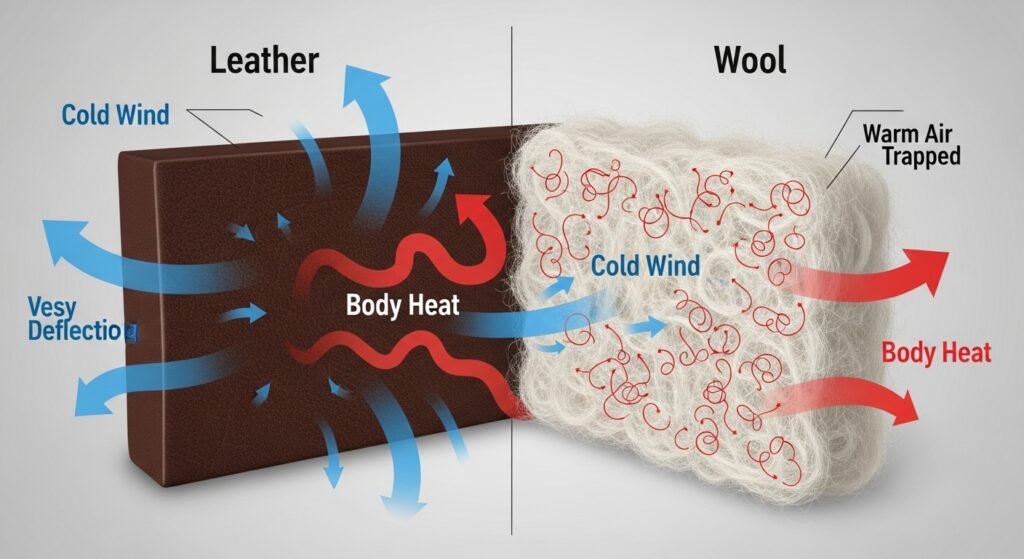
If we use NLP-style entity associations around winter outerwear, the most relevant co-occurring concepts are insulation, lining, windproofing, moisture management, breathability, and layering. These semantic signals matter because they define performance more accurately than style labels do.
A wool coat usually insulates by trapping warm air in its fibrous structure. Wool fibers have natural crimp, which helps create small pockets of air that slow heat transfer. Leather, by contrast, is not naturally lofty in the same way. Its strength lies in acting as a protective shell that blocks wind and creates a stable microclimate close to the body.
That means the question is not simply “which fabric is warmer?” but “which garment system keeps you warmer in your climate and daily use?”
Leather Jacket vs Wool Coat – Core Fabric Comparison
How leather retains and blocks heat
Leather is a dense, durable material with strong wind-resistant properties. This is why many people feel instantly protected when they put on a leather jacket in chilly weather. The material creates a barrier against air movement, which helps reduce the cooling effect of wind. In urban winter settings, especially when temperatures are cool rather than severely freezing, this can make leather feel surprisingly warm.
However, leather alone is not a high-loft insulator. A basic leather jacket without a warm lining does not trap as much heat as a thick wool coat. This is especially true for lightweight moto jackets, cropped cuts, and fashion-first silhouettes. The thermal profile of leather changes dramatically depending on the lining. A shearling-lined leather jacket, for example, is far warmer than an unlined or lightly lined leather jacket.
For readers exploring winter styling, this is also where practical guidance matters. If you want to understand how leather behaves in snowy conditions, you can review this product page for more context on wearing leather jackets in winter environments.
How wool insulates in cold weather
Wool is widely recognized for its natural insulation performance. According to the International Wool Textile Organisation, wool fibers can help regulate body temperature because of their unique structure and natural insulating capacity, making wool highly effective for cold-weather apparel. International Wool Textile Organisation. This is one reason wool coats remain a classic choice for winter wardrobes.
Unlike leather, wool is inherently designed by nature to preserve warmth. The fiber structure traps air, and trapped air acts as insulation. A thick melton wool coat, wool-blend overcoat, or double-breasted wool coat can provide excellent warmth in cold, dry weather. Longer wool coats also protect more of the body, including the thighs and hips, reducing total heat loss.
Wool also has the advantage of breathability. It tends to feel more temperature-regulating indoors and outdoors, whereas leather can sometimes feel less adaptable if the interior becomes too warm.
Which Is Warmer in Different Weather Conditions?

Dry cold
In dry cold weather, a wool coat is usually warmer than a standard leather jacket. This is especially true if the wool coat is mid-thigh or knee-length, dense, and designed for winter. The combination of fiber insulation and added coverage gives wool a strong performance edge.
This is why low-competition search terms like “best coat for dry winter cold,” “is wool coat enough for winter,” and “wool coat vs leather jacket for city winter” align strongly with user intent. In most dry, cold commuting conditions, wool wins on pure warmth.
Windy conditions
In windy weather, leather often performs better than people expect. Wind cuts through many fabrics, but leather’s dense surface helps block airflow effectively. A leather jacket can therefore feel warmer than a wool coat in strong wind, particularly if the wool coat is not tightly woven or if it has a looser fit.
That said, the best winter garments combine both wind resistance and insulation. A lined leather jacket does this well. A wool coat may need layering, scarves, or a tighter weave to compete under harsh wind exposure.
Damp or snowy weather
This category is more nuanced. Wool can remain insulating even when it absorbs some moisture, which is one of its strongest functional advantages. Leather, while protective on the surface, can be damaged by prolonged exposure to wet snow, slush, and rain if not treated properly.
So in terms of staying warm in light snow, a wool coat may still do well if it is dense and cared for properly. In wet winter conditions, neither is perfect compared to technical outerwear, but a treated leather jacket with warm lining can work for brief outdoor exposure, while a heavy wool coat is often better for steady cold.
Extreme winter temperatures
In very cold weather, especially below freezing for extended periods, most standard leather jackets are not warmer than a heavy wool coat. This is where coverage and insulation become decisive. A long wool overcoat layered over knitwear can outperform many casual leather jackets.
The exception is insulated leather outerwear, especially shearling or shearling-lined styles. These are in a different performance category and can rival or exceed wool coats in warmth. So, when someone asks, “Is leather warmer than wool in winter?” the hidden variable is usually whether the leather is insulated.
Key Factors That Affect Warmth Beyond Fabric
Lining and inner construction
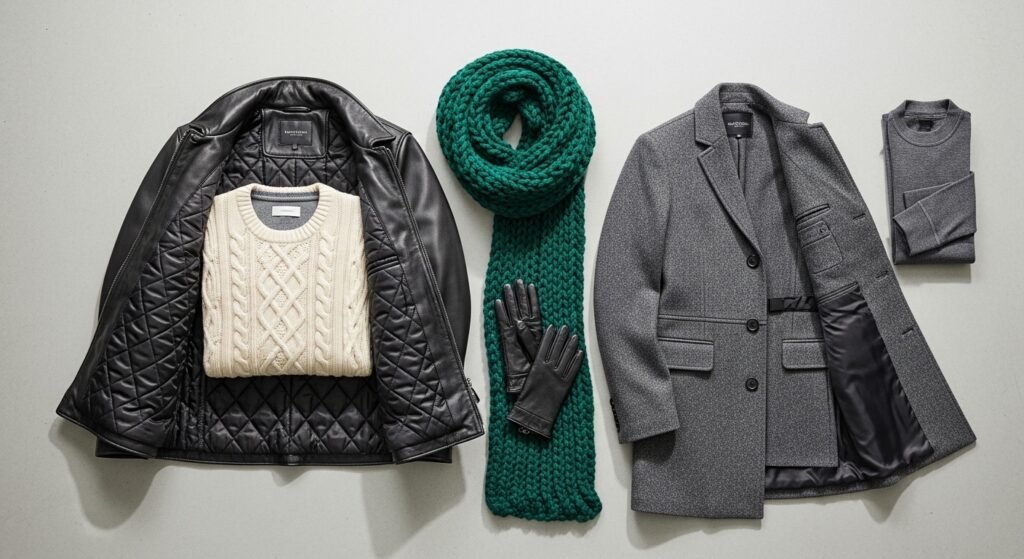
The lining is one of the most important warmth variables. A leather shell with quilted insulation, faux shearling, real shearling, or padded lining can be significantly warmer than an unstructured wool coat. Likewise, a wool coat with minimal lining may look elegant but offer only moderate winter performance.
From a semantic SEO angle, terms such as “insulated leather jacket,” “quilted wool coat,” “shearling-lined jacket,” and “winter overcoat lining” are highly relevant because users are often searching for functional differences rather than just fabric labels.
Garment length and body coverage
Length matters. A short leather jacket exposes more of the lower body to cold air, while a long wool coat protects the torso, hips, and upper legs. This gives the wool coat a built-in advantage in overall thermal coverage.
If warmth is your priority, coat length should be treated as a ranking factor in your decision-making process. More coverage often means better heat retention, especially during long outdoor periods.
Fit and air trapping
A properly fitted coat traps a thin layer of warm air without being too tight. If a leather jacket is too slim, it limits layering and reduces comfort. If a wool coat is too loose, it may allow more cold air circulation. The ideal fit balances insulation, mobility, and layering capacity.
Layering compatibility
Wool coats generally layer more easily over sweaters, blazers, hoodies, or thermal knits. This makes them more adaptable in variable winter climates. Leather jackets, depending on the cut, may restrict bulky layers. That means even if leather feels protective, wool can become warmer in real-life use because it supports a stronger layering system.
Leather Jacket Pros and Cons for Winter
A leather jacket offers a sleek silhouette, timeless appeal, and effective wind protection. It is often the preferred option for people who want a sharp, versatile outer layer for cool weather, driving, nightlife, and urban wear. It can also transition well between autumn and mild winter.
Its strengths include strong wind resistance, durability, style longevity, and the ability to feel warmer than expected in breezy weather. It also works well in short outdoor exposures and active city movement, where you do not want a bulky coat.
Its limitations are equally important. Many leather jackets are not designed for deep winter. Without insulation, they can feel cold in low temperatures. They also usually offer less body coverage than a wool coat, and they require more maintenance when exposed to moisture or snow.
So, if the user intent is “best stylish jacket for mild winter,” leather is highly relevant. If the intent is “warmest coat for freezing temperatures,” leather only competes when heavily lined.
Wool Coat Pros and Cons for Winter
A wool coat is often the better choice for classic winter warmth, especially in dry or moderately cold climates. It offers natural insulation, better layering flexibility, and a more formal styling range. It is ideal for office wear, smart-casual outfits, long walks in the cold, and everyday commuting.
Its strongest advantages include thermal retention, breathable comfort, full-body coverage, and polished aesthetics. Wool coats also fit more contexts, from businesswear to elevated streetwear.
The drawbacks include lower wind resistance compared with leather, potential heaviness, and reduced performance in heavy rain or slushy conditions. Some wool coats can also pill or lose structure over time if they are lower-quality blends.
Still, if we compare average winter-ready garments, wool coats are usually the warmer option overall.
Best Use Cases: When to Choose Leather and When to Choose Wool
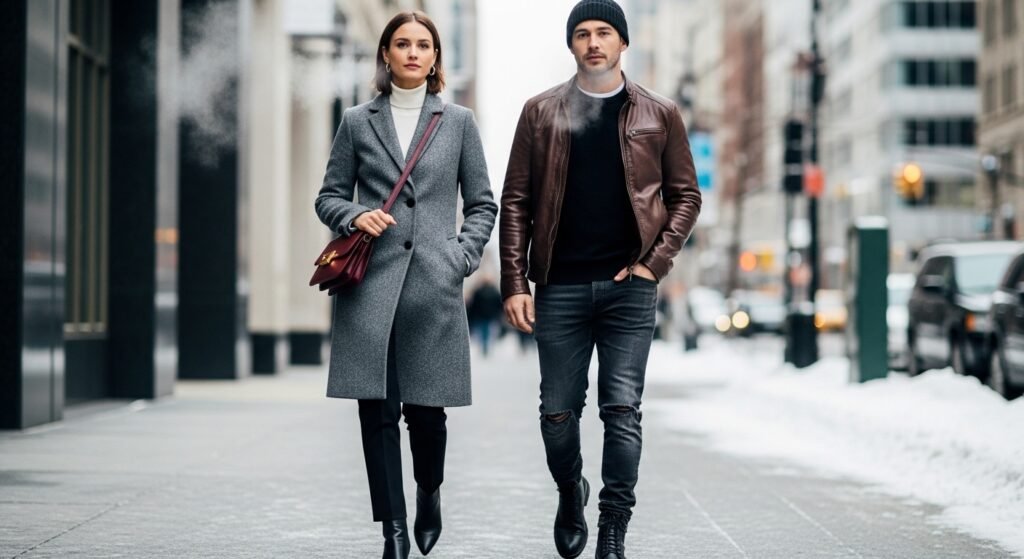
Choose a leather jacket when:
- You live in a cool to moderately cold climate
- Wind resistance matters more than maximum insulation
- You want a lightweight, stylish, versatile outer layer
- Your jacket includes an insulated or shearling lining
- Your winter outings are shorter and more mobile
Choose a wool coat when:
- You need better insulation for cold weather
- You want more coverage and easier layering
- You commute, walk, or spend longer periods outdoors
- Your style leans classic, minimal, or formal
- You want one of the best everyday options for winter elegance and warmth
For most people, asking “which is warmer, a leather jacket or wool coat,” the practical answer is this: a wool coat is generally warmer for winter, while a leather jacket is often better for wind and style-driven wear.
Final Verdict
If all else is equal, a wool coat is usually warmer than a leather jacket. Wool naturally insulates better, supports layering more easily, and often covers more of the body. That gives it the advantage in cold-weather performance.
A leather jacket can still feel very warm in windy conditions and may outperform a wool coat if it has a thick, insulated, or shearling lining. But in the average comparison between a regular leather jacket and a regular wool coat, wool comes out ahead for overall winter warmth.
The smartest buying decision depends on the use case. If you need dependable warmth for cold daily wear, choose a quality wool coat. If you want a stylish outer layer for cool weather, breezy days, and versatile outfits, a leather jacket is an excellent investment. If the budget allows, owning both gives you the best coverage across autumn and winter.
FAQs
Is a leather jacket warm enough for winter?
A leather jacket can be warm enough for winter if it has an insulated lining, a thick build, and room for layering. A lightweight leather jacket is usually not enough for harsh winter conditions.
Is wool warmer than leather?
In most standard outerwear comparisons, yes. Wool is typically warmer because it traps heat more effectively and is often used in longer, more insulating coat designs.
What is better for snow: leather or wool?
Neither is ideal for heavy wet snow compared to technical winter gear, but wool often performs better thermally in cold conditions. Leather can work in snow if it is treated and properly maintained.
Which lasts longer: a leather jacket or a wool coat?
A high-quality leather jacket can last for many years and often ages beautifully. A quality wool coat also lasts well, but leather generally has a stronger reputation for long-term durability if cared for correctly.
Can you wear a wool coat every day in winter?
Yes. A well-made wool coat is one of the best daily winter outerwear options because it balances warmth, breathability, and style.
