
Summary
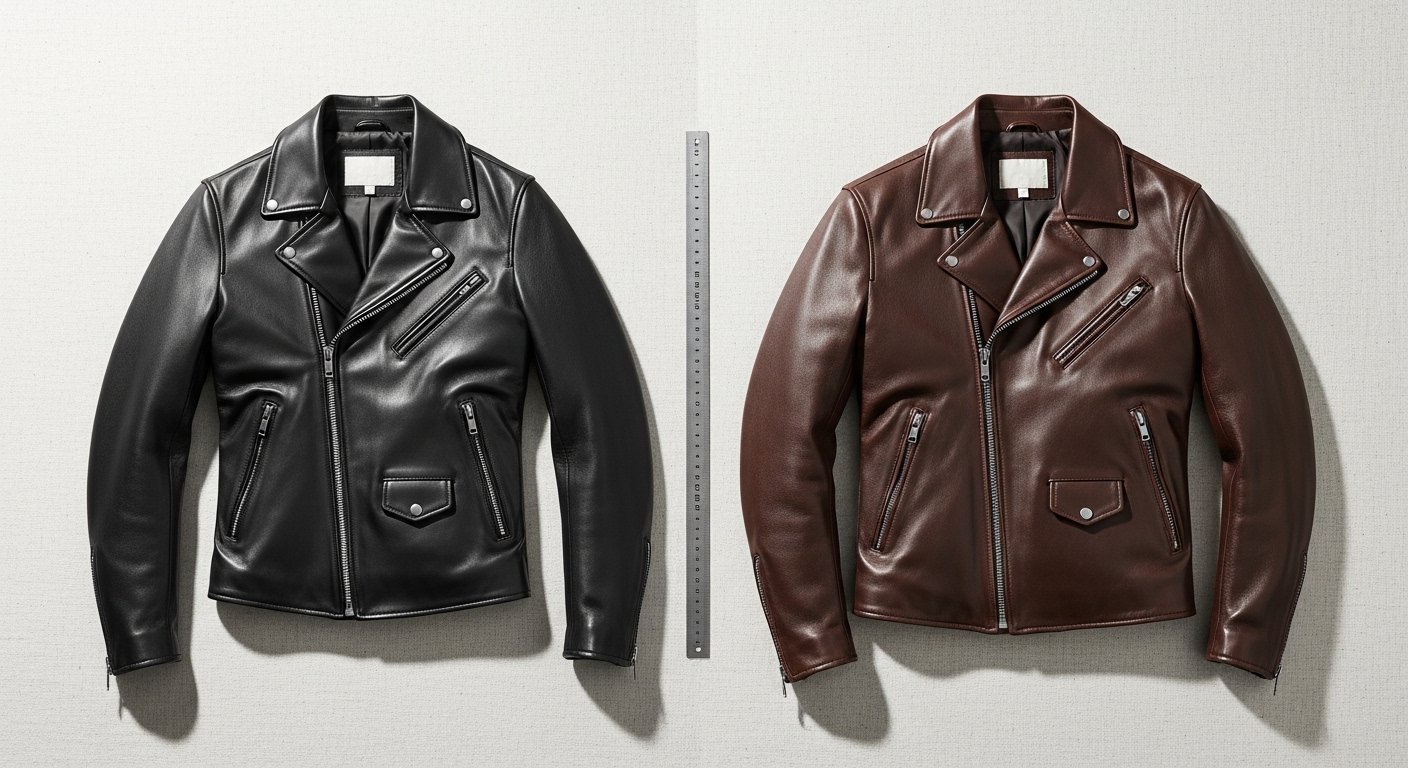
Choosing between a slim fit and a regular fit leather jacket is one of the most consequential decisions a buyer can make — and yet it is one of the least discussed. The fit of a leather jacket determines not only how it looks on your body, but how it moves with you, how long it lasts, and how versatile it is across different style contexts. This guide breaks down every key distinction between the two silhouettes — from construction and body type compatibility to layering potential and long-term wear behavior — so you can make a truly informed purchase decision that aligns with your lifestyle, aesthetic preferences, and physique.
Outline
- Introduction: Why Fit Is the Most Overlooked Variable in Leather Jacket Shopping
- Understanding Leather Jacket Fit: Core Terminology and Concepts
- What Is a Slim-Fit Leather Jacket?
- What Is a Regular Fit Leather Jacket?
- Slim Fit vs Regular Fit: A Side-by-Side Comparison
- Body Type Guide: Which Fit Works Best for Your Frame?
- Layering Considerations: Can You Wear a Sweater Underneath?
- Style Contexts: When to Wear Slim vs Regular Fit
- How Leather Stretch and Break-In Affects Fit Over Time
- Sizing Tips: How to Measure Yourself for the Right Leather Jacket Fit
- Common Fit Mistakes and How to Avoid Them
- Featured Product: A Premium Jacket That Bridges Both Worlds
- Conclusion: Slim vs Regular — Which Should You Buy?
- Image Prompts
- Meta Information
Introduction: Why Fit Is the Most Overlooked Variable in Leather Jacket Shopping
When most people shop for a leather jacket, they fixate on the obvious: the type of leather, the hardware finish, the color, and the brand. Fit, paradoxically, is one of the last things many buyers evaluate carefully — and it is the single factor that will most directly determine whether the jacket becomes a wardrobe staple or ends up collecting dust in the back of the closet.
The distinction between a slim fit and a regular fit leather jacket goes far beyond personal taste. It touches on functional ergonomics, long-term durability of the leather panels, body type compatibility, and even the occasions on which you can wear the piece. Understanding this distinction at a structural and semantic level will save you from costly returns, alterations, and buyer’s remorse.
This guide approaches the topic from a practical standpoint — explaining not just what each fit looks like, but why it exists, how it behaves on real bodies, and which type of person is best served by each silhouette.
Understanding Leather Jacket Fit: Core Terminology and Concepts
Before diving into the comparison, it helps to understand the vocabulary used in fit analysis for outerwear.
Silhouette refers to the overall shape and outline of the jacket when worn on the body. A slim silhouette hugs the body’s contours; a regular silhouette allows space and movement.
Ease is the amount of extra room built into a garment beyond the body’s actual measurements. Low ease means a closer fit; higher ease means more room for movement and layering.
Break-in period describes the process by which leather gradually softens and molds to the wearer’s body with use. This is a critical concept for leather jackets because the fit can change meaningfully over weeks and months of wear.
Drape refers to how the leather falls and moves around the body. Thicker leathers (like full-grain cowhide) have stiffer drape; softer leathers (like lambskin) drape more naturally.
Proportionality is the relationship between the jacket’s dimensions and the wearer’s natural body proportions — shoulder width, chest breadth, torso length, and sleeve length.
Understanding these terms helps contextualize why slim and regular fits are designed differently and why neither is objectively superior to the other.
What Is a Slim Fit Leather Jacket?
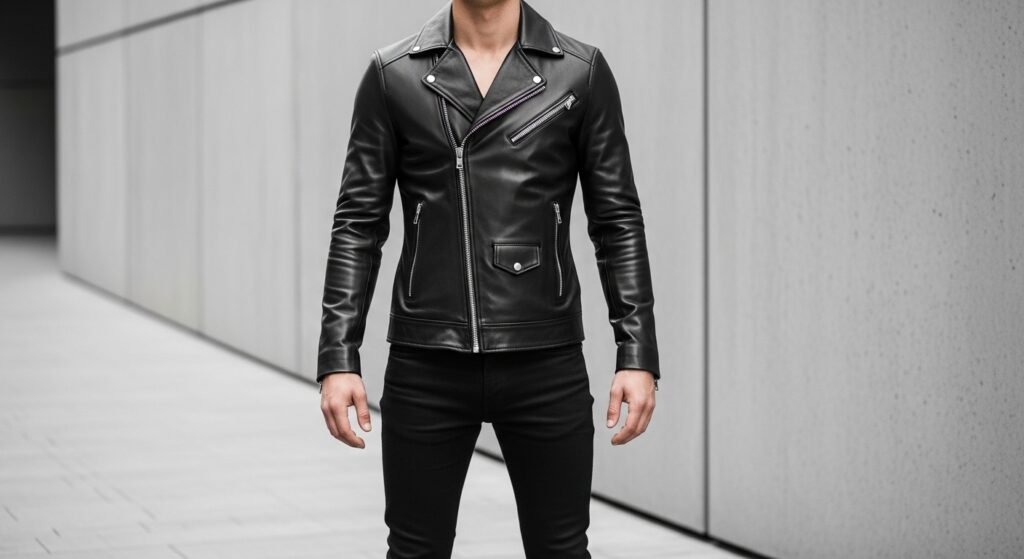
A slim fit leather jacket is cut with minimal ease, designed to follow and accentuate the natural contours of the wearer’s body. It typically features a narrower shoulder, a tapered waist, and a shorter body length. The sleeves are cut close to the arm, and the chest panels are positioned to create a streamlined, body-conscious silhouette.
Key Structural Characteristics of Slim-Fit Jackets
Slim-fit leather jackets are engineered with several deliberate design choices. The back panel typically has little or no excess fabric, which means the jacket lies flat against the body. The side seams curve inward slightly to create a waist suppression effect — visually narrowing the midsection. Armholes are positioned higher on the body, which creates a cleaner look when the arms are down but restricts the range of motion when raising the arms.
The lining on a slim fit jacket is usually cut just as snugly as the outer shell, and some high-end slim fit designs omit the lining entirely in order to reduce bulk and allow the jacket to sit as close to the body as possible.
Materials used for slim-fit jackets tend to be on the softer end of the leather spectrum. Lambskin, nappa leather, and vegetable-tanned goatskin are popular choices because their natural flexibility allows the jacket to follow body movement without creating unsightly bunching or pulling at the seams.
The Aesthetic Appeal of Slim Fit
The slim fit silhouette communicates a sharp, contemporary, and fashion-forward aesthetic. It reads as intentional and curated — signaling that the wearer has thought carefully about how the garment interacts with the body. In style and fashion discourse, slim-fit leather jackets are associated with urban cool, rock-and-roll edge, and modern minimalism.
What Is a Regular Fit Leather Jacket?
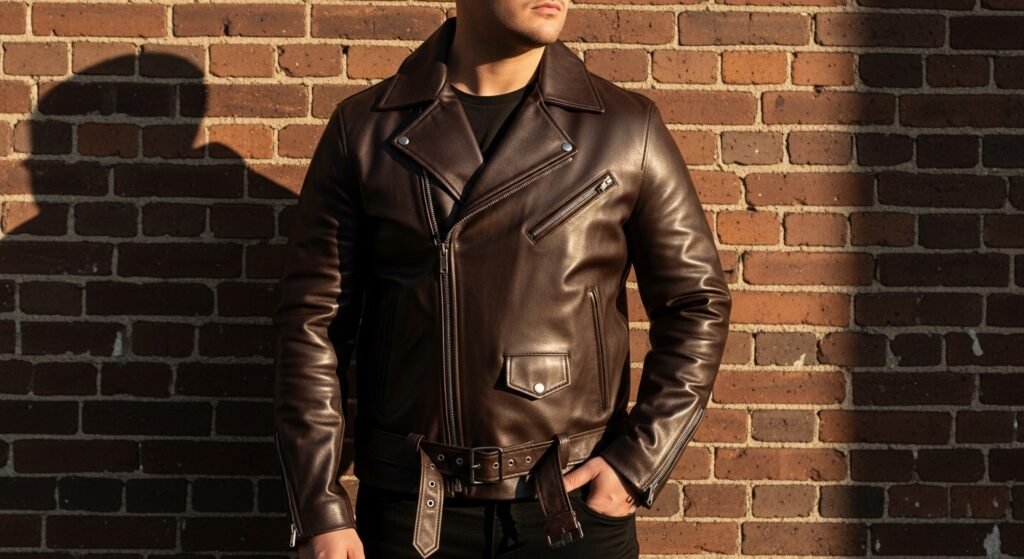
A regular fit leather jacket — sometimes described as a classic fit, standard fit, or relaxed fit — is cut with a moderate amount of ease throughout the body. It accommodates a wider range of body shapes without hugging any specific contour. The shoulders align with the natural shoulder bone, the chest has room to breathe, and the body length often falls lower on the hip.
Key Structural Characteristics of Regular Fit Jackets
In a regular fit jacket, the shoulder seam typically sits at the true edge of the shoulder — not pulled inward. The chest measurement includes enough ease (usually 3–5 inches beyond the actual chest circumference) to allow comfortable movement and layering. The sleeves have a traditional tube cut with moderate width, providing freedom for bending and lifting.
The body of a regular fit jacket does not taper significantly at the waist, creating a straighter or boxy silhouette that hangs more freely from the shoulders. This construction distributes stress across the leather more evenly, which can contribute to longer panel longevity — especially important for thicker, heavier leathers like full-grain cowhide or buffalo hide.
The Timeless Appeal of Regular Fit
The regular fit silhouette is rooted in the utilitarian origins of the leather jacket. From the A-2 flight jacket worn by World War II aviators to the classic motorcycle jacket made famous by Marlon Brando in The Wild One, regular fit designs prioritize function and durability alongside style. They carry a rugged, timeless, and versatile quality that transcends fashion cycles, making them equally appropriate on a construction site, a coffee shop, or a casual dinner.
Slim Fit vs Regular Fit: A Side-by-Side Comparison
Understanding both fits in isolation is useful, but the real insight comes from comparing them directly across several key dimensions.
Shoulder Construction
In a slim fit jacket, the shoulder is set slightly inward from the natural shoulder point, creating a narrower overall shoulder line that suits leaner physiques. In a regular fit jacket, the shoulder is placed at or just at the edge of the shoulder bone — a more anatomically neutral position that suits a broader range of body types.
Chest and Torso Room
Slim fit jackets are cut 0–2 inches larger than the actual chest measurement, meaning they will feel snug across the pectorals and ribcage. Regular fit jackets typically provide 3–6 inches of ease in the chest, creating a comfortable, non-restrictive feel that accommodates both heavier builds and layered clothing.
Waist Suppression
Slim fit jackets often incorporate side seam shaping that narrows the waist by 2–4 inches relative to the chest, creating a defined silhouette. Regular fit jackets maintain a more consistent width from chest to hem, resulting in a straight or only slightly tapered silhouette.
Sleeve Width and Length
Slim fit sleeve openings typically measure narrower, creating a streamlined look from shoulder to wrist. Regular fit sleeves allow more room for thick garments underneath and freedom of arm movement.
Body Length
Slim fit jackets tend to run shorter, ending at or just below the hip bone — a cropped proportion that emphasizes leg length. Regular fit jackets may fall slightly lower, offering more coverage and a more traditional proportional relationship with the rest of the outfit.
Break-In Behavior
Because slim fit jackets are in constant contact with the body’s moving parts, they break in and soften more quickly. Regular fit jackets may take longer to develop the personalized creasing and patina that leather lovers prize, but they maintain their structural integrity longer because the leather is under less consistent mechanical stress.
Body Type Guide: Which Fit Works Best for Your Frame?
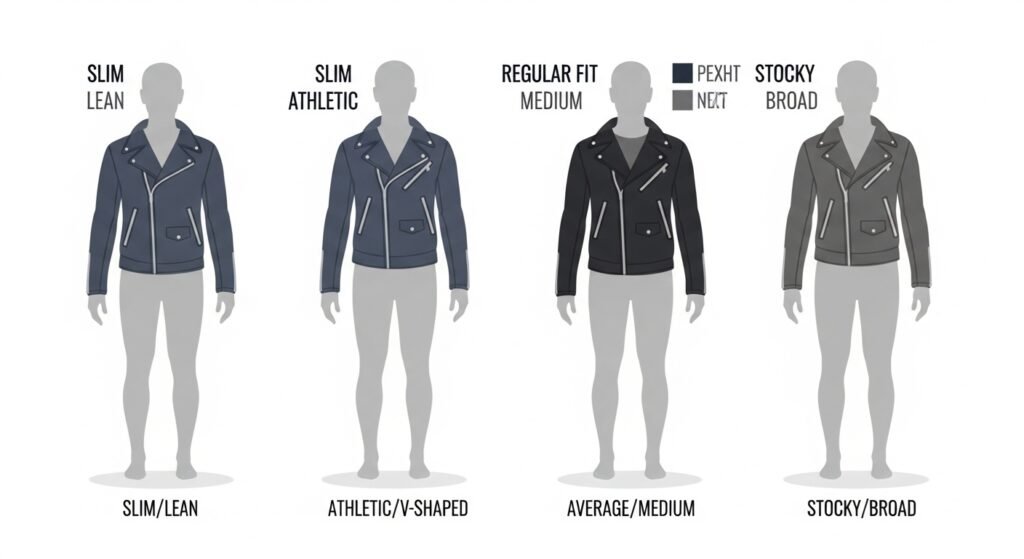
One of the most practically useful lenses through which to evaluate slim vs regular fit is body type. Neither fit is universal — each flatters certain proportions and can work against others.
Slim and Athletic Builds
People with a slim, lean, or V-shaped athletic physique are the natural target audience for slim-fit leather jackets. The close-cut silhouette follows the body’s natural taper — broad shoulders narrowing to a slim waist — and accentuates the proportions without adding bulk. An athletic build also means the jacket will not be pulled taut across the chest or shoulders, which is a common fit failure point for broader individuals in slim cut garments.
Stocky, Muscular, or Broad-Shouldered Builds
For people with wider shoulders, a barrel chest, or significant upper-body muscle mass, regular fit jackets are almost always the better choice. Attempting to wear a slim fit on a broad build results in shoulder seams that pull, side seams that stretch dangerously, and sleeve openings that cut into the bicep. The regular fit accommodates the full shoulder without strain and allows natural movement through the arms and back.
Average or Medium Builds
People with an average or medium build occupy a comfortable middle ground. Both fits can work, depending on the specific brand’s sizing chart and the type of leather. It is worth trying both silhouettes and paying close attention to the shoulder seam position and chest comfort before committing. Many medium-build wearers find that a slim fit in a size up gives them the best of both worlds — the cleaner silhouette without the restrictive tightness.
Plus-Size Builds
Regular fit leather jackets are the practical and stylistically superior choice for plus-size bodies. The generous ease through the chest, waist, and back ensures the jacket drapes naturally rather than pulling across stress points. Many high-quality leather jacket brands now offer regular fit styles in extended sizing that maintain the visual proportionality of the classic silhouette regardless of body size.
Layering Considerations: Can You Wear a Sweater Underneath?
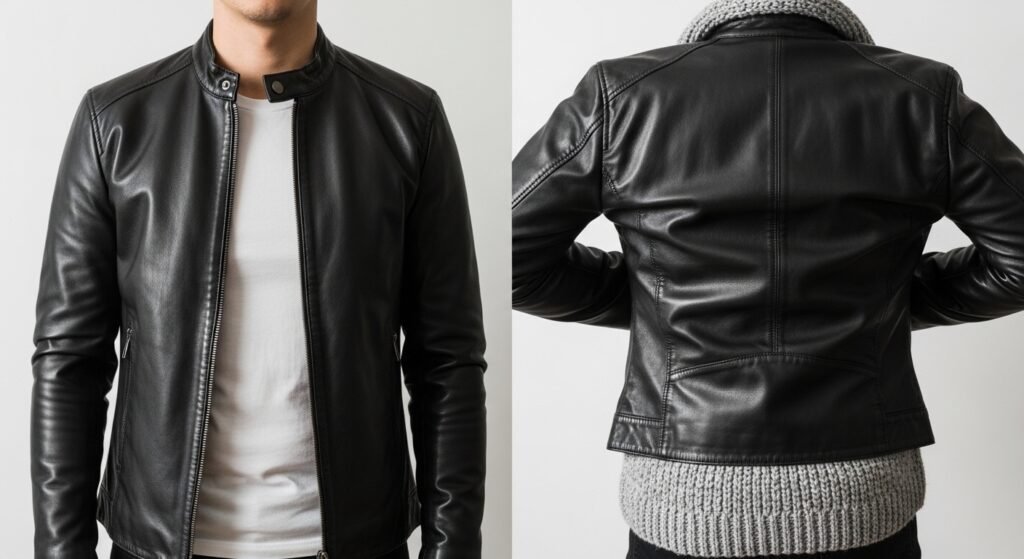
Layering potential is a practical and often underappreciated dimension of the slim vs regular fit debate. In colder climates, the ability to wear a mid-layer beneath a leather jacket significantly extends its seasonal usability.
Slim fit jackets are generally designed to be worn over a t-shirt or lightweight long-sleeve base layer. Attempting to layer a chunky knit sweater under a slim fit jacket almost always results in pulling across the shoulders and back, a bunched lining, and restricted arm movement. If you live in a climate that requires regular cold-weather layering, a slim-fit leather jacket may leave you underdressed for much of the year.
Regular fit jackets offer meaningful layering versatility. A medium-weight crew neck sweater or even a light hoodie can typically be worn underneath without compromising the jacket’s fit or appearance. This is especially relevant for shearling-lined leather jackets — which often feature a built-in mid-layer — designed to be worn as standalone outerwear in cold weather. Products like the Jacketra Arctic Luxury Leather Shearling Jacket are engineered with this kind of structural generosity in mind, combining premium leather outershell construction with interior warmth that makes layering secondary rather than mandatory.
Style Contexts: When to Wear Slim vs Regular Fit
Different environments and occasions call for different silhouettes, and understanding the contextual appropriateness of each fit helps you maximize the versatility of your investment.
Slim Fit: Best Style Contexts
Slim-fit leather jackets work exceptionally well in urban, contemporary, and fashion-conscious contexts. Pairing a slim-fit black leather jacket with slim-cut dark jeans and Chelsea boots creates a cohesive, monochromatic silhouette with strong visual intentionality. They also work well as part of smart-casual outfits — thrown over a button-down shirt and chinos — because the fitted profile reads as elevated rather than casual.
Slim fits are particularly effective in night-out scenarios, concerts, gallery openings, or any context where a slightly dressed-up but still edgy aesthetic is appropriate. Their association with contemporary menswear and womenswear fashion makes them a natural fit for style-conscious urban environments.
Regular Fit: Best Style Contexts
Regular fit leather jackets are the workhorses of outerwear — appropriate across a far wider range of contexts. They pair naturally with jeans and boots for casual weekend wear, translate effortlessly into workwear when worn over a button-down in more relaxed office environments, and function as genuine cold-weather outerwear when the conditions demand it.
The classic motorcycle jacket silhouette — which is typically a regular or slightly relaxed fit — is one of the most universally recognized and accepted outerwear profiles in contemporary Western dress. It carries no formal styling obligations and can be worn up or down without looking out of place.
How Leather Stretch and Break-In Affects Fit Over Time
One of the most important and frequently overlooked aspects of leather jacket fit is how the material changes with wear. Leather is an organic material with a cellular structure that responds to heat, moisture, and mechanical pressure. Over weeks and months of regular wear, leather panels stretch — particularly at stress points like the underarm gusset, elbow, and back.
For slim-fit jackets, this break-in process can actually be a selling point. A well-made slim fit leather jacket will soften and gently expand at the key flex points, creating a personalized fit that feels increasingly comfortable over time. However, this also means that a slim fit jacket purchased too small will not simply “break in” to a comfortable fit — it will stretch unevenly, damaging seams and stitching in the process.
For regular fit jackets, the break-in process is more gradual and evenly distributed because the leather is not under constant tension. The jacket develops a relaxed, lived-in character over time — the kind of beautiful aging that leather enthusiasts describe as “patina.”
It is also worth noting that certain leather types are more susceptible to unintended stretching. If you’re concerned about your jacket changing shape over time — especially after exposure to moisture — understanding how to stop a leather jacket from shrinking is equally important knowledge to have alongside your fit selection.
Sizing Tips: How to Measure Yourself for the Right Leather Jacket Fit
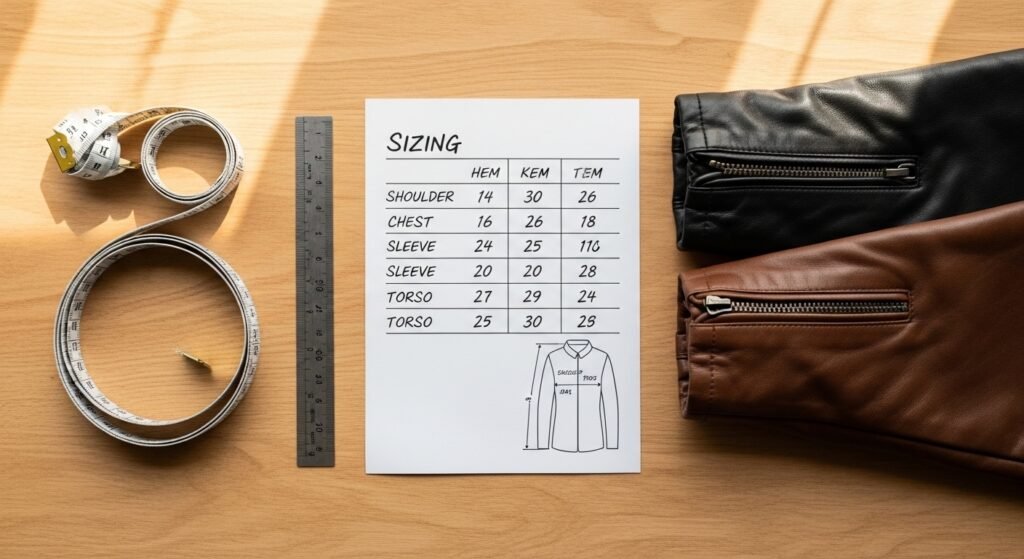
Accurate body measurements are the foundation of a successful leather jacket purchase, whether you’re buying in-store or online. The following measurements are the most critical for evaluating fit.
Chest Measurement
Wrap a flexible measuring tape around the widest part of your chest, under your armpits, and across your shoulder blades. Keep the tape parallel to the floor and do not pull it tight — you want the actual circumference of your chest at rest. For a slim fit jacket, your chest measurement should fall within 0–2 inches below the jacket’s stated chest dimension. For a regular fit, 2–4 inches of ease is comfortable.
Shoulder Width
Measure from the tip of one shoulder bone to the other across the back. This measurement is particularly critical because shoulder seams cannot be easily altered after purchase — unlike waist or sleeve length. Ensure the jacket’s shoulder width matches your actual shoulder width within half an inch in either direction.
Sleeve Length
Measure from the center of the back of the neck, over the shoulder, and down to the wrist bone with the arm slightly bent. Sleeve length is a common source of fit complaints with leather jackets, and many brands size sleeve length differently.
Torso Length
Measure from the base of the neck to where you want the jacket hem to fall. Most slim fit jackets fall between 25–27 inches in length; regular fit jackets tend to range from 27–30 inches.
Common Fit Mistakes and How to Avoid Them
Several recurring errors appear when people purchase leather jackets without adequate fit knowledge. Being aware of these pitfalls in advance dramatically increases the chances of a successful purchase.
Buying slim fit with the intention of “sizing up” to get more room. Sizing up in a slim fit jacket to gain chest room will simultaneously give you excess fabric at the shoulders and back — creating a sloppy silhouette that defeats the purpose of the slim cut. If you need more room, switch to a regular fit in your true size.
Ignoring shoulder seam placement. The shoulder seam position is the single most important indicator of correct jacket fit. If it sits off your shoulder or extends down your arm, no amount of break-in will correct it.
Purchasing leather that is too stiff for a slim cut. Very thick, heavy leathers — like full-grain cowhide at 1.2mm or above — are not well-suited to slim fit construction because they lack the natural flexibility to follow body movement without pulling and stressing seams. Slim fit jackets in stiff leather will feel uncomfortably restrictive and wear unevenly. According to the Leather Research Laboratory, the tensile strength and elongation properties of different leather types vary significantly and should be matched to the intended garment construction.
Forgetting to account for clothing worn underneath. Always try on or measure yourself while wearing the type of garment you intend to layer under the jacket. A measurement taken over a t-shirt will yield a jacket that feels too tight over a sweater.
Featured Product Spotlight: Premium Leather Jacket Construction That Transcends Fit Categories
While the slim vs regular fit debate is conceptually useful, the finest leather jackets are those engineered with enough structural intelligence to offer the best of both worlds — a clean, defined outer silhouette without the restrictive tightness of a strictly slim construction. The Jaketra Arctic Luxury Leather Shearling Jacket exemplifies this philosophy, combining a premium leather outer shell with a naturally insulating shearling interior that maintains proportional elegance without sacrificing comfort or movement.
Such jackets represent the premium end of the regular-to-relaxed fit spectrum — offering the timeless utility of a classic silhouette in materials that justify investment-level pricing.
Conclusion: Slim vs Regular Fit — Which Should You Buy?
The answer, ultimately, is personal — but it is not arbitrary. Slim fit leather jackets are the right choice for lean-to-athletic builds, fashion-conscious urban contexts, and buyers who prioritize silhouette and visual impact above all else. Regular fit leather jackets are the right choice for stocky, muscular, or average builds, cold-climate wearers who layer frequently, and buyers who value versatility, long-term durability, and timeless style over trend-specific aesthetics.
Both fits, when selected correctly and made from quality leather, have the potential to be lifelong wardrobe pieces that only improve with age. The key is understanding what your body needs, what your lifestyle demands, and what your personal style communicates — and then choosing the fit that serves all three.
