Summary
Storing a leather jacket correctly during winter months is not merely about folding it away — it is an act of preservation. Leather is a natural, breathable material that responds to environmental conditions, and improper storage can cause irreversible cracking, mildew growth, color fading, and structural deformation. This comprehensive guide covers every critical aspect of off-season leather jacket storage: pre-storage cleaning and conditioning, humidity and temperature control, correct hanging techniques, breathable cover options, moth and pest prevention, common storage mistakes to avoid, and revival methods when spring arrives. Whether you own a classic biker silhouette, a tailored moto jacket, or one of the boldest streetwear leather jacket styles, these storage principles apply universally and will protect your investment for years to come.
Outline
- Why Proper Leather Jacket Storage Matters in Winter
- Understanding Leather as a Material (Semantic Context)
- Pre-Storage Preparation: Cleaning Your Leather Jacket
- Conditioning the Leather Before Long-Term Storage
- Choosing the Right Storage Location
- Temperature and Humidity: The Two Biggest Threats
- How to Hang a Leather Jacket for Storage
- Using Breathable Garment Bags vs. Plastic Covers
- Stuffing and Shape Retention Methods
- Protecting Against Moths, Mold, and Mildew
- What to Avoid When Storing Leather Jackets
- Reviving Your Leather Jacket After Winter Storage
- Special Considerations for Different Leather Types
- FAQs About Winter Leather Jacket Storage
Why Proper Leather Jacket Storage Matters in Winter
A premium leather jacket is one of the most enduring wardrobe investments a person can make. Unlike fast-fashion outerwear, a well-crafted leather piece develops character over time — acquiring a natural patina that reflects its journey. But this durability is conditional. Leave a leather jacket in the wrong environment over a cold, damp winter, and you risk returning in spring to a garment riddled with mold, cracked panels, warped shoulders, or a musty odor that no amount of airing out can fully remove.
Winter is particularly harsh on stored leather for several interrelated reasons. Seasonal shifts bring higher indoor humidity from heating systems cycling on and off, reduced air circulation in closed wardrobes, and temperature fluctuations that cause leather fibers to alternately expand and contract. Over weeks and months, these stresses accumulate — silently degrading the structural integrity and surface finish of your jacket.
Understanding how to store leather jackets properly in winter is therefore not optional knowledge. It is essential maintenance for anyone serious about longevity, appearance, and the full lifecycle value of their outerwear.
Understanding Leather as a Material
Before diving into storage protocols, it helps to understand leather at a material level — because the why behind each storage recommendation becomes immediately clear once you grasp the biology and chemistry of animal hide.
Leather is produced through a tanning process that converts raw animal skin into a stable, durable material. Despite this transformation, leather retains many characteristics of living skin: it breathes, it absorbs oils and moisture, and it reacts to its environment. The collagen fiber network within leather is what gives it flexibility and strength, but these fibers require a degree of moisture and lubrication to remain supple. When leather dries out — as it naturally does in low-humidity environments like heated winter rooms — those fibers lose flexibility and begin to crack.
Conversely, too much moisture introduces its own problems. Excess humidity feeds mold and mildew spores, which colonize leather surfaces readily, leaving behind stains, odor, and structural damage. This dual sensitivity to dryness and dampness is why controlled storage conditions are so critical.
Key semantic concepts in leather care:
- Fiber hydration: The moisture content within the leather’s collagen structure
- pH balance: Leather has a natural acid mantle; alkaline cleaners can strip this
- Surface finish: Aniline, semi-aniline, and pigmented finishes respond differently to products
- Breathability: Leather requires airflow to prevent anaerobic mold growth
Pre-Storage Preparation: Cleaning Your Leather Jacket
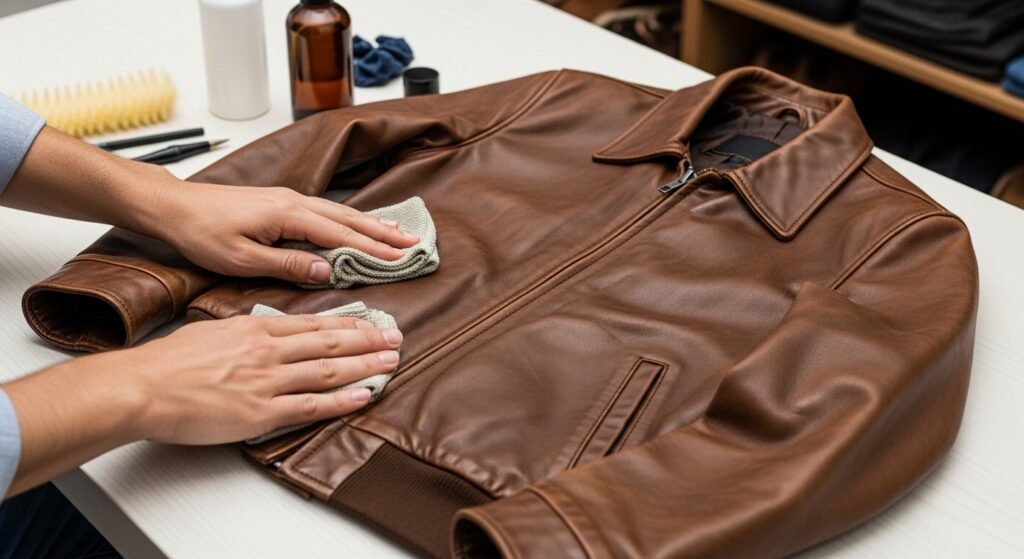
Surface Dirt and Dust Removal
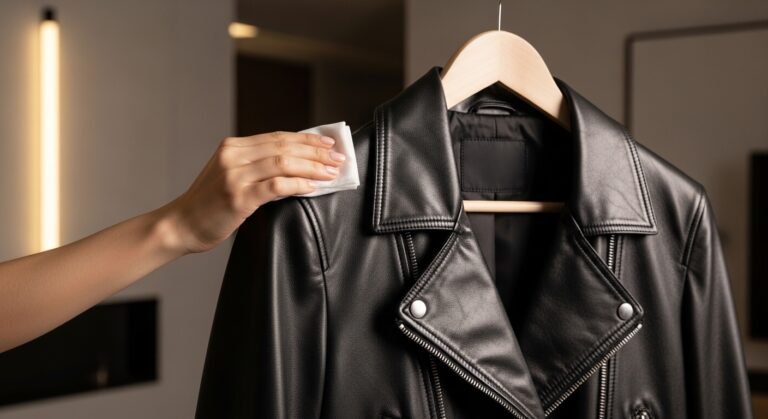
Begin with a soft, dry microfiber cloth and gently wipe down the entire surface of the jacket — inside and out. Pay close attention to collar areas, cuffs, pocket openings, and seam lines where debris accumulates. For stubborn surface grime, use a slightly dampened cloth with lukewarm water and a pH-neutral leather cleaner.
Avoid these common cleaning mistakes:
- Never use household detergents, dish soap, or alcohol-based products
- Never saturate leather with water — use minimal moisture
- Never scrub aggressively; use circular, light motions
Lining and Interior Care
The jacket’s interior lining — often polyester, silk, or cotton — also needs attention. Turn the jacket inside out where possible and spot-clean any sweat stains or odor-causing residues with a fabric-appropriate cleaner. Allow the lining to dry completely before proceeding.
Zipper and Hardware Maintenance
Metal zippers, buckles, and studs should be wiped clean of oxidation or grime. A small amount of zipper lubricant on metal teeth prevents corrosion during storage. Brass and silver-toned hardware can be polished lightly with a dry cloth to remove tarnish before storage.
Conditioning the Leather Before Long-Term Storage
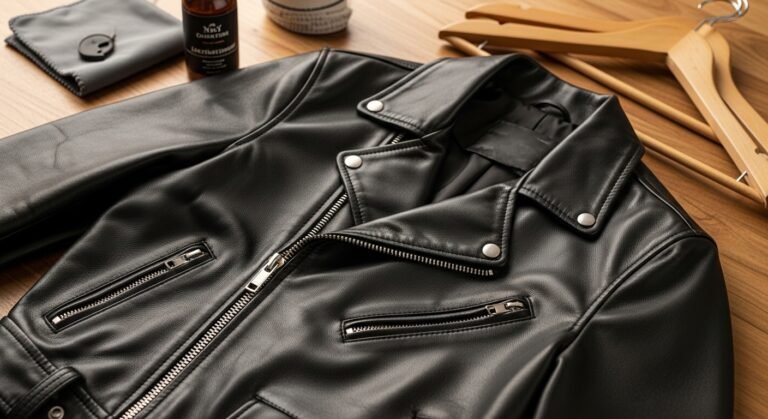
Once your jacket is clean and fully dry (never condition damp leather), apply a high-quality leather conditioner. Conditioning is the act of replenishing the natural oils and emollients within the leather’s fiber matrix — essentially moisturizing it before it faces months of a dry, enclosed environment.
According to leather care experts at the Leather Conservation Centre, regular conditioning with appropriate emulsified creams or wax-based conditioners significantly extends the service life of leather goods by maintaining fiber flexibility and preventing the micro-cracking that precedes visible surface cracking.
How to Apply Leather Conditioner
- Use a clean, soft applicator cloth or sponge
- Apply conditioner in small circular motions across the entire surface
- Allow it to absorb for 15–20 minutes
- Buff away excess with a dry cloth
- Let the jacket rest for at least 2 hours before storage
For full-grain and top-grain leathers, beeswax-based conditioners offer excellent long-term protection. For suede or nubuck, use a specialized suede protector spray rather than cream conditioner.
Choosing the Right Storage Location
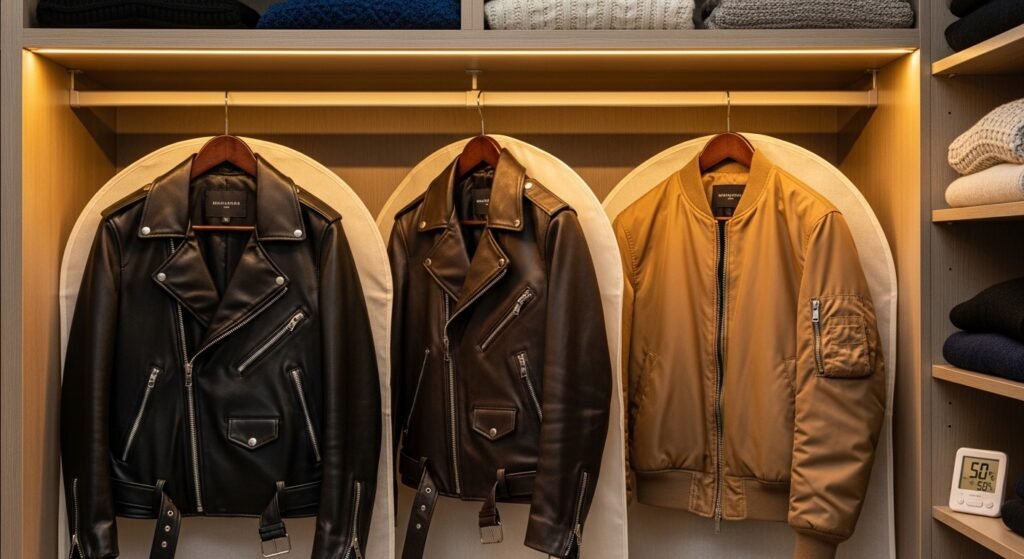
Location is everything when it comes to leather jacket winter storage. The ideal storage environment is:
- Cool (between 50°F–70°F / 10°C–21°C)
- Moderately humid (40%–55% relative humidity)
- Dark (away from UV light sources that fade and dry leather)
- Well-ventilated (with some air circulation to prevent anaerobic conditions)
- Away from heat sources (radiators, heating vents, pipes)
Bedroom Closets vs. Basement Storage
Many people default to basement or attic storage during winter cleanouts. For leather jackets, this is a significant mistake. Basements tend toward high humidity and cooler temperatures that encourage mold. Attics suffer extreme temperature swings and dryness.
The best location for winter leather storage is a bedroom closet on an interior wall — away from exterior walls that become cold, and away from direct heat vents. Interior closets maintain the most stable temperature and humidity levels in most homes.
If your home runs dry in winter (common with forced-air heating), consider placing a small humidifier nearby or including moisture-stabilizing packets inside the storage area.
Temperature and Humidity: The Two Biggest Threats
Understanding the relationship between temperature and relative humidity is central to proper leather jacket winter storage.
Too dry (below 35% RH): Leather loses its natural moisture, fibers contract and stiffen, surface begins to crack. This is accelerated by heated indoor air in winter.
Too humid (above 65% RH): Mold and mildew thrive, the leather surface develops a white or green bloom, and odor penetrates deep into fibers.
Monitoring Your Storage Environment
Invest in a small, inexpensive digital hygrometer to monitor the humidity of your storage area. These devices display both temperature and relative humidity and are available for under $15. Place one inside your closet and check it periodically throughout winter. If humidity drops below 40%, add a humidifying element. If it rises above 60%, improve ventilation or use a dehumidifier sachet.
How to Hang a Leather Jacket for Storage
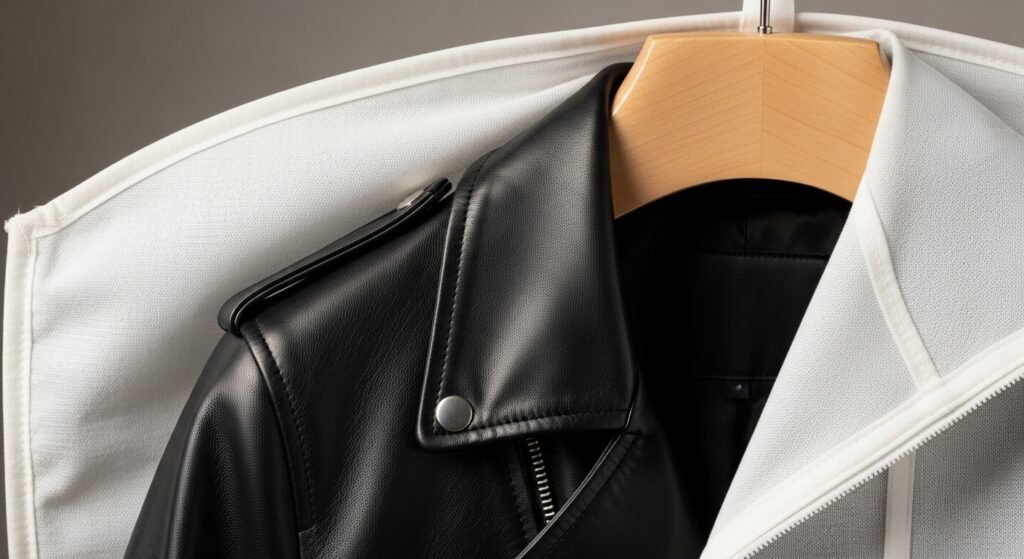
One of the most overlooked aspects of leather jacket storage is how the jacket is physically supported. Leather is heavy — especially thicker biker and moto styles — and improper hanging causes shoulder deformation, collar distortion, and permanent stretch marks around the hanger contact points.
The Right Hanger Makes All the Difference
Use a wide, contoured wooden hanger with rounded shoulder edges. The width of the hanger should closely match the natural shoulder span of the jacket. Thin wire hangers cause concentrated pressure points that, over months, permanently deform leather shoulders.
Padded hangers are an excellent alternative — the padding distributes weight more evenly and cushions the leather from hard contact.
Hanging Best Practices
- Hang the jacket zipped or buttoned to maintain the front panel’s natural alignment
- Leave ample space on either side — leather needs room to breathe and should not be compressed by neighboring garments
- Ensure the collar sits naturally; don’t fold or tuck it against the hanger
Using Breathable Garment Bags vs. Plastic Covers
The cover you choose for stored leather is critically important. Many people reach for the plastic dry-cleaning bags their clothes come home in — a convenient but damaging choice for leather.
Why Plastic is the Enemy of Stored Leather
Plastic bags trap moisture and prevent the air exchange that leather requires. Over weeks, moisture condenses inside plastic covers, creating a humid micro-environment perfect for mold growth. Additionally, certain plastics off-gas chemicals that can react with leather’s surface finish, causing discoloration and tackiness.
The Breathable Garment Bag Solution
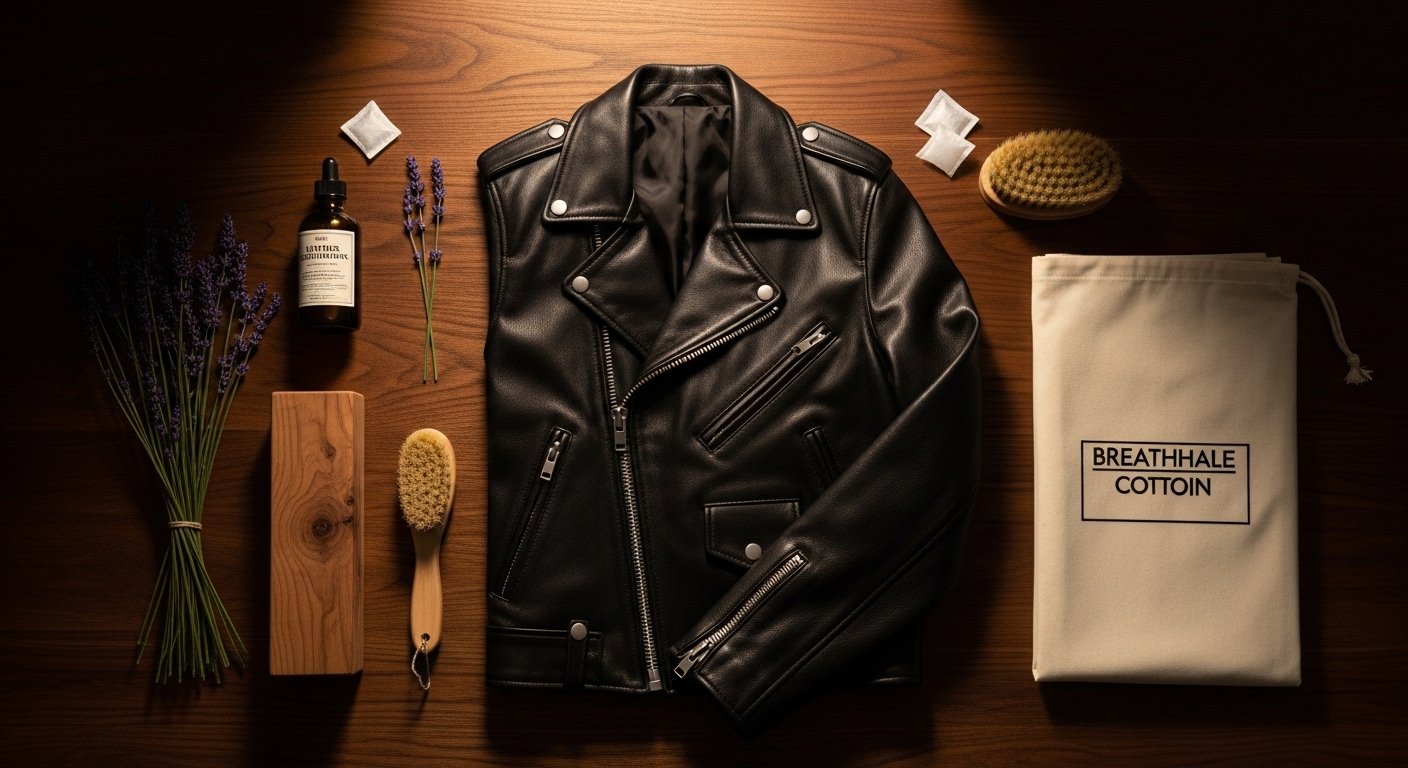
Always use a breathable fabric garment bag — cotton, muslin, or non-woven polypropylene — for leather jacket storage. These materials allow air circulation while protecting the jacket from dust, light, and insects. Look for bags with a full-length zipper and an interior hook loop that aligns with your hanger hook.
If you own a high-value jacket like a Jaketra Rider Luxury Black Leather Biker Jacket, investing in a premium cotton dust bag is particularly worthwhile — it’s inexpensive protection for an expensive investment.
Stuffing and Shape Retention Methods
Beyond hanging, the three-dimensional shape of a leather jacket needs active support during long storage periods. This is especially relevant for structured moto and biker jackets with defined lapels, chest panels, and sleeve silhouettes.
Sleeve and Body Stuffing
Lightly stuff the sleeves and body cavity with acid-free tissue paper or clean, unprinted white paper. Avoid newspapers (the ink can transfer to lighter leather interiors). The stuffing should be firm enough to hold its natural shape but not so packed that it stretches the leather outward.
This technique prevents:
- Sleeve creasing from folding under their own weight
- Collar collapse
- Front panel waviness from unsupported leather
Protecting Against Moths, Mold, and Mildew
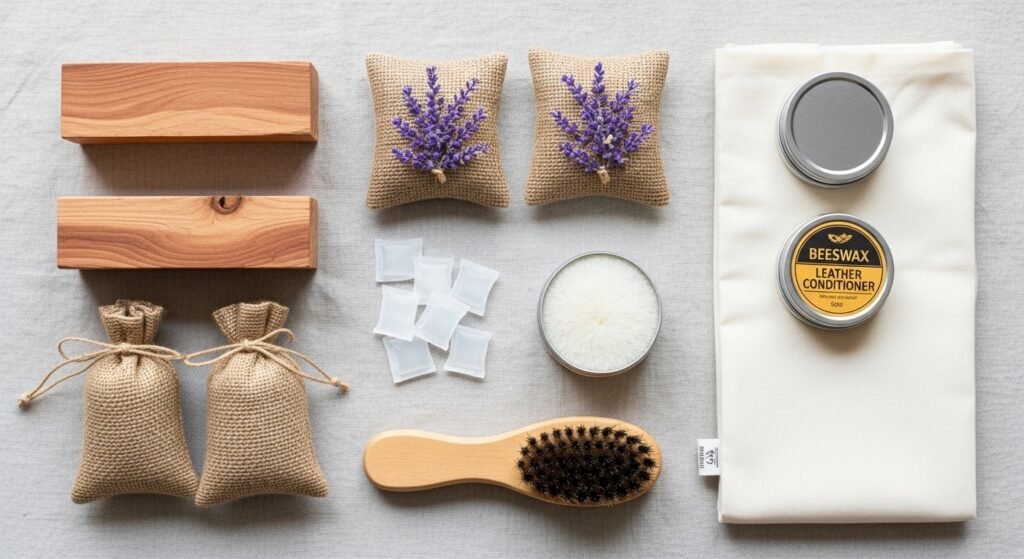
Cedar and Natural Repellents
Cedar wood is a time-tested natural moth repellent. Cedar blocks, balls, or hangers placed within the garment bag or closet area emit aromatic oils that deter moth larvae — the true culprit that damages textile linings and exposed leather edges. Refresh cedar blocks by lightly sanding them every season to reactivate the aromatic oils.
Lavender sachets serve a similar purpose and add a pleasant scent that helps neutralize any ambient mustiness in your storage area.
Silica Gel and Humidity Control
Small silica gel packets placed inside the garment bag absorb excess moisture and help maintain optimal humidity levels immediately around the jacket. Replace or regenerate these packets every few months.
Mold Prevention Protocol
If you live in a particularly humid climate, apply a light coat of mold-inhibiting leather conditioner with antimicrobial properties before storage. Ensure your jacket is completely dry before bagging — even residual surface moisture from cleaning can initiate mold growth during months of enclosed storage.
What to Avoid When Storing Leather Jackets
A quick reference of the most damaging storage habits:
- Folding the jacket creates permanent crease lines in the leather
- Storing in direct sunlight — UV radiation causes color fading and surface drying
- Using plastic covers — traps moisture, promotes mold
- Leaving it near heating vents — desiccates leather, causes cracking
- Storing in a damp basement or garage — high humidity causes mold and mildew
- Packing into suitcases or boxes — compression distorts shape and restricts airflow
- Using mothballs — the chemicals in traditional mothballs can damage the leather surface finish and leave a persistent odor
- Skipping conditioning — dry leather entering a dry winter storage environment will emerge significantly more cracked
Reviving Your Leather Jacket After Winter Storage
When spring arrives, and you retrieve your jacket, it will need a revival routine before wear.
- Remove from the bag and allow it to air out for 24–48 hours in a well-ventilated room
- Inspect for any mold spots — treat immediately with a diluted white vinegar solution on a cloth, then recondition
- Apply a fresh coat of leather conditioner to restore any moisture lost during storage
- Buff hardware to restore shine
- Check seams and stitching for any stress points that may have developed
- Hang in natural light briefly (not direct sunlight) to let the leather naturally warm up and regain suppleness
Special Considerations for Different Leather Types
Full-Grain Leather
The most durable and premium grade. Responds well to wax-based conditioners and requires less frequent intervention. Age and storage marks often contribute to patina rather than detracting from appearance.
Top-Grain Leather
Slightly more processed surface. Responds well to cream conditioners. More uniform in appearance, so storage damage (scratches, discoloration) tends to be more visible.
Suede and Nubuck
The most delicate storage candidates. Must be brushed with a suede brush before storage. Protected with suede spray rather than cream conditioner. Particularly vulnerable to moisture damage — silica gel packets are essential.
Bonded Leather
A manufactured material that layers leather fibers onto a backing. Much more prone to peeling and cracking than full-grain leather, especially after months in dry storage. Condition generously and store with extra care.
FAQs About Winter Leather Jacket Storage
Q: Can I store a leather jacket in a vacuum-sealed bag? No. Vacuum sealing removes all air, but leather needs some air circulation. Vacuum bags also compress the jacket, causing permanent crease lines and distorting the shape.
Q: How often should I condition leather before storage? Once before storage is typically sufficient for seasonal storage (3–6 months). For longer storage periods, consider mid-storage conditioning if possible.
Q: Is it okay to store leather in a cedar-lined closet? Yes — cedar-lined closets are actually ideal. They naturally regulate humidity and deter insects.
Q: My jacket has a slight musty smell — is that fixable? Yes. Air it out for 48 hours, then wipe with a diluted white vinegar solution, allow to dry fully, and apply conditioner. A baking soda sachet placed near (not touching) the jacket for 24 hours can also absorb residual odor.
Q: Can I store my leather jacket in a garment box instead of hanging it? Only if the box is large enough that the jacket can lie completely flat without being folded or compressed. Hanging is always preferred.