
SUMMARY
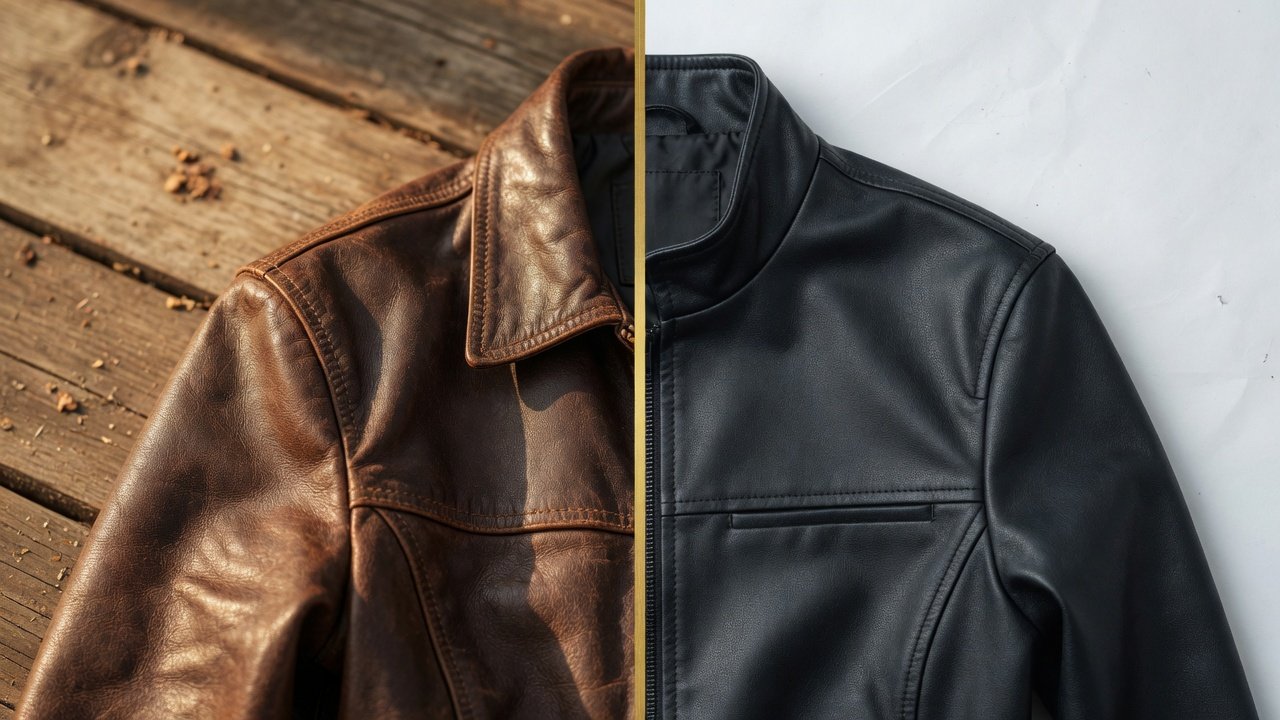
This article provides an exhaustive, semantically rich comparison between faux leather and genuine leather jackets. It explores durability, sustainability, aesthetics, cost, maintenance, ethical considerations, and long-term value — helping readers make an informed purchasing decision. Whether you’re a first-time buyer or a seasoned jacket collector, this guide breaks down every critical dimension using real-world insights and expert-backed information.
Table of Content
- Introduction: The Great Leather Debate
- What Is Real Leather? Understanding the Material
- What Is Faux Leather? Breaking Down the Alternatives
- Faux Leather vs Real Leather: Key Differences at a Glance
- Durability and Longevity — Which Lasts Longer?
- Aesthetics and Texture — How Do They Look and Feel?
- Cost Comparison — Budget-Friendly vs Premium Investment
- Comfort and Wearability
- Ethical and Environmental Considerations
- Maintenance and Care
- Weather Resistance and Seasonal Suitability
- Resale Value and Long-Term Investment
- Who Should Choose What? Buyer Personas
- Verdict: Faux Leather or Real Leather Jacket?
Faux Leather vs Real Leather Jacket: Pros, Cons, and Everything You Need to Know
Choosing between a faux leather and a real leather jacket is rarely as simple as picking the cheaper option. It’s a decision that intersects personal values, lifestyle requirements, budget constraints, and long-term fashion goals. With the global leather goods market evolving rapidly — and synthetic alternatives becoming increasingly sophisticated — this comparison is more relevant today than ever before.
This in-depth guide examines both materials through multiple lenses: durability, aesthetics, environmental impact, cost-per-wear value, and ethical considerations. Whether you’re searching for the best leather jacket for men, a vegan leather jacket for women, or simply trying to understand the difference between PU leather and genuine leather, this article covers it all.
What Is Real Leather? Understanding the Material
Real leather — also called genuine leather, full-grain leather, or natural leather — is derived from animal hides, most commonly cattle, although lamb, goat, pig, and exotic animals are also used. The hide goes through a complex tanning process that can be vegetable-based (using organic tannins from tree bark) or chrome-based (using chromium salts for faster processing).
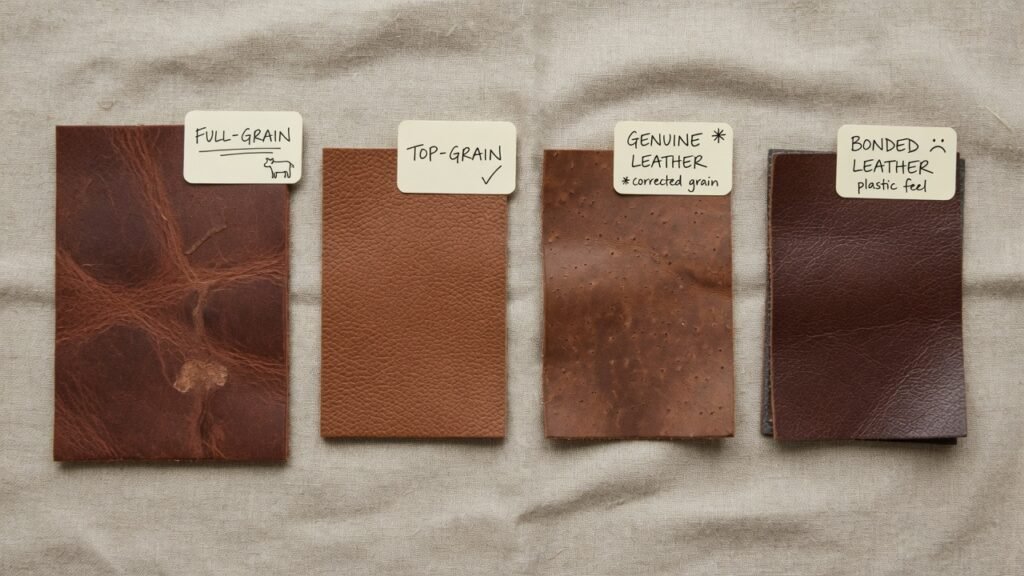
Within the category of real leather itself, there is a significant quality hierarchy:
Full-grain leather sits at the top. It retains the entire grain layer of the hide, including all natural markings and imperfections. This type develops a beautiful patina over time — a hallmark of aging gracefully.
Top-grain leather is the second-highest quality. The surface is sanded to remove blemishes, resulting in a more uniform appearance, but it sacrifices some of the durability and character of full-grain.
Genuine leather (despite the authoritative-sounding name) is actually a lower-tier product made from leftover hide layers bonded together. It’s often used in budget leather goods and deteriorates faster than full or top-grain options.
Bonded leather is at the bottom — essentially a composite of leather scraps and synthetic binders. It peels and cracks within a few years.
Understanding this hierarchy is essential because when people debate “real leather vs faux leather,” they’re not always comparing like-for-like. A high-quality PU faux leather jacket may actually outlast a bonded leather one.
What Is Faux Leather? Breaking Down the Alternatives
Faux leather — also known as vegan leather, synthetic leather, pleather, PU leather, or artificial leather — is a man-made material engineered to replicate the look and feel of animal hide. The two most common types are:
Polyurethane (PU) Leather: The most widely used synthetic leather today. PU leather is flexible, relatively breathable compared to older synthetics, and can be made to mimic various leather textures convincingly. Modern PU leather has improved dramatically in quality, durability, and tactile feel.
Polyvinyl Chloride (PVC) Leather: An older and cheaper synthetic, PVC leather is stiffer, less breathable, and less environmentally favorable due to toxic chlorine-based manufacturing. It is largely being phased out in favor of PU in quality fashion products.
Emerging sustainable alternatives are also disrupting the market:
- Piñatex: Made from pineapple leaf fibers, a byproduct of the pineapple harvest.
- Mylo (mushroom leather): Derived from mycelium, the root structure of fungi.
- Apple leather: Crafted from apple industry waste (cores and peels).
- Cactus leather: A sustainable material from nopal cactus, requiring minimal water.
These bio-based leathers represent the next frontier of sustainable fashion and are increasingly used by luxury brands looking to offer cruelty-free alternatives without compromising on aesthetics.
Faux Leather vs Real Leather: Key Differences at a Glance
| Feature | Real Leather | Faux Leather |
| Source | Animal hide | Synthetic / plant-based |
| Durability | 20–50+ years (quality dependent) | 2–10 years |
| Cost | $150–$5,000+ | $20–$400 |
| Breathability | High | Low to moderate |
| Environmental Impact | Water-intensive, chemical tanning | Petroleum-based (PU/PVC) |
| Ethical Stance | Animal product | Vegan/cruelty-free |
| Aging | Develops patina, improves with age | Peels, cracks over time |
| Maintenance | Regular conditioning needed | Easier to clean, less conditioning |
| Weight | Heavier | Lighter |
| Resale Value | Retains value well | Minimal resale value |
Durability and Longevity — Which Lasts Longer?
This is arguably the most decisive factor for most buyers, and the answer is nuanced.
A high-quality full-grain or top-grain leather jacket, when properly maintained, can last decades. Heritage leather jacket brands often carry the tagline “buy once, wear forever” — and for good reason. With appropriate conditioning and storage, a quality leather jacket becomes a generational heirloom. The natural fibers in genuine leather have tensile strength and flexibility that synthetic materials struggle to replicate.
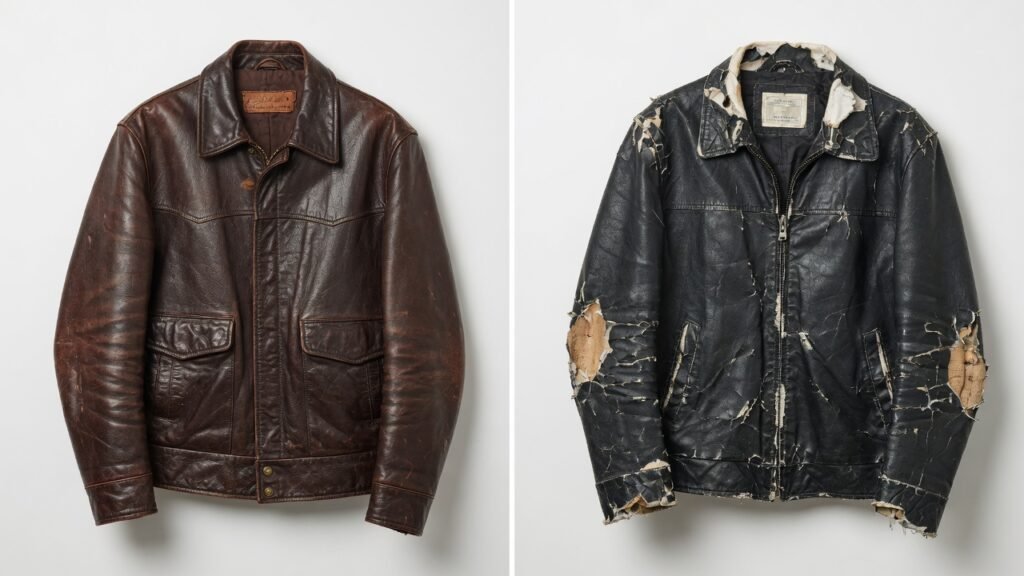
Faux leather jackets, even premium PU variants, have a fundamentally different aging trajectory. The plastic-polymer base begins to degrade through a process called hydrolysis — breakdown caused by moisture, heat, and flexing over time. This leads to the characteristic peeling, flaking, and cracking that most people have experienced with pleather products. The average lifespan of a mid-range PU leather jacket is 2–5 years under regular use, though high-end versions can stretch to 8–10 years with careful care.
That said, durability isn’t just about time — it’s about value per use. A $50 faux leather jacket replaced every 3 years costs far more over a decade than a $400 genuine leather jacket maintained properly.
Verdict on Durability: Real leather wins decisively for long-term wearers. Faux leather suits those who prefer seasonal fashion cycles or have budget constraints.
Aesthetics and Texture — How Do They Look and Feel?
The tactile and visual experience of real leather is difficult to replicate. Genuine leather has a warmth, depth, and organic irregularity that synthetic materials can approximate but rarely match. The natural grain patterns, subtle variations in texture, and the way light plays across the surface give real leather an unmistakable richness.
Real leather also breathes. The porous nature of the hide allows air circulation, which keeps the wearer more comfortable across seasons and reduces the clammy feeling associated with synthetics.
Faux leather, particularly lower-quality variants, often has a plasticky sheen, uniform texture, and a slight stiffness that experienced eyes can detect immediately. However, modern high-end PU leather jackets — especially those with embossed grain textures and matte finishes — have closed the gap considerably. At a glance, many people cannot distinguish between a quality faux leather jacket and a genuine one.
The key aesthetic differentiator emerges over time: real leather develops a patina — a deepening of color, softening of texture, and accumulation of character marks that make each jacket uniquely personal. Faux leather, by contrast, doesn’t mature — it simply wears out.
Cost Comparison — Budget-Friendly vs Premium Investment
The price gap between faux and genuine leather jackets is vast and spans multiple tiers:
Faux Leather Jacket Price Range:
- Budget tier: $20–$80 (fast fashion, PVC-based, short lifespan)
- Mid-range: $80–$250 (PU leather, decent construction, 3–5 year lifespan)
- Premium synthetic: $250–$500 (high-quality PU, designer brands, sustainable alternatives)
Real Leather Jacket Price Range:
- Entry-level genuine leather: $150–$350 (bonded or split leather, basic construction)
- Mid-range: $350–$800 (top-grain leather, quality hardware, good craftsmanship)
- Premium/luxury: $800–$5,000+ (full-grain, artisan construction, heritage brands)
The cost-per-wear calculation fundamentally changes the value proposition. A $600 full-grain leather jacket worn 100 times per year for 20 years costs just $0.30 per wear. A $200 faux leather jacket lasting 4 years and worn 80 times per year costs $0.62 per wear — more than double, despite the lower sticker price.
For budget-conscious shoppers or those new to leather jackets who want to test the style before committing, faux leather provides a low-risk entry. For those making a wardrobe investment, genuine leather offers superior long-term value.
Comfort and Wearability
Comfort is a multidimensional consideration that extends beyond texture.
Breathability: Real leather is significantly more breathable than synthetic alternatives. Its natural pores allow moisture and heat to escape, making it more comfortable across a wider temperature range. Faux leather, being polymer-based, traps heat and moisture, which can cause discomfort during physical activity or warmer weather.
Weight: Genuine leather jackets are heavier than faux leather. For some, this weight provides a satisfying, substantial feel. For others — particularly those with back issues or those who prefer lightweight outerwear — faux leather’s lightness is a genuine advantage.
Break-in Period: Real leather requires a break-in period. A brand-new genuine leather jacket can feel stiff and structured; with wear, it molds to your body and becomes increasingly comfortable. Faux leather is typically softer out of the box, but doesn’t improve in the same way — it simply wears down.
Fit and Structure: Quality leather jackets often have better structural integrity due to the natural properties of hide, holding their shape even after years of wear. Faux leather can lose its shape more easily, particularly around the collar, cuffs, and shoulders.
Ethical and Environmental Considerations
This is where the conversation becomes most complex — and where personal values weigh heavily in the decision.
Real Leather’s Environmental Footprint: The leather industry is associated with significant environmental concerns. Cattle farming contributes to greenhouse gas emissions, deforestation, and water consumption. Traditional chrome tanning uses hazardous chemicals, with poorly regulated tanneries causing severe water pollution in developing countries. However, vegetable-tanned leather from ethically managed farms presents a significantly lower environmental burden.
Faux Leather’s Environmental Footprint: PU and PVC leather are petroleum-derived products. Their manufacturing process involves fossil fuels and releases volatile organic compounds (VOCs). While they avoid the direct animal welfare issue, they are not biodegradable, contributing to plastic pollution and microplastic shedding in waterways.
The emerging plant-based leathers (mycelium, cactus, pineapple) represent the most environmentally favorable option, combining cruelty-free ethics with biodegradable or low-impact production.
For a balanced perspective on sustainable textile practices, the Sustainable Apparel Coalition’s Higg Index provides standardized environmental impact measurements across material types — a valuable resource for eco-conscious consumers evaluating their options.
Animal Welfare: For those committed to veganism or animal-rights principles, faux leather is the clear choice regardless of environmental trade-offs.
Maintenance and Care
Proper care dramatically affects the lifespan and appearance of both leather types.
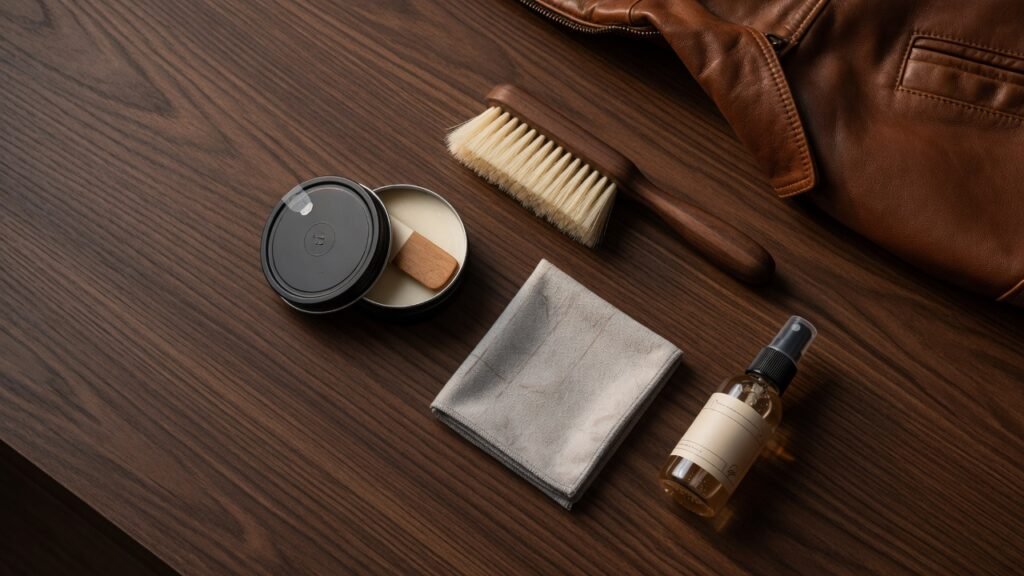
Real Leather Care: Genuine leather requires regular conditioning with a quality leather conditioner to prevent drying and cracking. It should be kept away from prolonged direct sunlight and extreme heat, stored with cedar or breathable covers to prevent mold, and treated with water-repellent spray for rain protection. Knowing how to properly Clean a Leather Jacket is essential — most real leather jackets should be professionally cleaned or carefully spot-cleaned rather than machine-washed, and conditioning should be done every 3–6 months, depending on usage and climate.
Faux Leather Care: Synthetic leather is considerably lower-maintenance. It can typically be wiped clean with a damp cloth, is resistant to water staining, and doesn’t require conditioning oils. However, it should still be kept away from sharp objects (which cause irreparable peeling), excessive heat (which accelerates polymer breakdown), and harsh chemical cleaners.
The maintenance advantage clearly goes to faux leather for those with busy lifestyles or those unwilling to invest time in upkeep.
Weather Resistance and Seasonal Suitability
Real Leather: Genuine leather provides excellent wind resistance and a moderate level of water resistance, though it is not waterproof and can be damaged by prolonged saturation. With a quality water-repellent treatment, it handles light rain well. Real leather also has natural insulating properties that make it well-suited for cooler seasons — typically fall through early spring.
Faux Leather: Synthetic leather is inherently more water-resistant due to its non-porous polymer surface. However, it offers less insulation and can feel clammy in humid conditions. Its temperature regulation is poor — it traps heat in summer and provides minimal insulation in winter without a lining.
For four-season versatility, a lined genuine leather jacket with appropriate treatment generally outperforms faux leather in real-world weather conditions.
Resale Value and Long-Term Investment
The secondary market for leather jackets reveals a stark contrast.
Real Leather: Quality leather jackets — particularly from heritage brands like Schott NYC, Belstaff, A-2 flight jackets, and Perfecto-style moto jackets — hold and sometimes appreciate in resale value. Vintage genuine leather jackets in good condition regularly command prices equal to or exceeding their original retail price on platforms like eBay, Vestiaire Collective, and Grailed.
Faux Leather: Synthetic leather jackets have essentially zero meaningful resale value. The material degradation that occurs over the years makes them unsellable on the secondary market in most cases. They are consumable fashion items, not investable wardrobe pieces.
For those who view clothing as part of a circular economy — buying, maintaining, and eventually reselling quality pieces — genuine leather is the logical choice.
Who Should Choose What? Buyer Personas
Choose Faux Leather If You:
- Follow a vegan or cruelty-free lifestyle
- Are experimenting with the leather jacket aesthetic for the first time
- Have a limited budget of under $150
- Prefer lighter-weight outerwear
- Live in a warmer climate and need a casual-cool aesthetic layer
- Prefer low-maintenance clothing care routines
- Cycle through fashion trends frequently
Choose Real Leather If You:
- Are you making a long-term wardrobe investment
- Value craftsmanship, heritage, and material authenticity
- Want a jacket that improves and personalizes with age
- Prioritize breathability and all-season comfort
- Are interested in resale or inheritance value
- Are willing to invest time in proper care and maintenance
- Prefer sustainable investment over fast fashion cycles
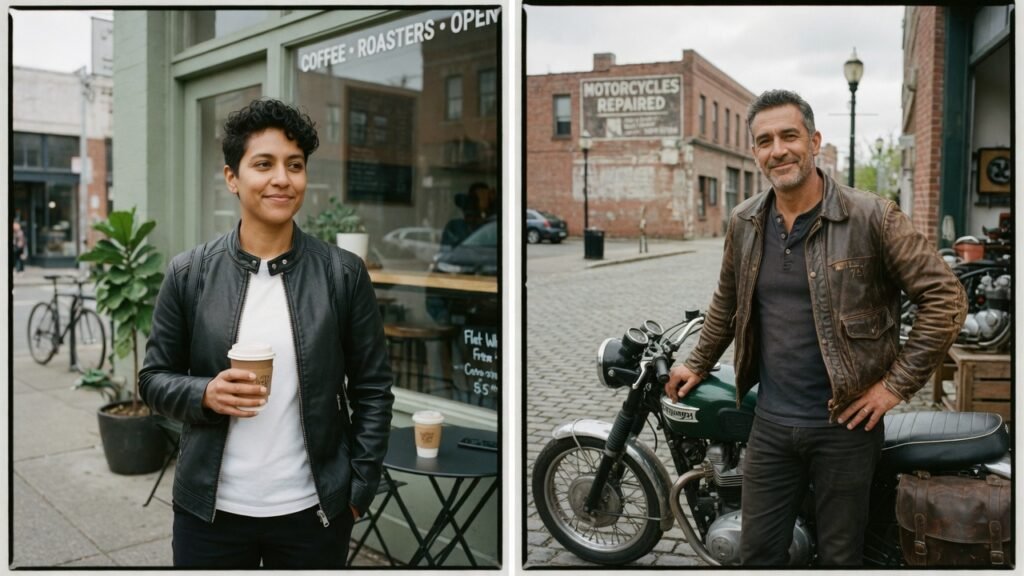
Verdict: Faux Leather or Real Leather Jacket?
Neither material is universally superior — the right choice depends entirely on your priorities.
If you prioritize longevity, character, breathability, resale value, and wearable investment, a quality genuine leather jacket — full-grain or top-grain — is one of the most cost-effective and rewarding clothing purchases you can make. Treat it well, condition it regularly, and it will outlast most other items in your wardrobe by decades.
If you prioritize ethics, affordability, lightweight comfort, low maintenance, or fashion flexibility, a quality PU faux leather jacket — or an emerging plant-based alternative — delivers excellent style value without the ethical or financial commitment of genuine leather.
The most exciting development in this space is the rapid evolution of sustainable bio-based leathers. As materials like mycelium leather and cactus leather scale commercially, they may well render the traditional faux vs real debate obsolete — offering cruelty-free, biodegradable, beautiful, and durable alternatives that satisfy both sides of the argument.
Whatever you choose, buy the best quality your budget allows, care for it properly, and wear it with intention. A great jacket — real or faux — is always more than just outerwear. It’s an expression of personal identity.
