Summary
Leather jacket maintenance is one of the most searched yet least understood topics in fashion care. Many jacket owners either over-clean their leather — stripping it of its natural oils — or neglect it entirely until cracking, fading, or odor sets in. This in-depth guide covers everything you need to know: how often to clean a leather jacket based on its type and use frequency, the best leather care products, spot-cleaning techniques, deep-cleaning methods, conditioning schedules, proper storage practices, and seasonal care routines. Whether you own a classic biker jacket, a sleek moto-style piece, or a tailored leather blazer, this article gives you a science-backed, practical leather care calendar to keep your investment looking its best for decades.
Table of Content
- Introduction: Why Leather Cleaning Frequency Matters
- Understanding Leather Types and Their Cleaning Needs
- How Often Should You Clean a Leather Jacket? (The Definitive Schedule)
- Signs Your Leather Jacket Needs Cleaning Now
- Spot Cleaning vs. Deep Cleaning: What’s the Difference?
- How to Clean a Leather Jacket Step-by-Step
- How Often Should You Condition a Leather Jacket?
- Seasonal Leather Care Routine
- Common Leather Cleaning Mistakes to Avoid
- Storage Tips That Reduce How Often You Need to Deep Clean
- When to Take Your Leather Jacket to a Professional
- FAQs About Leather Jacket Cleaning Frequency
- Conclusion
Why Leather Jacket Cleaning Frequency Matters
A leather jacket is more than a garment — it is an investment, a statement, and in many cases a piece that can last a lifetime if cared for correctly. Yet one of the most common questions among leather jacket owners is deceptively simple: how often should you clean a leather jacket?
The answer depends on several interconnected factors: the type of leather, how frequently you wear it, the environments you expose it to, and whether you are doing routine surface maintenance or a full deep clean. Unlike cotton or synthetic fabrics, leather is a natural, porous material derived from animal hide. It breathes, absorbs moisture, accumulates body oils, and responds to temperature changes. This means that the wrong cleaning frequency — or the wrong method — can do more harm than good.
Over-cleaning leather removes the protective oils embedded in its fibers, leading to dryness, cracking, and premature aging. Under-cleaning allows dirt, salt, body sweat, and environmental pollutants to build up in the pores, dulling the finish, breaking down the material, and causing permanent discoloration. Getting the frequency right is the single most impactful thing you can do for the longevity of your leather jacket.
Understanding Leather Types and Their Cleaning Needs
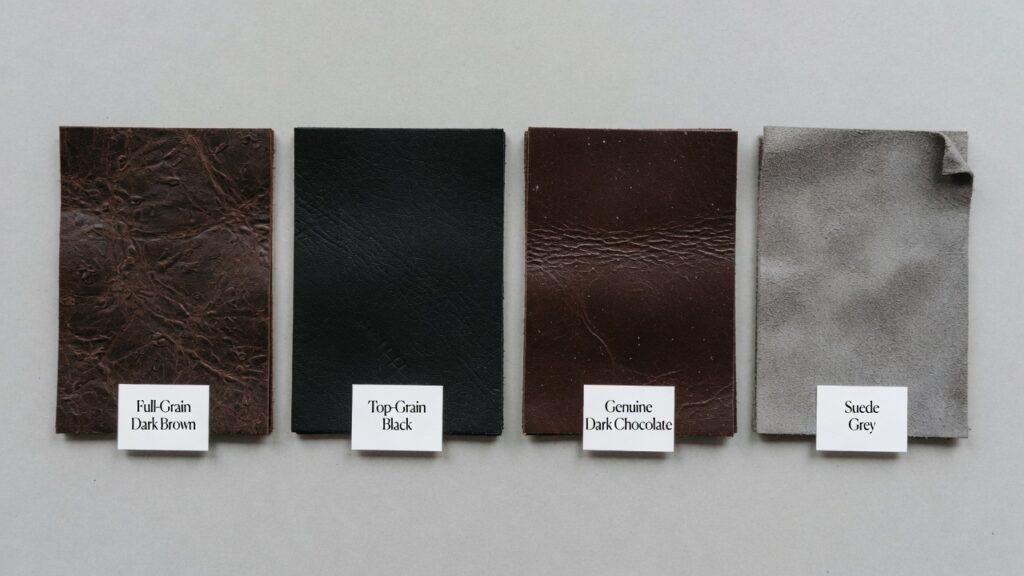
Before establishing a cleaning schedule, it is essential to identify what type of leather your jacket is made from. Different leather types have different porosity levels, surface coatings, and sensitivities to moisture and cleaning agents.
Full-Grain Leather
Full-grain leather is the highest quality type, using the outermost layer of the hide with all natural grain intact. It is dense, durable, and develops a beautiful patina over time. Because it is less processed, it can be more sensitive to harsh cleaners. It requires gentle, infrequent deep cleaning (once or twice a year) but benefits from monthly conditioning.
Top-Grain Leather
Top-grain leather is sanded and buffed to remove imperfections, then given a surface coating. It is the most common type found in mid-to-high-end leather jackets. The coating makes it slightly more resistant to moisture and stains, making spot cleaning easier. Deep cleaning once every six to twelve months is generally appropriate.
Genuine Leather
Often found in budget leather jackets, genuine leather is the lower layers of the hide bonded together. It is more prone to peeling and cracking. It requires more careful cleaning — less water, gentler products — and benefits from conditioning every four to six weeks.
Suede and Nubuck
Suede and nubuck are the brushed inner surfaces of the hide. They are the most delicate of all leather types and require entirely different care tools (suede brushes, suede erasers, no water-based cleaners). Deep cleaning should only be done by a professional.
Lambskin Leather
Lambskin is buttery-soft and lightweight, making it highly desirable for fashion jackets. It is also the most delicate full-leather type. Avoid any harsh rubbing or excessive moisture. Spot clean gently as needed and deep clean no more than once a year.
How Often Should You Clean a Leather Jacket?
This is the core question, and the answer is structured around three tiers of cleaning: surface wiping, spot cleaning, and deep cleaning.
Surface Wiping: After Every Wear
After each wear, wipe your leather jacket gently with a dry or slightly damp soft microfiber cloth. This removes surface dust, light debris, and any perspiration that has migrated to the exterior. This takes thirty seconds and is the single highest-impact habit for keeping your jacket in excellent condition. Let it air dry naturally — never near a heat source — for fifteen to twenty minutes before storing it.
Spot Cleaning: As Needed (But Promptly)
Spot cleaning should be done immediately whenever a spill, stain, or concentrated dirt occurs. The longer a stain sits on leather, the deeper it penetrates the pores. Use a leather-specific cleaning solution on a soft cloth and dab — never rub — the affected area. For oil-based stains, a small amount of cornstarch left on the spot overnight can absorb excess oil before you apply any cleaner.
General spot cleaning frequency: whenever a spill or visible stain occurs — ideally within the first few hours.
Deep Cleaning: Two Times Per Year
For most leather jacket owners who wear their jacket regularly (two to four times per week), a thorough deep clean twice a year is the recommended standard. The ideal times are:
- Spring (March–April): After winter’s salt exposure, cold air, and heavy layering
- Fall (September–October): Before storing for the warmer months, or before entering heavy winter use
If you wear your jacket only occasionally (once a week or less), once per year may be sufficient. If you wear it daily, especially in urban environments with pollution, sweat, and frequent temperature changes, you may benefit from a light deep clean every four months.
Conditioning: Every Three to Six Months
Conditioning is not the same as cleaning. A leather conditioner replenishes the natural oils that keep leather supple, preventing dryness and cracking. Even if your jacket doesn’t look dirty, it can be drying out. Condition at minimum twice per year — ideally at the same time as your deep cleans — and more frequently if you live in a dry or cold climate.
Signs Your Leather Jacket Needs Cleaning Now
Rather than following a rigid calendar, learn to read the signals your leather jacket sends. Here are the most important indicators that cleaning is overdue:
Visual signs:
- A dull, flat finish that lacks its original luster
- Visible dirt build-up along the collar, cuffs, or pockets
- Salt stains or white residue (common after winter wear)
- Discoloration or uneven patches in the leather surface
- Transfer of dye or color onto light-colored clothing
Tactile signs:
- The leather feels stiff, dry, or brittle — especially along fold lines at the elbows
- The surface feels tacky or slightly sticky
- Cracking has begun to appear (this indicates conditioning is urgently needed)
Olfactory signs:
- A sour or musty odor embedded in the jacket (often from sweat or improper storage)
- A chemical or mildew smell, which may indicate moisture damage
If your jacket shows fading or color loss, this is a separate but related concern. You can learn more about restoring discolored leather in this guide on how to Fix Faded Leather Jacket Color.
Spot Cleaning vs. Deep Cleaning: What’s the Difference?
Understanding this distinction prevents one of the most common leather care mistakes: treating every minor blemish as a reason for a full deep clean.
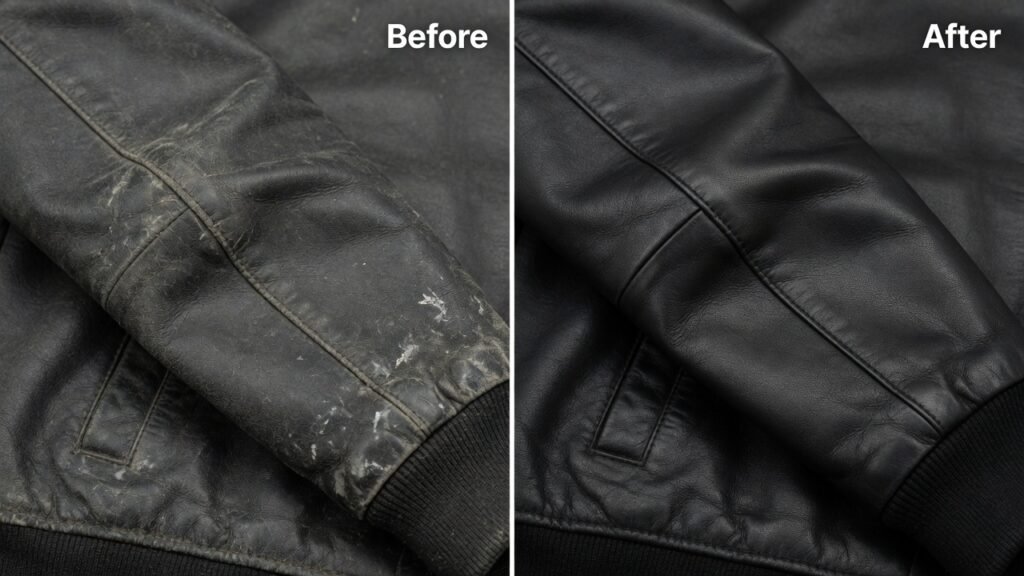
Spot cleaning targets a specific, isolated area. You apply a small amount of cleaner only where needed, blot the area, and let it dry. This is minimally invasive and does not significantly affect the surrounding leather’s oils or finish.
Deep cleaning treats the entire surface of the jacket — front, back, sleeves, collar, and lining. It removes accumulated grime, body oil, environmental pollutants, and stale odors from the whole garment. Because it involves more moisture and agitation, it also requires conditioning afterward to restore the leather’s oil balance.
The rule: spot clean reactively (as needed), deep clean proactively (on a schedule).
How to Clean a Leather Jacket Step-by-Step
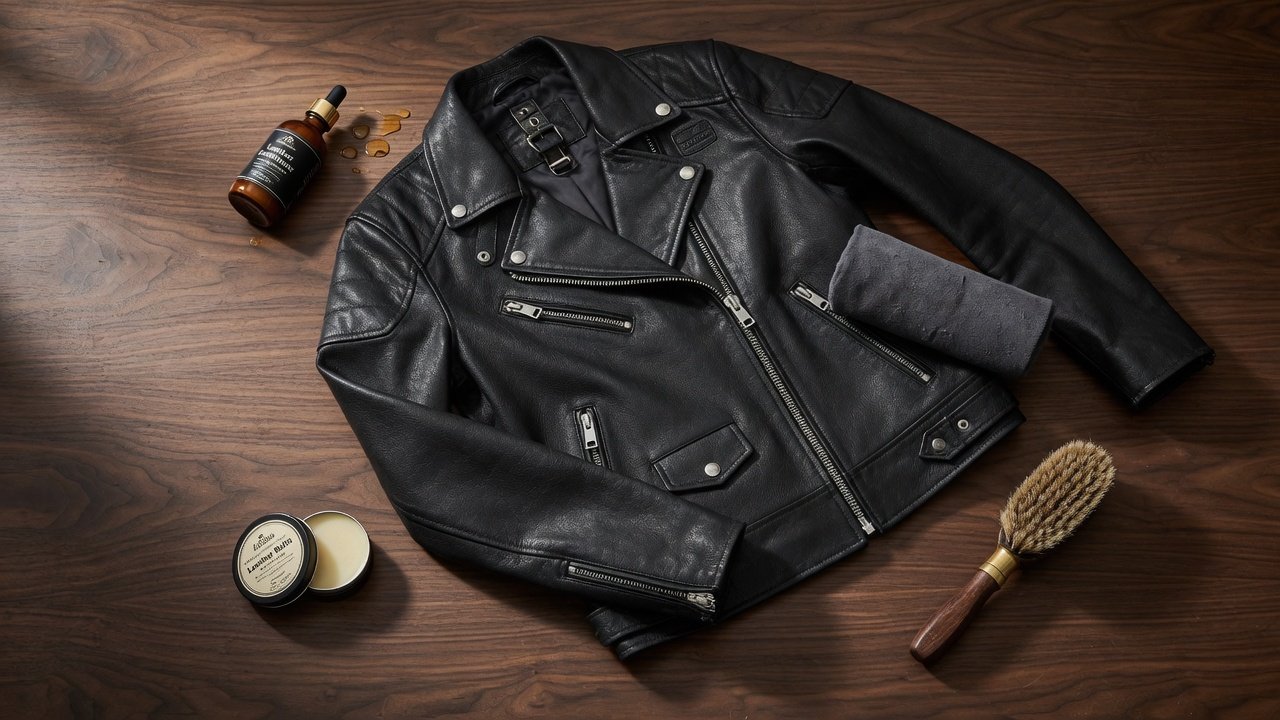
What You Will Need
- Soft microfiber cloths (at least two — one for cleaning, one for buffing)
- Leather-specific cleaner (pH-balanced formula)
- Leather conditioner
- Soft-bristle brush (for seams and crevices)
- Warm water (not hot)
- Mild, unscented soap (as a backup for surface cleaning)
Step 1: Check the Care Label
Before applying anything, check the manufacturer’s care instructions inside the jacket. Some leathers have specific restrictions on cleaning agents or water exposure.
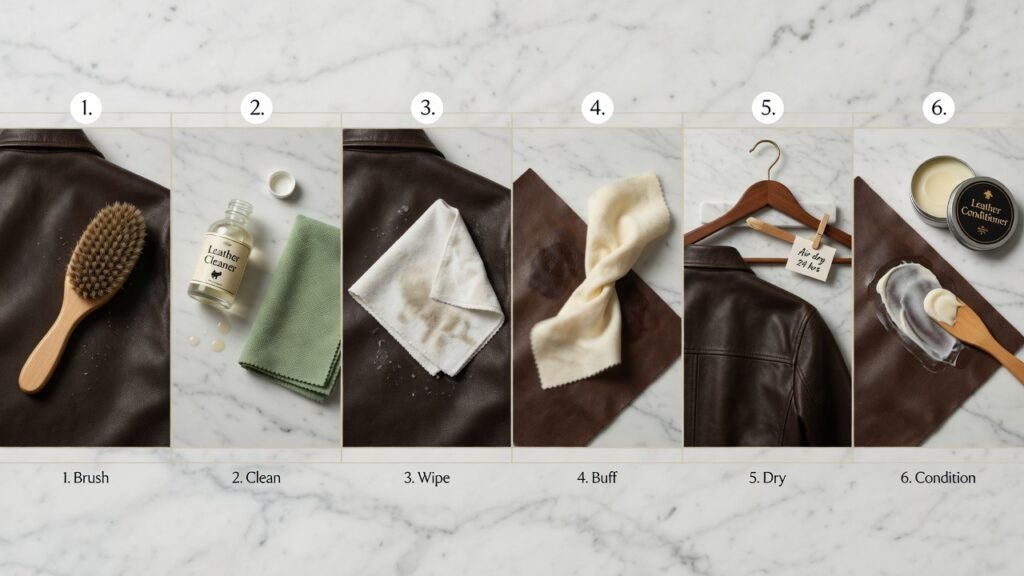
Step 2: Dust and Brush
Use the soft-bristle brush to loosen any surface dust from seams, pockets, and the collar. Follow with a dry microfiber cloth and wipe across the full surface.
Step 3: Apply Leather Cleaner
Apply a small amount of leather cleaner to a damp microfiber cloth — not directly to the jacket. Work in small circular sections, moving methodically from collar to hem. Use light pressure; do not scrub.
Step 4: Address Problem Areas
Give extra attention to the collar (which collects skin oils and makeup), the cuffs (which pick up dirt and sweat), and the underarm zones (which absorb the most perspiration).
Step 5: Wipe Off Residue
Using a clean, dry cloth, wipe away any cleaner residue in the same circular motion. Ensure no cleaner is left sitting in seams or pores.
Step 6: Allow to Dry Naturally
Hang the jacket on a padded hanger and allow it to air dry completely at room temperature. This may take one to two hours. Never use a hair dryer, radiator, or direct sunlight to speed up drying — heat is the primary enemy of leather.
Step 7: Apply Conditioner
Once completely dry, apply leather conditioner using a fresh cloth. Work it gently into the surface in circular motions. Pay extra attention to crease-prone areas like elbows and shoulders. Allow the conditioner to absorb for fifteen to twenty minutes, then buff with a clean dry cloth.
How Often Should You Condition a Leather Jacket?
Conditioning frequency depends on your climate and how often you wear the jacket:
- Arid or cold climates: Every two to three months. Dry air strips moisture from leather much faster.
- Temperate climates with regular wear: Every three to four months.
- Humid climates: Every four to six months. Excessive conditioning in humid environments can promote mold growth.
- Infrequent wearers: At a minimum twice per year, regardless of climate.
A simple test: press your thumb onto the leather surface for five seconds. If the leather feels noticeably warmer and slightly soft after you lift your thumb, moisture levels are acceptable. If it feels hard, cool, and stiff, it is time to condition.
According to the Leather Conservation Centre, regular conditioning is the most important preventive care step for extending the life of leather garments, as it maintains the fiber structure integrity and prevents the micro-cracking that leads to irreversible damage. Learn more about leather care best practices at the Leather Conservation Centre.
Seasonal Leather Care Routine
Spring Cleaning (March–April)
Winter is harsh on leather — road salt, freezing temperatures, and indoor heating all extract moisture from the material. In spring, do a full deep clean, then condition generously. Check for any salt staining and treat immediately with a damp cloth and leather cleaner before conditioning over the area.
Summer Storage (May–August)
If you are putting the jacket away for the summer, clean and condition it first. Store in a breathable cotton garment bag — never plastic, which traps moisture and promotes mold. Use a padded hanger and store it in a cool, dark area away from direct sunlight or heat sources.
Fall Readiness (September–October)
Before the heavy wear season begins, do a condition-only treatment to restore suppleness, and inspect the jacket for any cracking or color changes that developed in storage.
Winter Protection (November–February)
During winter, pay special attention to salt staining. After any exposure to snow or road salt, wipe the jacket with a slightly damp cloth as soon as possible — salt is one of the most corrosive substances for leather. Apply a water-repellent leather spray before heading into wet winter conditions.
Common Leather Cleaning Mistakes to Avoid
Using household cleaning products. Windex, dish soap, baby wipes, and alcohol-based sprays are not formulated for leather pH and will degrade the surface coating and dry out the hide.
Soaking the leather. Excessive water causes leather to stiffen as it dries, distort in shape, and can promote mold growth in the lining.
Rubbing stains aggressively. Rubbing pushes the stain deeper into the pores and can abrade the surface finish. Always dab and blot.
Drying with heat. Heat causes leather to contract and crack. Always air dry at room temperature.
Skipping conditioning after cleaning. Cleaning removes surface oils along with the dirt. Without conditioning afterward, the leather becomes vulnerable to drying and cracking.
Using the wrong conditioner. Wax-based conditioners can clog pores and leave a residue. Use a purpose-formulated leather conditioner with natural oils such as neatsfoot oil, lanolin, or mink oil.
Cleaning suede like smooth leather. Never use water or liquid cleaner on suede. Use a dedicated suede brush and suede eraser.
Storage Tips That Reduce How Often You Need to Deep Clean
How you store your leather jacket directly affects how quickly it gets dirty and how frequently it needs cleaning.
- Always hang on a padded, wide-shoulder hanger. Wire hangers create pressure points and distort the shoulder shape over time.
- Store in a breathable cotton garment bag. This keeps dust off while allowing air circulation.
- Maintain a stable temperature and humidity. Ideal storage conditions are 50–70°F (10–21°C) with 40–55% relative humidity.
- Keep away from direct sunlight. UV radiation fades leather and breaks down surface coatings.
- Do not fold leather for long-term storage. Folding creates permanent crease marks and stresses the fiber at fold points.
- Stuff sleeves loosely with acid-free tissue paper to maintain shape if stored for extended periods.
If you own a high-value piece like the Luxury Black Leather Biker Jacket, investing in proper storage is just as important as a good cleaning routine. Premium leathers, when stored correctly and maintained on schedule, can remain in showroom condition for twenty years or more.

When to Take Your Leather Jacket to a Professional
While most routine cleaning and conditioning can be done at home, certain situations call for professional leather care services:
- Deep-set stains that do not respond to home treatment (ink, wine, oil that has fully set)
- Mold or mildew growth, which requires specialized fungicidal treatment and careful drying
- Significant color fading or uneven discoloration across large areas
- Structural damage such as tears, peeling, or delaminating leather (common in bonded or genuine leather)
- Lining replacement or zipper repair, which requires a leather artisan
- Exotic leathers — crocodile, ostrich, and stingray — which have highly specific care requirements
When selecting a leather care professional, look for certifications in leather restoration, ask for references, and confirm they have experience with your specific leather type. A specialist will also be able to re-dye, re-glaze, or re-condition your jacket to near-original condition.
FAQs About Leather Jacket Cleaning Frequency
Can I machine wash a leather jacket? No. Machine washing destroys leather. The agitation, water saturation, and heat from the spin cycle will cause the leather to warp, crack, and stiffen beyond repair. Always hand clean.
Can I put a leather jacket in the dryer? Absolutely not. Dryer heat is extremely damaging to leather. Always air dry at room temperature.
How do I remove the sweat smell from a leather jacket? Mix equal parts water and white vinegar in a spray bottle, lightly mist the lining (not the leather exterior), and hang to air out for several hours. Alternatively, place the jacket in a breathable bag with a small cup of baking soda overnight.
Is it okay to use baby wipes for quick cleaning? Not recommended. Many baby wipes contain alcohol, fragrance, or other chemicals harmful to leather finishes. Use a purpose-made leather cleaner on a damp cloth instead.
How often should I clean a leather jacket I wear every day? Surface wipe after each wear, spot clean as needed, light deep clean every three to four months, and condition every two to three months.
How do I know if my leather conditioner is working? After application and absorption (fifteen to twenty minutes), the leather should feel visibly softer and more supple, have a subtle healthy sheen, and flex more easily along bend points like the elbows.
Conclusion
The question of how often you should clean a leather jacket does not have a single universal answer — but it does have a clear framework. Wipe your jacket down after every wear. Spot clean immediately when needed. Deep clean twice a year as a baseline. Condition every three to six months, depending on your climate. Store correctly to extend the time between cleans.
Leather rewards attentiveness. Unlike synthetic materials that age with visible deterioration, a well-maintained leather jacket ages beautifully — developing a rich, personal patina that tells the story of the life it has been part of. The investment of thirty minutes twice a year in proper cleaning, and ten minutes every few months in conditioning will return decades of wearability, comfort, and style.
If you are starting fresh with a new piece, treat its first clean and condition session as the beginning of a care relationship you will maintain for years. The better you care for it, the better it will look — and the more it will become yours.