Summary
Baby wipes seem like a handy, grab-and-go solution for cleaning leather jackets — and in truth, they can work in a pinch. But the full answer is far more nuanced. This in-depth guide about Can You Use Baby Wipes to Clean a Leather Jacket explores the chemistry behind baby wipes, how different leather types respond to them, the risks of repeated use, safer alternatives, and a step-by-step cleaning routine. Whether you’re dealing with a quick surface smudge or planning a deeper conditioning session, this article covers everything you need to make an informed decision before reaching for that wipe.
Table of Content
- Introduction — The baby wipes and leather cleaning question
- What Are Baby Wipes Made Of?
- Understanding Leather as a Material
- Can You Use Baby Wipes on a Leather Jacket? (Direct Answer)
- Types of Leather and Their Compatibility with Baby Wipes
- When Baby Wipes Are Acceptable to Use
- When You Should Avoid Baby Wipes on Leather
- Risks and Side Effects of Using Baby Wipes on Leather
- Step-by-Step Guide: Cleaning a Leather Jacket with Baby Wipes
- Better Alternatives to Baby Wipes for Leather Care
- How to Condition Leather After Cleaning
- Preventing Damage: Long-Term Leather Jacket Care Tips
- Frequently Asked Questions
- Conclusion
Introduction — The Baby Wipes and Leather Cleaning Question
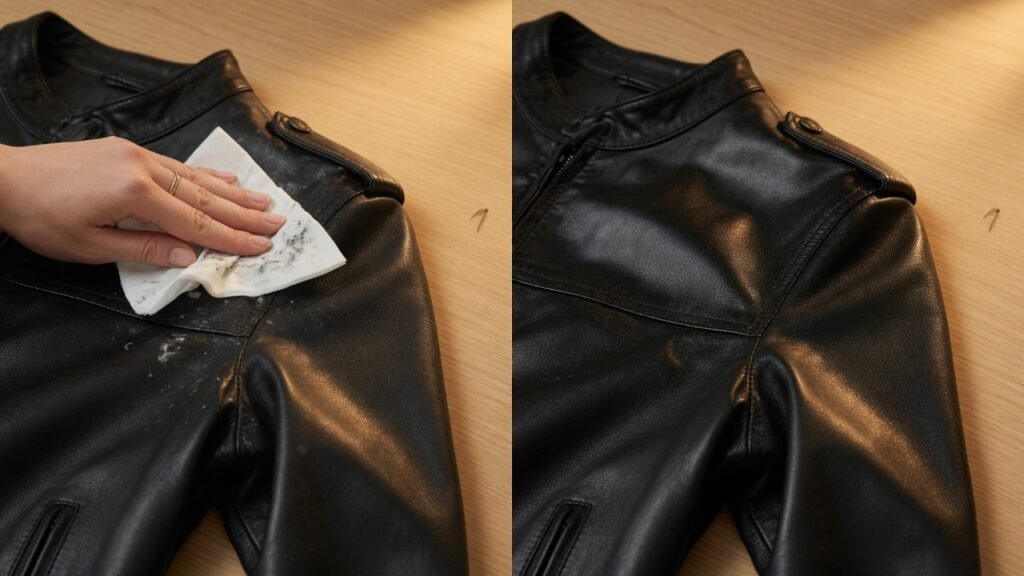
You’ve just noticed a smudge on your favorite leather jacket. You glance over at the pack of baby wipes on the counter. The question crosses your mind: Can I just use one of these?
It’s a surprisingly common question typed into search engines every single day — and the answer is not simply yes or no. The interaction between baby wipes and leather is a nuanced one that depends on the wipe’s chemical composition, the type of leather, and the frequency of use. Getting it wrong can lead to dryness, discoloration, cracking, or a sticky residue that attracts more dirt.
This guide breaks down everything you need to know so you can make the smartest choice for your leather jacket.
What Are Baby Wipes Made Of?
Understanding baby wipes at the ingredient level is the first step to evaluating their suitability for leather.
Most commercial baby wipes are pre-moistened, non-woven fabric cloths made from a blend of polyester and viscose or cotton fibers. The liquid solution they’re saturated in typically contains a combination of the following components:
Water makes up the majority of the solution — often 99% or more in sensitive-skin formulas. Preservatives such as phenoxyethanol or sodium benzoate prevent bacterial growth. Emollients and humectants like aloe vera, glycerin, or panthenol help soothe skin. Surfactants such as polysorbate 20 or PEG-40 act as mild cleansing agents that lift dirt and oils. Fragrance compounds are included in scented varieties. Some wipes also contain alcohol (isopropyl or ethyl alcohol), which is a key concern for leather.
The exact pH of baby wipes typically ranges between 5.5 and 7.0, formulated to match infant skin. Leather, by contrast, has a slightly acidic pH of around 4.5 to 5.0. This subtle difference in acidity is worth noting in the context of long-term effects.
Understanding Leather as a Material
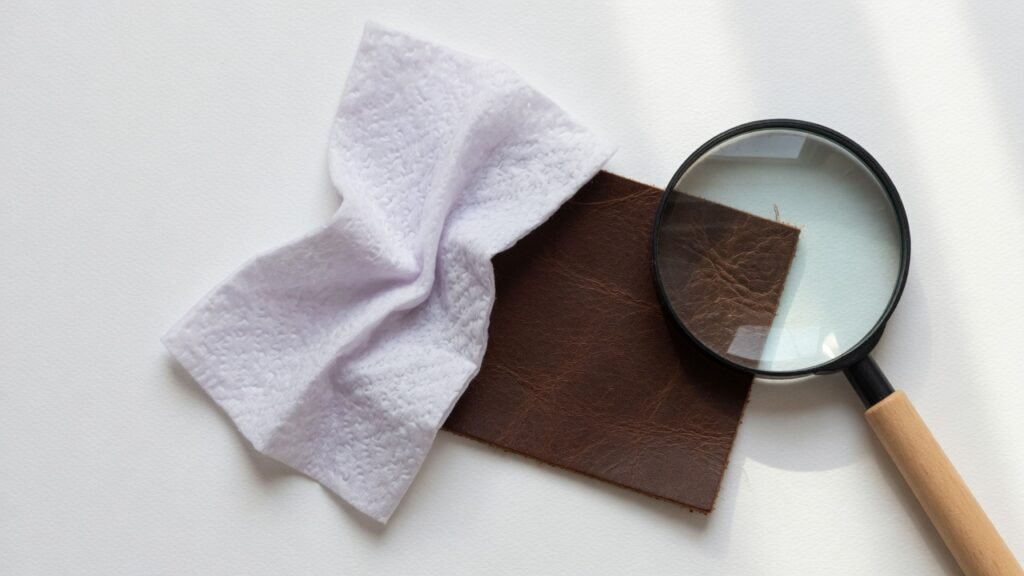
Leather is a durable, natural material made from animal hides — most commonly cowhide — that has been tanned and treated. Its structure is made up of interwoven protein fibers, primarily collagen. These fibers give leather its characteristic strength and flexibility.
However, leather is also a porous, organic surface. It breathes, absorbs moisture, and releases it. Over time, the natural oils within leather can deplete, leading to dryness, brittleness, and cracking — a process called leather desiccation. This is why conditioning is such a critical part of leather maintenance.
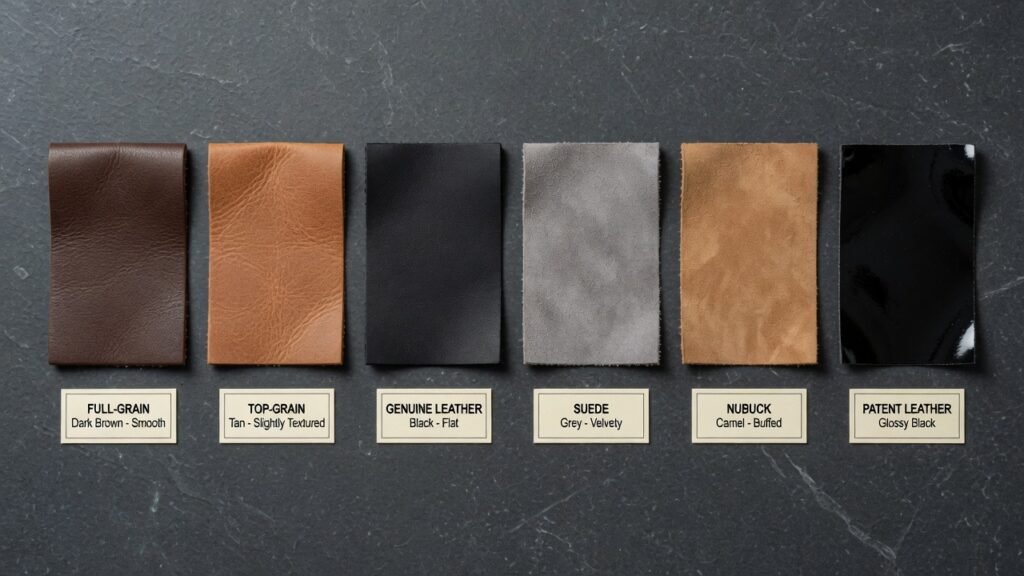
Different finishing types — full-grain, top-grain, genuine, bonded, nubuck, and suede — have varying surface textures and porosity levels that respond very differently to cleaning agents. Finished leather (with a protective coating or pigment layer) is far more resilient to external liquids than unfinished or aniline-dyed leather.
Can You Use Baby Wipes on a Leather Jacket? (Direct Answer)
Yes — but only for occasional, light surface cleaning, and only on finished, smooth leather.
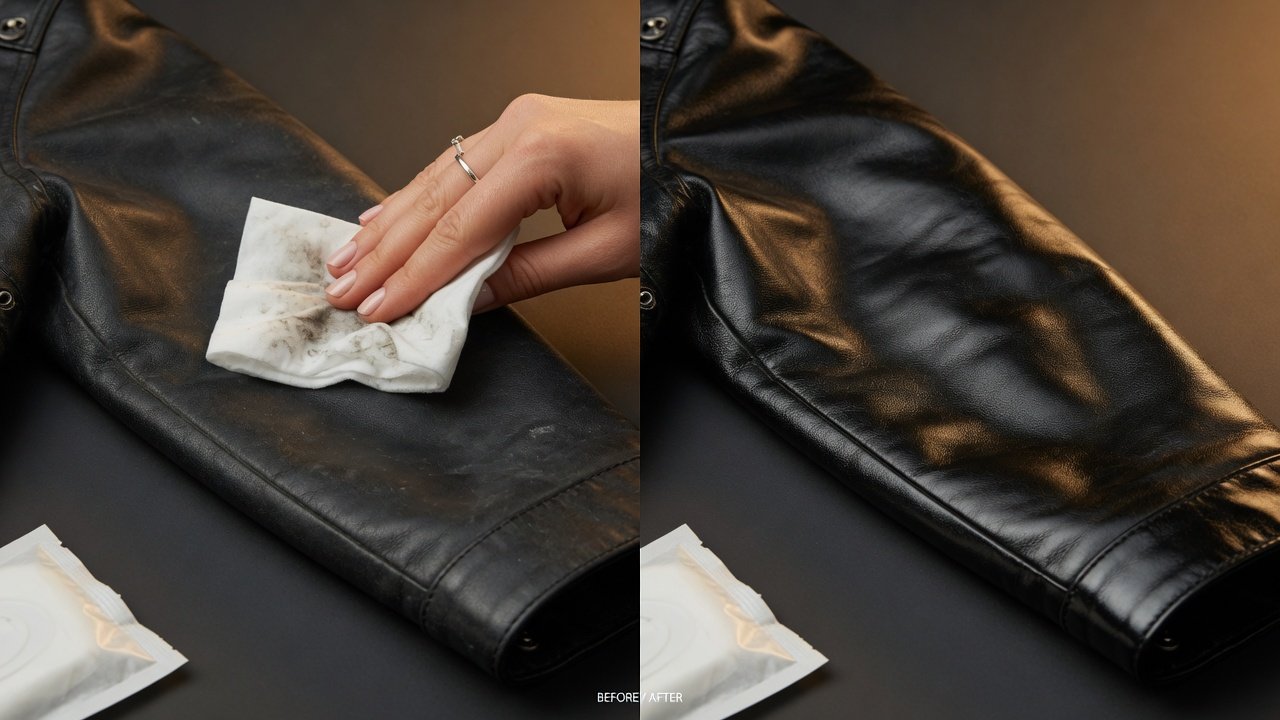
Baby wipes can effectively remove surface-level dirt, light grime, and minor smudges from leather jackets without causing immediate damage. Their gentle formulation is generally mild enough to avoid stripping protective coatings when used sparingly.
However, frequent or repeated use can lead to cumulative drying effects, pH imbalance on the leather surface, residue buildup, and eventual color fading or cracking. Baby wipes were designed for human skin — not tanned animal hide — and the two, while similar in some ways, have important differences in how they respond to moisture and surfactants.
Think of using baby wipes on a leather jacket the way you’d think of using hand sanitizer as a regular skincare routine — fine in an emergency, but not a long-term strategy.
Types of Leather and Their Compatibility with Baby Wipes
Full-Grain and Top-Grain Leather
These are the highest-quality forms of leather and often feature protective coatings or dyes. They are the most tolerant of baby wipe use, as the coating provides a barrier between the wipe’s solution and the underlying leather fibers. If you own a premium leather trucker jacket — like the Jaketra Pioneer Luxury Black Leather Trucker Jacket — occasional use of baby wipes for quick surface spot-cleaning is generally safe if followed with conditioning.
Genuine and Bonded Leather
Lower-quality leather grades are more susceptible to moisture damage. Bonded leather, especially, can peel or delaminate when repeatedly exposed to wet cleaning agents. Use baby wipes very sparingly on these and always test first.
Aniline and Semi-Aniline Leather
These are minimally processed leathers with little to no surface coating, meaning they are highly porous and extremely sensitive to moisture and chemicals. Baby wipes should be avoided on aniline leather, as even water-based solutions can create dark water stains or alter the color permanently.
Suede and Nubuck
These napped-finish leathers are the most delicate and should never be cleaned with baby wipes. The moisture will mat down the fibers, cause staining, and permanently damage the texture. Only dry cleaning methods (special suede brushes, rubber erasers) are appropriate.
Patent Leather
Patent leather features a high-gloss lacquer finish. Baby wipes can be used lightly to clean smudges, but avoid alcohol-based wipes as they may dull the glossy finish.
When Baby Wipes Are Acceptable to Use
There are specific scenarios where reaching for a baby wipe makes practical sense:
Immediate spill response: If something spills on your leather jacket and you need to act fast before it sets in, a quick blot with a baby wipe can prevent a stain from absorbing deeper.
Light surface dust and grime: When your jacket has accumulated light environmental dirt from a day out, a gentle wipe-down can refresh it temporarily.
Pre-conditioning prep on finished leather: Lightly wiping the surface before applying a conditioner can remove surface dust, allowing the conditioner to penetrate more effectively.
Travel situations: When you don’t have access to leather-specific cleaning products, a baby wipe provides a better option than using harsher cleaners like dish soap or multi-surface sprays.
The key rules: use an alcohol-free, fragrance-free baby wipe; apply minimal pressure; use one pass rather than scrubbing; and always follow up with a leather conditioner.
When You Should Avoid Baby Wipes on Leather
Avoid baby wipes in the following situations:
On suede, nubuck, or aniline leather, the moisture risk is too high, and the damage can be irreversible.
For deep stains or set-in marks — baby wipes don’t have the surfactant power to lift embedded stains, and you’ll risk spreading them.
As a regular cleaning routine — weekly or biweekly use can gradually strip the leather’s natural oils and alter its surface chemistry.
When the wipe contains alcohol, fragrance, or harsh preservatives, these ingredients accelerate leather drying and can cause discoloration.
On colored or dyed leather, you haven’t tested — always do a spot test on a hidden area (like the inside hem) before applying a wipe to visible sections.
Risks and Side Effects of Using Baby Wipes on Leather
Even with the gentlest baby wipes, repeated use on leather carries real risks that are worth understanding:
Drying and cracking: The surfactants in wipes, however mild, gradually remove the leather’s natural oils with each application. Over time, this leads to the leather becoming stiff and developing surface cracks.
Residue buildup: Some baby wipes leave behind a thin film of emollients or glycerin. On leather, this can attract dust and cause a tacky surface feel.
pH disruption: Even a slight shift in surface pH can affect the leather’s protective coating and the dyes within it, leading to subtle discoloration over time.
Color transfer: On jackets with unstable dyes, the slight moisture from a wipe can cause color to leach out or become patchy.
Mold risk in humid environments: If the leather isn’t allowed to dry properly after cleaning, the retained moisture can create conditions for mold or mildew growth — especially in jackets stored in closets.
Step-by-Step Guide: Cleaning a Leather Jacket with Baby Wipes
If you’ve determined that your leather jacket is a finished, smooth variety and you’ve decided a baby wipe is appropriate for the situation, here’s the right way to do it:
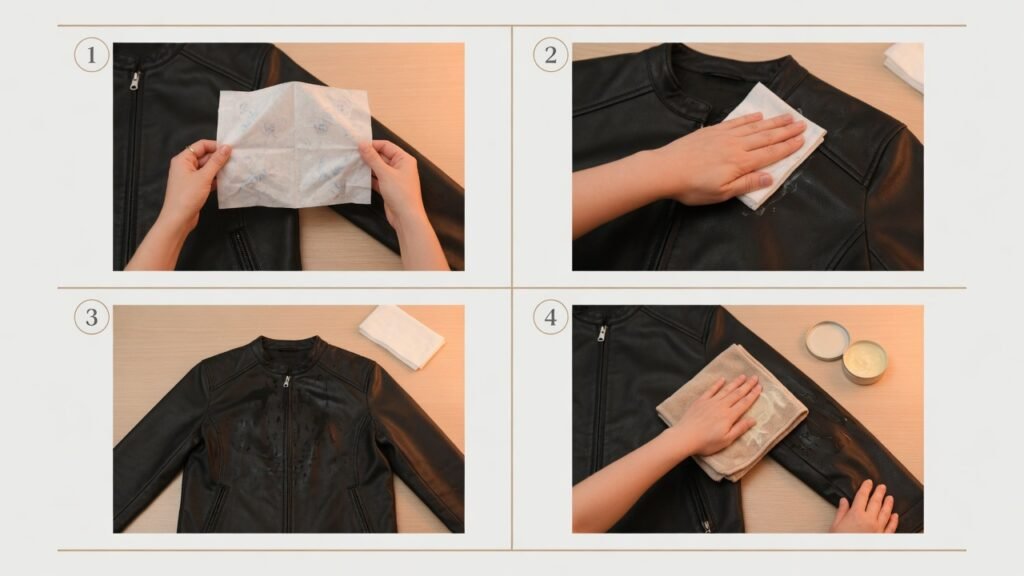
Step 1 — Choose the right wipe. Select an alcohol-free, fragrance-free baby wipe. Sensitive-skin or hypoallergenic varieties are the safest option.
Step 2 — Spot test first. Take the wipe and gently dab it on a concealed area of the jacket — the inside of a cuff or under the collar. Wait 5 minutes and check for any color change, residue, or adverse reaction.
Step 3 — Lay the jacket flat. Lay it on a clean, flat surface rather than wearing it, so you have better visibility and control.
Step 4 — Wipe gently in a single direction. Apply the wipe in long, smooth strokes following the natural grain of the leather. Avoid circular scrubbing motions, which can abrade the surface.
Step 5 — Use minimal wipes. Use as few wipes as needed to address the spot or surface area. Don’t saturate the leather.
Step 6 — Allow to air dry. Let the jacket dry naturally in a well-ventilated space away from direct sunlight or heat sources for at least 15–20 minutes.
Step 7 — Condition immediately after. This is non-negotiable. Apply a quality leather conditioner to replenish the oils that the wipe may have removed. This is the single most important step in protecting your jacket after cleaning.
Better Alternatives to Baby Wipes for Leather Care
For those who want to protect their investment with dedicated care products, these options outperform baby wipes significantly:
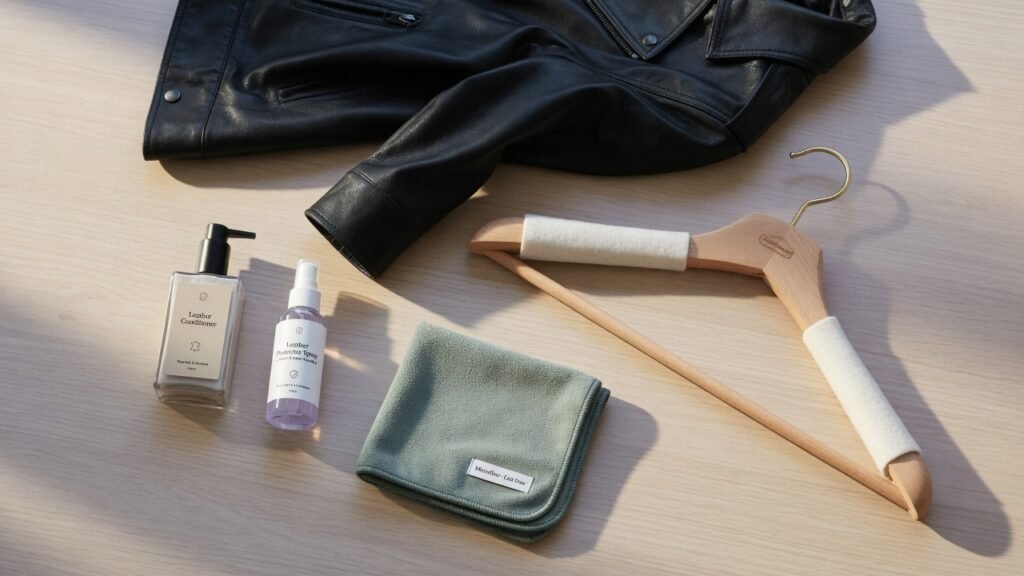
Dedicated leather cleaner: Products formulated specifically for leather — such as Leather Honey Leather Cleaner or Chamberlain’s Leather Milk — are pH-balanced for leather’s natural acidity and designed to clean without removing oils. These are the gold standard for routine cleaning.
Mild saddle soap: Traditional saddle soap gently cleans and conditions simultaneously. It’s particularly effective for light-to-moderate soiling on smooth finished leather.
Distilled water and a microfiber cloth: For very light surface dust, a barely damp microfiber cloth with plain distilled water is often sufficient and the least invasive option available.
Leather conditioning wipes: Some brands produce pre-moistened wipes specifically formulated for leather, containing conditioning agents alongside mild cleansers — a much better option than standard baby wipes.
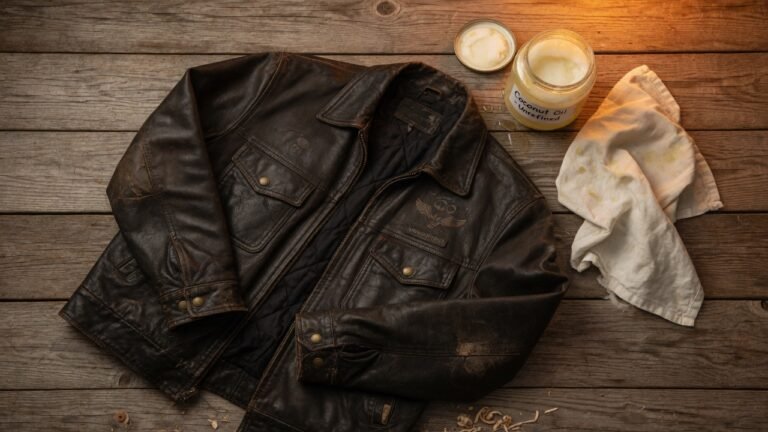
For those wondering about more natural home remedies, it’s worth knowing that you can Use Coconut Oil on a Leather Jacket as a conditioning treatment — though it should be applied sparingly to avoid darkening the leather.
And for more targeted stain problems, our detailed guide on how to Remove Ink Stains from a Leather Jacket provides fast, tested methods for handling one of the most common leather jacket stains.
How to Condition Leather After Cleaning
Conditioning is the critical follow-up to any cleaning routine — whether you’ve used baby wipes, a dedicated cleaner, or even just water. According to the Leather Research Laboratory, leather that is regularly conditioned retains its tensile strength, flexibility, and appearance far longer than untreated leather.
Here’s the basic conditioning process:
Apply a small amount of conditioner to a clean, soft microfiber cloth or applicator pad. Work it into the leather in small circular motions, covering all areas, including seams and folds. Allow the conditioner to absorb for 10–15 minutes. Buff away any excess with a clean, dry cloth. For a jacket used frequently, conditioning once every 4–6 weeks is an ideal maintenance schedule.
Preventing Damage: Long-Term Leather Jacket Care Tips
Caring for your leather jacket goes well beyond the occasional wipe-down. A consistent care routine dramatically extends the lifespan and look of the garment:
Store it properly. Hang your jacket on a wide, padded hanger to maintain its shape. Avoid folding and store in a breathable garment bag — never in plastic, which traps moisture.
Keep it away from direct sunlight and heat. UV rays fade leather color and accelerate drying. Avoid leaving your jacket in the car on sunny days or near radiators.
Address stains quickly. The faster you act on a fresh stain, the higher your chances of full removal. Blotting (not rubbing) is always the first response.
Waterproof seasonally. Applying a leather protector spray before rainy seasons creates a hydrophobic barrier that repels water and prevents salt staining from winter weather.
Rotate wear. If you have multiple leather pieces, rotating them allows each jacket time to breathe and recover between wears.
Avoid over-cleaning. Cleaning leather too frequently — even with gentle products — can strip oils over time. Clean only when necessary.
Frequently Asked Questions
Will baby wipes remove scuffs from a leather jacket? Baby wipes may reduce the visibility of very light surface scuffs, but they won’t repair scuffed leather that has lost color or texture. A leather repair kit or professional treatment is needed for true scuffs.
Can I use Huggies or Pampers wipes on leather? Both brands produce alcohol-free sensitive-skin varieties that are relatively safe for occasional use on finished leather. Always check the ingredient label before use.
Do baby wipes leave residue on leather? Some formulas — particularly those containing glycerin or silicone derivatives — can leave a very faint film. This is why conditioning and buffing after use is always recommended.
How often can I use baby wipes on my leather jacket? Treat it as an emergency measure, not a routine — no more than once or twice a month at most, always followed by conditioning.
Can baby wipes remove oil stains from leather? No. Oil-based stains require specialized leather degreasers. Using a baby wipe on an oil stain may spread it further into the leather.
Do baby wipes affect the smell of leather? Scented wipes can temporarily overpower or alter the natural leather scent. Unscented wipes have minimal impact on smell.
Conclusion
So, can you use baby wipes to clean a leather jacket? Yes, in a pinch, on smooth finished leather, with an alcohol-free formula, applied gently and followed immediately by conditioning. But baby wipes are an emergency tool, not a care system.
Leather is a premium material that rewards proper maintenance with decades of wear. Investing in a dedicated leather cleaner and conditioner protects your jacket’s appearance, suppleness, and value far better than any quick fix. When you have a high-quality piece — the kind built to last — give it the care it deserves.