
Summary
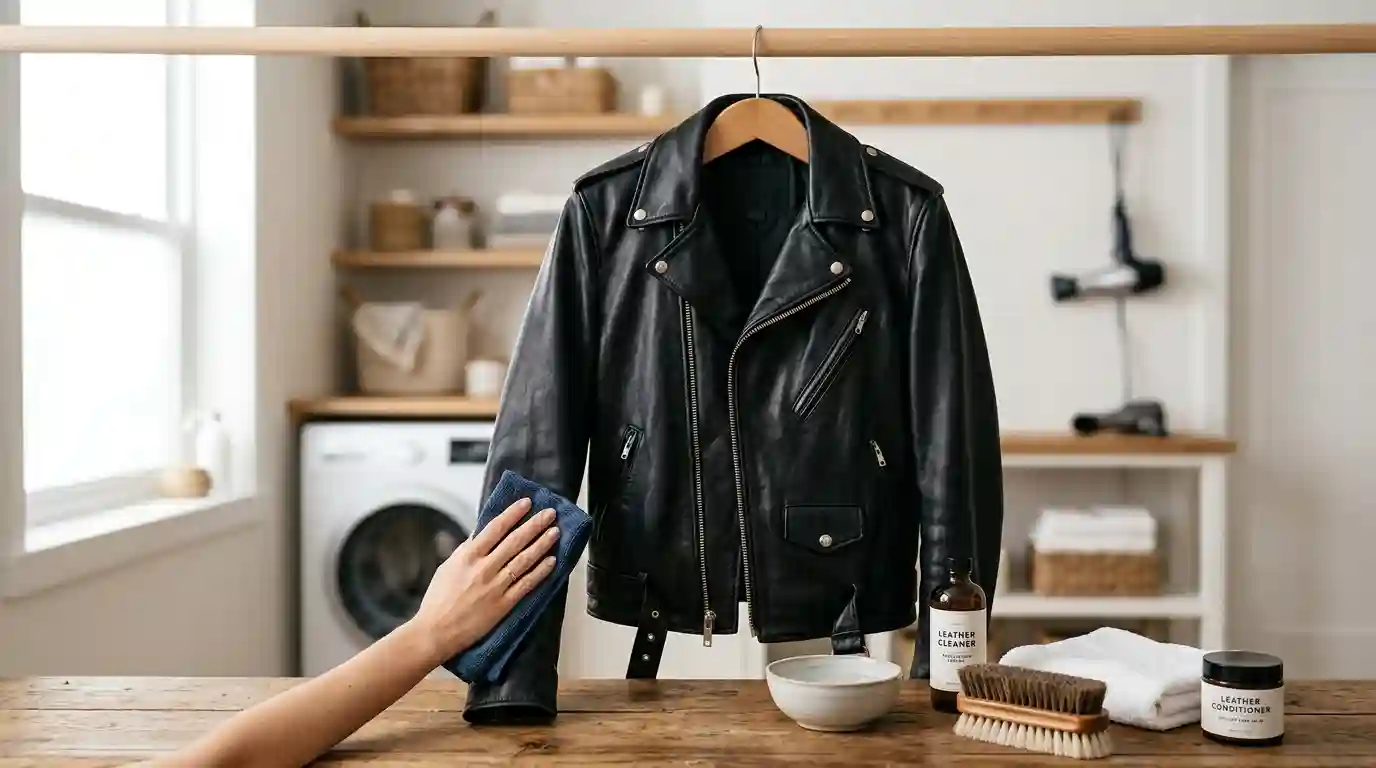
Learning how to wash leather jacket correctly can prevent discoloration, stiffness, cracking, water marks, and permanent damage. Unlike cotton or polyester clothing, genuine leather should rarely be submerged in water or placed in a washing machine. Most leather jackets need gentle surface cleaning, careful stain treatment, separate lining care, natural air-drying, and occasional conditioning. This guide explains how to identify your leather type, choose suitable cleaning supplies, clean the exterior and lining, handle common stains, and know when professional leather cleaning is the safer choice.
Table of Contents
- How to Wash Leather Jacket: What Washing Really Means
- Check the Care Label and Leather Type
- Supplies Needed to Clean a Leather Jacket
- How to Wash Leather Jacket at Home Step by Step
- How to Clean the Jacket Lining
- How to Remove Common Leather Jacket Stains
- How to Dry a Leather Jacket Correctly
- Conditioning After Cleaning
- Mistakes That Can Ruin Leather
- When to Use a Professional Cleaner
- Long-Term Leather Jacket Maintenance
- Conclusion
- Frequently Asked Questions
A genuine leather jacket is not ordinary clothing. It is made from a natural material with a surface finish, internal fibers, oils, dyes, and protective coatings that can react badly to excessive water, heat, detergent, friction, and unsuitable chemicals.
This means the word “wash” needs to be understood carefully. In most cases, washing a leather jacket means removing loose dirt, wiping the surface with minimal moisture, treating stains individually, cleaning the fabric lining separately, and allowing the garment to dry naturally.
The safest cleaning method depends on the type of leather, the jacket’s construction, the care-label instructions, and the severity of the dirt or stain.
How to Wash Leather Jacket: What Washing Really Means
A leather jacket usually should not be washed by soaking it in a basin or running it through a normal washing machine cycle. Water can enter the leather’s porous structure, disturb its natural oils, move dyes unevenly, and cause the material to become stiff as it dries.
Instead, a typical at-home cleaning routine includes:
- Brushing or wiping away surface dust
- Testing the cleaner on a concealed section
- Applying a small amount of leather-safe cleaning solution
- Wiping with a barely damp microfiber cloth
- Cleaning the lining without saturating the leather shell
- Drying the jacket at room temperature
- Applying a suitable leather conditioner after drying
Leather Naturally recommends using a dry brush or slightly damp cloth for many leather items, testing products on an unseen area, and allowing wet leather to dry naturally away from radiators, hairdryers, and direct sunlight. Its detailed recommendations are available in the Leather Naturally leather-care guide.
The objective is controlled cleaning, not saturation.
Can You Put a Leather Jacket in the Washing Machine?
As a general rule, do not put a genuine leather jacket in a washing machine unless its manufacturer explicitly states that machine washing is permitted.
A washing machine exposes the jacket to prolonged water contact, detergent, tumbling, friction, and rapid movement. These conditions may:
- Remove protective surface finishes
- Cause dye transfer or color fading
- Distort the jacket’s shape
- Damage glued components
- Tarnish metal hardware
- Shrink or wrinkle the leather
- Leave the surface dry and brittle
Even a gentle or hand-wash cycle may be too aggressive. The care label should always take priority over general cleaning advice.
Is Hand-Washing a Leather Jacket Safe?
Hand-washing can also be risky when it means fully immersing the garment in water. For most finished leather jackets, surface cleaning is safer than soaking.
Certain specialty or washable leather garments are manufactured differently and may have specific washing instructions. Unless the label identifies the jacket as washable, use a low-moisture cleaning method or consult a leather-care professional.
Check the Care Label and Identify the Leather Type
Before cleaning anything, examine the care label inside the jacket. Look for information about:
- Material composition
- Cleaning restrictions
- Professional-cleaning requirements
- Recommended drying method
- Ironing restrictions
- Manufacturer-specific warnings
A jacket may contain genuine leather on the exterior while using polyester, cotton, viscose, satin, or another textile for the lining. Each component may require a different cleaning approach.
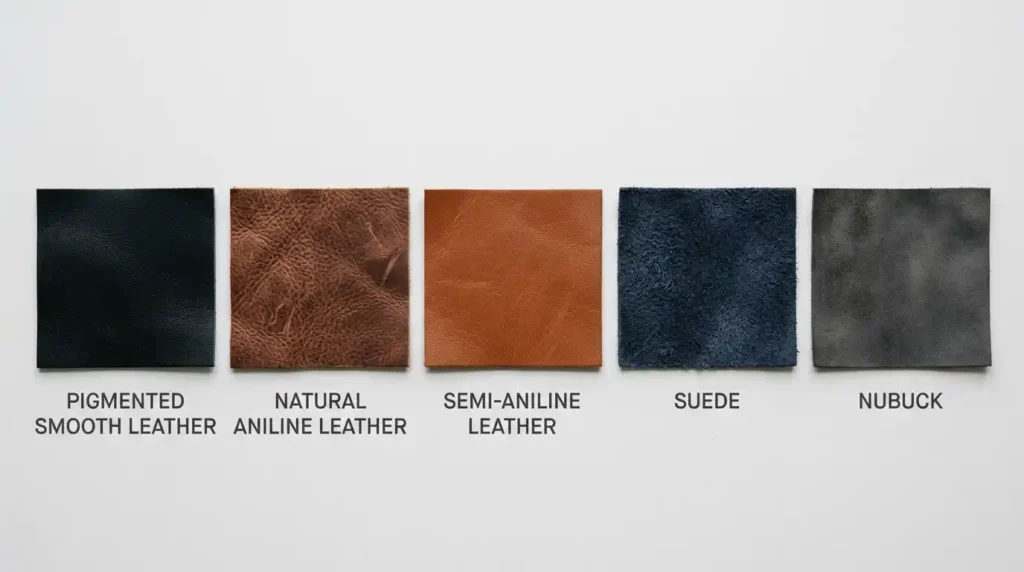
Pigmented or Protected Leather
Pigmented leather has a surface coating that provides color consistency and some resistance to moisture and staining. It is commonly used in motorcycle jackets, fashion jackets, furniture, and automotive interiors.
This type is often easier to clean than open-pore leather, but it can still be damaged by strong detergent, hard scrubbing, alcohol, bleach, or excessive water. Leather Naturally describes pigmented leather as comparatively hard-wearing and more liquid-repellent than open-pore varieties.
Aniline Leather
Aniline leather has little or no pigmented surface coating. Its natural markings remain visible, giving it a rich and distinctive appearance. However, it absorbs liquids more readily and may darken when exposed to moisture.
Use extreme caution when cleaning aniline leather. A product that works well on protected leather may cause a permanent dark patch on an aniline jacket. A concealed patch test is essential.
Semi-Aniline Leather
Semi-aniline leather has a light protective finish while retaining much of the natural appearance of aniline leather. It offers slightly greater stain resistance, but it is not immune to water marks or color changes.
Use only products specifically identified as suitable for semi-aniline leather.
Suede and Nubuck
Suede and nubuck have a soft, raised nap rather than a smooth-coated surface. Regular leather cream, household soap, and wet cloth cleaning can flatten the nap or create dark spots.
These materials usually require:
- A suede or nubuck brush
- A suede eraser
- A specialized foam or dry cleaner
- A compatible protective spray
Leather Naturally advises removing dirt from suede and nubuck with a suitable brush and using products designed specifically for these absorbent leather types.
Sheepskin and Lambskin
Sheepskin and lambskin are valued for softness, flexibility, and a lightweight feel. They can be more delicate than heavy cowhide and may show scratches, pressure marks, oil stains, or water damage more easily.
A premium sheepskin design such as the Quilted Slim-Fit Moto Biker Jacket should be cleaned with a restrained method that protects its color contrast, quilting, seams, and supple finish.
Faux Leather
Faux leather is usually made from a textile base coated with polyurethane or polyvinyl chloride. It does not require the same conditioning products as genuine leather, and oil-heavy leather treatments may leave it greasy or weaken the coating.
Follow the care label and use a cleaner intended for synthetic leather.
Supplies Needed to Clean a Leather Jacket
Gather everything before starting so you do not leave the jacket damp while searching for supplies.
Recommended items include:
- Two or three clean microfiber cloths
- A soft clothes brush
- Lukewarm water
- A pH-balanced cleaner made for the jacket’s leather type
- A small bowl
- Cotton swabs for seams and hardware
- An absorbent white towel
- A broad, padded hanger
- Leather conditioner compatible with the finish
- Mild fabric detergent for the lining, when permitted
- A suede brush and suede eraser for suede or nubuck garments
Avoid colored towels because unstable fabric dye may transfer onto pale leather.
Choosing a Leather Cleaner
Choose a product that clearly identifies the leather types it can be used on. A cleaner for protected automotive leather may not be appropriate for delicate aniline lambskin or suede.
Avoid cleaners containing bleach, ammonia, harsh solvents, abrasive particles, or unspecified degreasers. Household surface cleaners and disinfecting wipes are not substitutes for leather-care products.
Before applying any cleaner, place a small amount on an inconspicuous section, such as:
- Inside the cuff
- Under the collar
- Behind the belt
- Along an interior facing
- Near the lower inside hem
Let the test area dry completely. Check for darkening, fading, tackiness, roughness, or changes in sheen.
How to Wash Leather Jacket at Home Step by Step
The following method is suitable for routine surface cleaning of many smooth, finished leather jackets. It is not intended for suede, nubuck, heavily stained aniline leather, or garments whose labels require professional cleaning.
Step 1: Empty the Pockets
Remove keys, coins, receipts, earbuds, and other objects. Heavy items can pull the wet or softened material out of shape.
Open all zippers and inspect the pockets for crumbs, makeup, pens, or leaking products.
Step 2: Shake Out and Brush the Jacket
Take the jacket to a well-ventilated area and shake it gently. Use a soft brush or dry microfiber cloth to remove:
- Dust
- Hair
- Lint
- Dried mud
- Loose debris around seams
- Dirt around zipper tape and pocket edges
Do not scrub aggressively. Dirt particles can act like abrasives if they are rubbed across the surface.
Step 3: Perform a Patch Test
Apply the selected cleaner to a hidden section according to the product instructions. Do not continue until the test area has dried and you are satisfied with the result.
A patch test is especially important for light colors, two-tone designs, distressed leather, vintage jackets, and open-pore finishes.
Step 4: Prepare the Cleaning Cloth
Dampen a microfiber cloth with lukewarm water and wring it thoroughly. The cloth should feel slightly moist, not wet enough to drip.
Apply a small quantity of leather cleaner to the cloth rather than pouring it directly onto the jacket. Direct application can create concentrated spots.
Step 5: Clean One Section at a Time
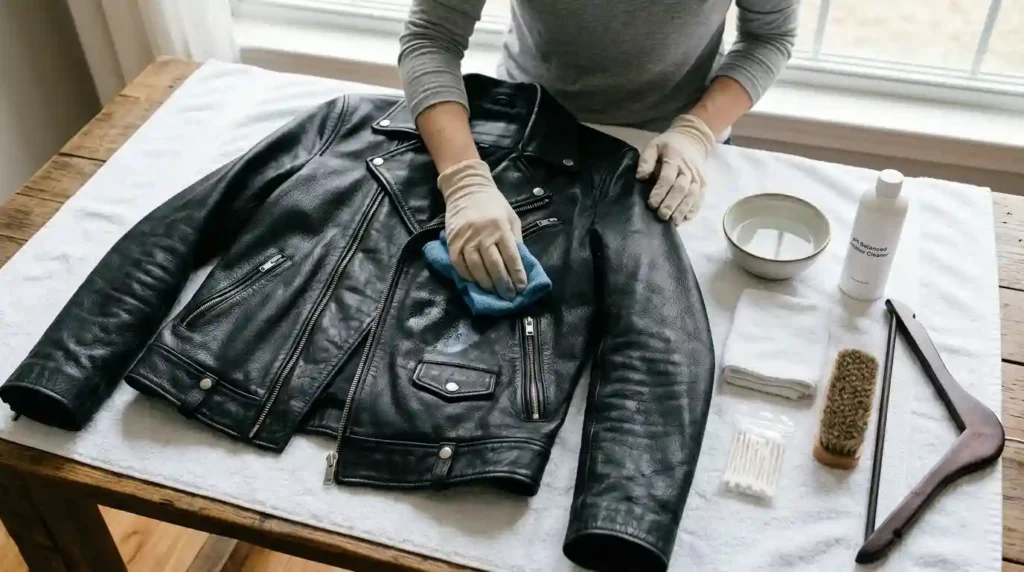
Lay the jacket flat on a clean white towel or place it on a sturdy padded hanger.
Work in small sections using gentle circular or overlapping strokes. Clean complete panels rather than isolated dots whenever possible. This reduces the chance of creating visible rings or uneven areas.
Pay particular attention to:
- Collar edges
- Cuffs
- Elbows
- Pocket openings
- Front zipper area
- Lower hem
- Underarm regions
These areas collect skin oils, dust, perspiration residue, and environmental grime.
Do not rub hard at stubborn marks. Excessive friction can alter the finish or remove pigment. Leather Naturally specifically cautions against aggressive rubbing because it can damage the leather surface.
Step 6: Remove Cleaner Residue
Use a second cloth that is clean and barely damp to remove remaining cleaner. Do not repeatedly wet the same area.
Inspect the jacket under even lighting to make sure no foam, streaks, or residue remain around seams and hardware.
Step 7: Blot Excess Moisture
Press a dry white towel lightly against damp sections. Do not twist, wring, stretch, or fold the jacket.
Reshape the collar, lapels, cuffs, and hem while the leather is still flexible.
How to Clean the Inside Lining
The lining often needs more attention than the leather exterior because it absorbs sweat, skin oils, deodorant, fragrance, and everyday odors.
Light Lining Cleaning
Turn the jacket inside out as far as its construction safely allows. Lay it flat with the leather supported by a dry towel.
Mix a small amount of mild fabric detergent with lukewarm water. Dampen a clean cloth and wring it thoroughly. Wipe the lining gently, focusing on:
- Underarm areas
- Neckline
- Cuffs
- Lower back
- Pocket bags
Keep moisture away from the leather underneath. Follow with another barely damp cloth to remove detergent residue.
Deep Lining Cleaning
A heavily soiled lining is difficult to clean thoroughly without wetting the outer shell. Professional cleaning is usually safer when the lining has:
- Strong perspiration odors
- Extensive staining
- Mold or mildew
- Makeup or ink marks
- Oil contamination
- Widespread discoloration
A specialist may clean or replace the lining while protecting the leather exterior.
Removing Odor Without Saturating the Jacket
Begin by airing the jacket in a shaded, ventilated location. Avoid spraying perfume, air freshener, or deodorizing chemicals directly onto the leather.
For persistent odor, professional leather cleaning is safer than repeatedly applying home remedies. Some powders and deodorizing sprays may become trapped in seams or leave residue on dark linings.
How to Remove Common Leather Jacket Stains
Stains should be treated according to their source and the leather finish. Random household remedies can make a stain larger or more permanent.
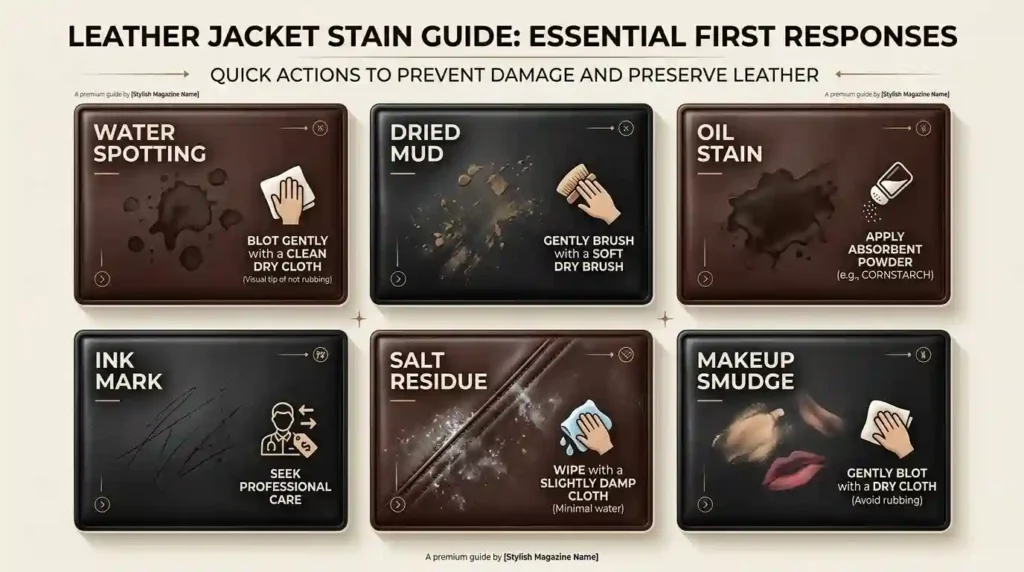
Water Spots
Blot fresh water immediately with a clean absorbent cloth. Do not rub.
A sharply defined water ring may sometimes be reduced by lightly and evenly wiping the surrounding panel with a barely damp cloth, but this is risky on aniline, suede, nubuck, and pale leather. Professional treatment may be needed.
Mud and Dirt
Allow wet mud to dry before brushing it away. Wiping wet mud can push soil deeper into the grain.
After removing loose dirt, clean the area with a product suitable for the leather type.
Oil and Grease
Blot fresh oil without pressing it further into the leather. Do not use dishwashing detergent, concentrated degreaser, or hot water.
Oil can penetrate beyond the surface, especially on open-pore leather. A leather-cleaning specialist has a better chance of reducing the stain without creating a pale or dark ring.
Ink
Ink is among the most difficult stains to remove safely. Alcohol, acetone, hairspray, and nail-polish remover can dissolve dyes or surface coatings.
Avoid experimenting with strong solvents. Seek professional help, particularly for large marks or light-colored leather.
Salt Marks
Road salt and perspiration salts may leave pale outlines. Wipe the affected area gently with a leather-safe cleaner and minimal moisture. Clean the surrounding panel evenly to reduce visible boundaries.
Makeup
Blot creams and liquid cosmetics first. Do not spread the product across the grain. Use a cleaner approved for the jacket’s finish and work from the outside of the mark toward its center.
Mold or Mildew
Move the jacket away from other clothing and take it to a ventilated area. Mold can extend into the lining, seams, and internal structure even when only a small surface patch is visible.
Extensive mold, persistent odor, or repeated growth requires professional assessment. Improper wet cleaning may spread spores or leave moisture trapped inside the garment.
How to Dry a Leather Jacket Correctly
Drying is just as important as cleaning. Poor drying can leave leather stiff, shrunken, misshapen, faded, or cracked.
Use a Padded Hanger
Hang the jacket on a broad, padded hanger that supports the shoulders. Thin wire hangers can create pressure points and distort the shoulder line.
Fasten or partially zip the jacket so it keeps its intended shape while still allowing airflow.
Dry at Room Temperature
Place the jacket in a ventilated room away from:
- Direct sunlight
- Radiators
- Fireplaces
- Clothes dryers
- Hairdryers
- Heat vents
- Dehumidifiers positioned too close to the leather
Leather Naturally advises allowing wet leather to dry naturally rather than exposing it to direct heat or sunlight.
Do Not Wear It While Wet
Wearing a damp jacket can stretch the elbows, shoulders, back, and cuffs. Let it dry fully before putting it on.
Reposition the Jacket During Drying
Check the garment periodically. Smooth the lapels, straighten the cuffs, and make sure the hem is not folded.
Do not pull or aggressively flex the material while it is wet.
Conditioning the Leather After Cleaning
Cleaning can remove some surface oils along with dirt. A compatible leather conditioner helps maintain flexibility and reduce excessive dryness.
However, more conditioner is not necessarily better. Overapplication can darken the leather, create a greasy finish, attract dirt, soften structured areas, or block breathable pores.
How to Apply Leather Conditioner
- Confirm that the jacket is completely dry.
- Test the conditioner in a concealed location.
- Apply a small amount to a clean microfiber cloth.
- Spread it thinly and evenly over one panel at a time.
- Allow it to absorb according to the product directions.
- Buff away any excess with a dry cloth.
- Let the jacket rest before wearing or storing it.
Use a conditioner designed for the specific leather finish. Suede and nubuck generally require specialized care rather than conventional leather cream.
How Often Should You Condition a Leather Jacket?
There is no universal schedule. The appropriate frequency depends on:
- Climate
- Wear frequency
- Leather type
- Storage conditions
- Exposure to rain or sun
- Manufacturer recommendations
- Condition of the finish
Condition when the leather begins to feel unusually dry or when the manufacturer’s instructions recommend it. Avoid conditioning automatically every few weeks.
Mistakes That Can Ruin a Leather Jacket
Many damaged jackets are the result of well-intentioned cleaning attempts.
Soaking the Entire Jacket
Submerging ordinary leather can cause stiffness, uneven color, shrinkage, distorted seams, and dye movement.
Using Laundry Detergent on the Exterior
Laundry detergents are formulated for washable textiles, not leather finishes. They may remove oils or leave difficult residue.
Scrubbing Stains Aggressively
Hard scrubbing may remove pigment, flatten the grain, or create a polished patch that looks different from the surrounding surface.
Applying Heat
A radiator, tumble dryer, or hairdryer may speed evaporation but can also dry and deform the leather.
Using Household Oils
Olive oil, coconut oil, and cooking oils are not reliable leather conditioners. They may darken the jacket, become rancid, collect dust, or produce an uneven finish.
Applying Alcohol or Acetone
Strong solvents can dissolve finishes and dyes. A small ink mark can become a much larger faded patch.
Skipping the Patch Test
Even a product labeled for leather may react differently with a particular dye, finish, or protective coating.
Cleaning Suede Like Smooth Leather
A wet cloth or cream cleaner can flatten suede’s nap and create dark, permanent-looking areas.
When Professional Leather Cleaning Is the Better Choice
Home cleaning is suitable for dust, light surface soil, and minor maintenance. Professional cleaning is preferable when the jacket has:
- A dry-clean-only care label
- Extensive oil or grease stains
- Ink or paint marks
- Mold growth
- Strong smoke or perspiration odor
- Significant water damage
- Delicate aniline leather
- Suede or nubuck with widespread staining
- Multiple contrasting colors
- Vintage or historically valuable construction
- Torn seams or damaged panels
- A heavily soiled fixed lining
Choose a cleaner who specifically works with leather garments. Conventional textile dry cleaning is not automatically suitable for leather.
Ask whether the cleaner has experience with the jacket’s leather type, color, finish, hardware, and lining. Photograph the jacket beforehand and point out every existing scratch, mark, or weak seam.
Long-Term Leather Jacket Maintenance
A jacket that receives routine care will need less aggressive cleaning.
Wipe Away Dust Regularly
Use a dry microfiber cloth after frequent wear, particularly around the collar, cuffs, and pocket openings.
Let the Jacket Air Out
After wearing it for several hours, hang it in a ventilated area before returning it to a wardrobe. This helps moisture and body heat dissipate.
Store It on a Wide Hanger
A supportive hanger helps preserve the shoulder structure. Avoid folding the jacket for long periods because creases can become difficult to remove.
Use a Breathable Garment Cover
Choose cotton or another breathable fabric. Plastic covers may trap humidity and encourage odor or mildew.
Keep It Away From Sunlight
Long-term ultraviolet exposure can fade dyes and dry the surface. Store the jacket in a cool, shaded wardrobe.
Avoid Overcrowding
Leave enough space around the jacket to prevent crushing, creasing, and poor air circulation.
Protect It From Rain
A leather-compatible protector may improve resistance to light moisture, but it does not make every jacket waterproof. Open-pore leather, suede, and nubuck remain vulnerable to prolonged rain even after treatment. Leather Naturally recommends appropriate protection while still limiting exposure to wet conditions.
Choose Quality Leather and Construction
Well-selected materials and sound construction are easier to preserve when matched with appropriate care. Collections such as Jaketra Leather Jackets provide useful reference points for comparing different jacket styles, leather finishes, panel designs, and detailing before choosing a garment.
Conclusion
Understanding how to clean a leather jacket starts with recognizing that genuine leather should not be treated like ordinary washable fabric. For most jackets, the safest process is dry dust removal, patch testing, low-moisture surface cleaning, separate lining care, slow air-drying, and light conditioning with a compatible product.
The care label and leather type should guide every decision. Pigmented leather may tolerate gentle wiping, while aniline leather, suede, nubuck, lambskin, and vintage garments often require greater caution. Strong solvents, washing machines, soaking, hard scrubbing, direct heat, and improvised household treatments can turn a small cleaning problem into permanent damage.
Routine maintenance is usually more effective than occasional intensive cleaning. Wipe the jacket regularly, air it after wear, store it on a supportive hanger, keep it away from direct sunlight, and respond to stains promptly. When the damage is extensive or the material is particularly delicate, a professional leather cleaner is the safer investment.
Frequently Asked Questions
Can You Wash a Leather Jacket With Water?
You can use a very small amount of water on some finished leather jackets, usually through a thoroughly wrung-out microfiber cloth. Do not soak the jacket unless the manufacturer specifically states that it is washable. Aniline leather, suede, and nubuck can mark easily when exposed to water.
Can You Machine-Wash a Leather Jacket on a Gentle Cycle?
Not unless the care label explicitly permits machine washing. A gentle cycle still exposes the garment to water, detergent, friction, and tumbling, all of which may damage conventional leather.
Can You Use Dish Soap to Clean a Leather Jacket?
Dish soap is designed to remove grease and may be too aggressive for some leather finishes. A cleaner formulated for the specific type of leather is safer. Always conduct a concealed patch test.
How Do You Clean the Armpits of a Leather Jacket?
Turn the jacket inside out and clean the lining with a cloth lightly dampened with diluted mild fabric detergent, provided the care label permits it. Keep the leather shell as dry as possible. Persistent perspiration staining or odor may require professional lining treatment.
How Long Does a Leather Jacket Take to Dry?
Drying time varies with humidity, jacket thickness, lining material, and the amount of moisture used. Allow the jacket to dry naturally and completely at room temperature. Do not accelerate the process with a hairdryer, radiator, or tumble dryer.
Should You Condition a Leather Jacket After Cleaning?
Conditioning can be beneficial after the jacket is fully dry, particularly when the leather feels less supple. Use a product compatible with the finish, perform a patch test, and apply only a thin layer.
Can Baby Wipes Be Used on Leather?
Baby wipes may contain alcohol, fragrance, moisturizers, preservatives, or other ingredients not intended for leather. They can leave residue or alter the finish. Use a purpose-made leather cleaner instead.
How Do You Remove Bad Smells From a Leather Jacket?
Air the jacket in a shaded, ventilated area and lightly clean the lining according to its care instructions. Avoid spraying perfume or household deodorizer directly onto the garment. Strong smoke, mold, or perspiration odors may require professional cleaning.
What Should You Do if a Leather Jacket Gets Soaked in Rain?
Blot excess water with a clean towel, place the jacket on a broad padded hanger, reshape it gently, and let it dry at room temperature away from direct heat and sunlight. Once completely dry, assess whether it needs a compatible conditioner.
Can Suede Leather Jackets Be Washed at Home?
Suede should not be cleaned using the same method as smooth leather. Use a suede brush, suede eraser, or specialized suede-cleaning product. Widespread stains and water damage are best handled by a professional.
How Often Should a Leather Jacket Be Cleaned?
Remove dust and light surface dirt regularly, but deep cleaning should be based on actual need rather than a fixed schedule. Frequent wet cleaning can be unnecessary and may increase wear.
Is Professional Dry Cleaning Safe for Leather Jackets?
Only when performed by a cleaner experienced in leather garments. Standard textile dry-cleaning methods may not be appropriate. Confirm that the cleaner understands the jacket’s leather type, dye, finish, lining, and hardware.