Summary
This article is a comprehensive, guide on How to Protect Leather Jacket from Sun Fading. It covers the science behind UV damage to leather, preventive care routines, recommended products, storage tips, and restoration methods.
Table of Content
- Why Sun Fading Is the Silent Enemy of Leather
- How UV Rays Damage Leather at a Molecular Level
- Early Warning Signs of Sun-Damaged Leather
- How to Protect a Leather Jacket from Sun Fading — 10 Proven Methods
- Best Products for UV Protection on Leather Jackets
- How to Restore a Sun-Faded Leather Jacket
- Seasonal Leather Care Routine
- FAQs About Sun Protection for Leather Jackets
- Conclusion
Why Sun Fading Is the Silent Enemy of Leather
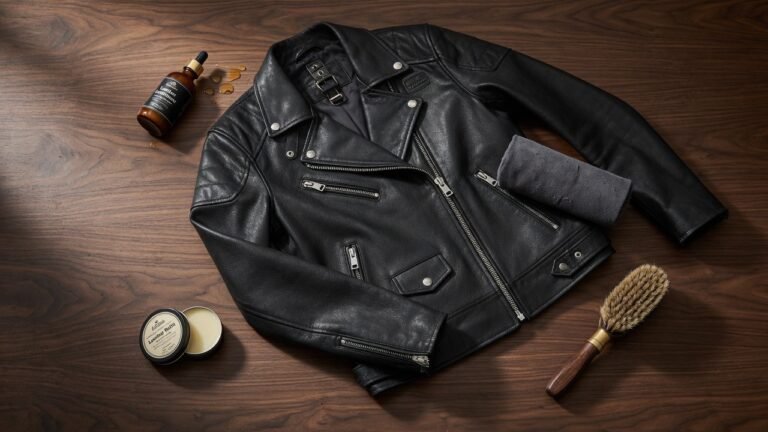
A leather jacket is more than a garment — it is an investment in style, durability, and self-expression. Whether you own a rugged Leather Biker Jacket or a sleek bomber, one of the most underestimated threats to its longevity is prolonged exposure to sunlight. UV radiation silently degrades the pigment, dries out the natural oils, and causes the surface to crack, discolor, and fade over time.
Unlike stains or physical tears that are immediately visible, sun damage accumulates gradually. By the time you notice significant fading or stiffness, the leather fibers may already have begun breaking down at a structural level. This guide will walk you through everything you need to know about UV protection for leather — from understanding the science of sun damage to building a practical, seasonal care routine that keeps your jacket looking rich and supple for years.
How UV Rays Damage Leather at a Molecular Level
To protect leather effectively, it helps to understand what you are protecting it from. Leather is made from tanned animal hide — a protein-based material that contains collagen fibers, natural oils, and surface dye. When ultraviolet radiation penetrates these fibers, it triggers a process called photo-oxidation.
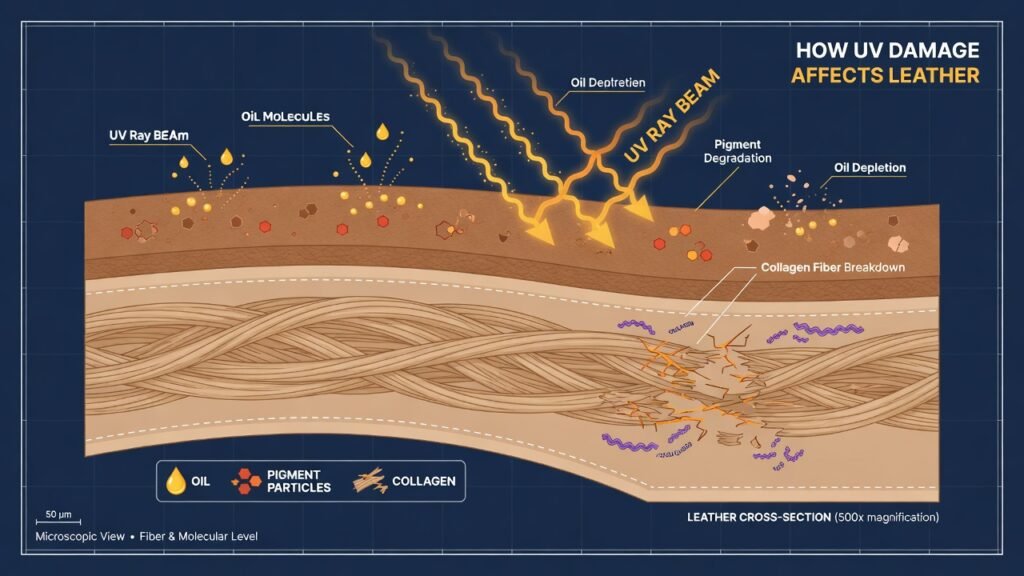
Photo-oxidation breaks down the collagen bonds within the leather matrix, causing the fibers to lose elasticity and moisture. At the same time, UV rays break apart the chromophores — the chemical compounds responsible for the jacket’s color. This explains why black leather turns brownish-grey, deep burgundy fades to a dull rust, and tan leather bleaches unevenly.
Infrared radiation from the sun also plays a role. While UV radiation damages color, infrared heat draws moisture and natural oils out of the leather, accelerating dryness and cracking. Together, UV and infrared exposure create a dual threat that no leather is completely immune to without proper care.
Early Warning Signs of Sun-Damaged Leather
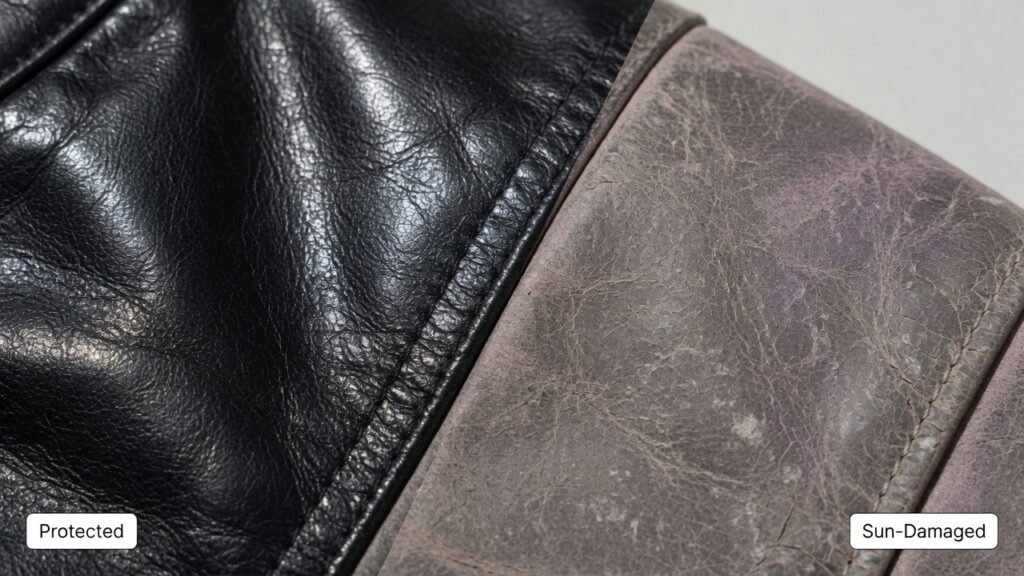
Catching sun damage early is the best way to prevent irreversible deterioration. Watch for these telltale indicators:
- Color shift or uneven fading — One side of the jacket looks noticeably lighter, especially the shoulders and sleeves.
- Surface dryness and tightness — The leather feels stiff and no longer has its natural supple feel.
- Fine surface cracks or crazing — Tiny lines forming across the grain are a sign that the oils have been depleted.
- Chalky or dusty surface texture — Oxidized leather often develops a powdery film on the surface.
- Loss of sheen — A once-glossy finish becomes flat and dull even after cleaning.
If your jacket is showing one or more of these signs, it needs immediate conditioning and UV protection before further exposure worsens the damage.
How to Protect a Leather Jacket from Sun Fading — 10 Proven Methods
4.1 Apply a UV-Protective Leather Conditioner Regularly
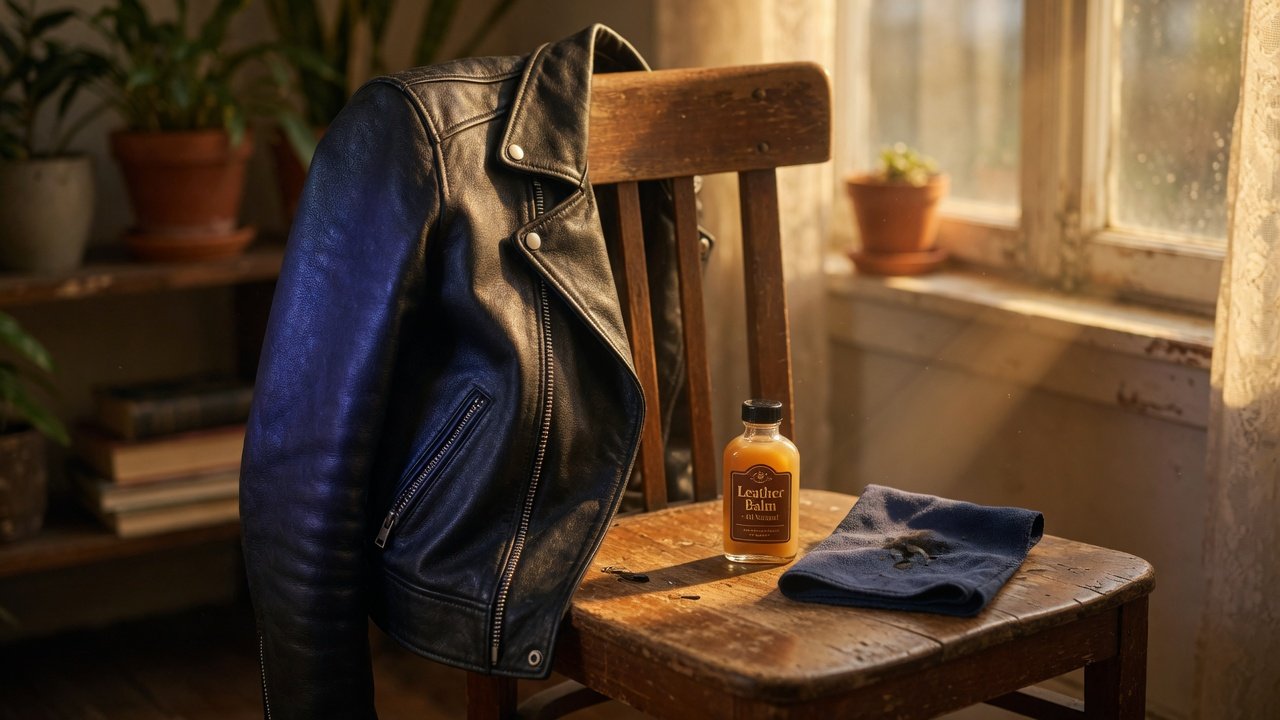
The most effective frontline defense against sun fading is a high-quality leather conditioner that contains UV inhibitors. These products penetrate the leather’s surface, replenish lost oils, and create a chemical barrier that reflects or absorbs UV radiation before it reaches the dye and fiber layers.
Look for conditioners that list UV filters, UV blockers, or sun protection agents on their ingredient labels. Apply the conditioner every 4–6 weeks if the jacket sees regular outdoor use, or every 2–3 months for occasional wear. Use a soft microfiber cloth in circular motions and allow full absorption before wearing.
4.2 Use a Leather Sealant or Wax-Based Protector
After conditioning, applying a leather sealant or protective wax adds a second layer of defense. Wax-based protectors like carnauba wax or beeswax formulations create a physical barrier on the surface that repels moisture and diffuses UV light.
These products are especially beneficial for jackets with aniline or semi-aniline finishes — natural leathers that lack a thick pigment coating and are therefore more vulnerable to sun fading. Apply wax sparingly, buff to a gentle shine, and reapply seasonally.
4.3 Store Your Jacket Away from Direct Sunlight
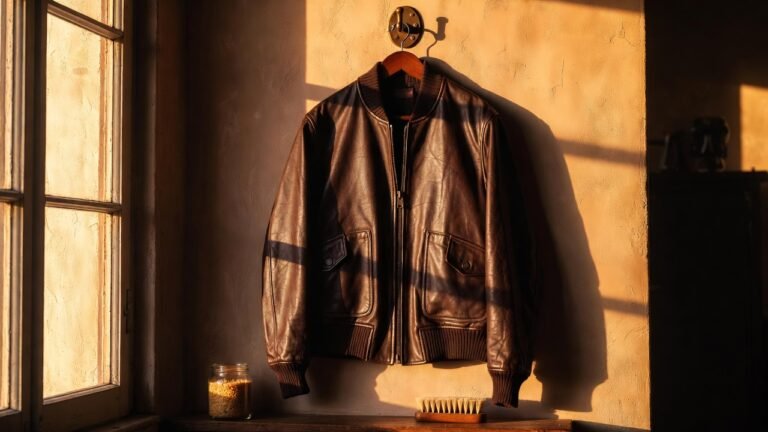
Where you store your leather jacket matters as much as how you clean it. Hanging it near a window, on a sunlit coat rack, or in a room with intense afternoon light can cause cumulative fading even when the jacket is not being worn.
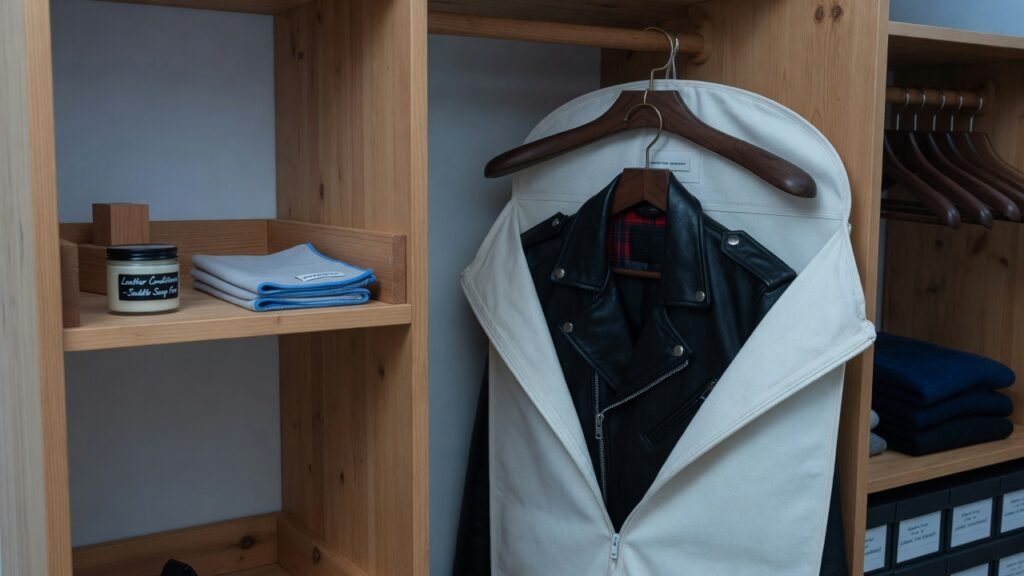
Store your jacket in a cool, dry, and dark area — ideally a wardrobe or closet with no direct light exposure. Avoid plastic covers, which trap moisture; instead, use a cloth or canvas garment cover that allows the leather to breathe while blocking light.
4.4 Use a Breathable Garment Bag for Long-Term Storage
For seasonal or long-term storage, a breathable garment bag is one of the most practical and affordable protective measures. It shields the leather from both light and dust while allowing air circulation to prevent mold and mildew — a common problem with airtight storage.
Choose a bag made from non-woven fabric or cotton muslin. Avoid vacuum-sealed bags, which can compress leather and distort its natural shape over time.
4.5 Avoid Leaving Your Jacket in a Hot Car
The interior of a parked car can reach temperatures of 60–80°C (140–176°F) on a hot sunny day. This extreme heat, combined with UV radiation passing through the car windows, is one of the fastest ways to damage leather. Even a single prolonged exposure can cause surface cracking, dye bleeding, and permanent shape distortion.
Make it a habit to take your jacket with you when leaving the vehicle, or place it in the trunk or under a seat where it is shielded from direct solar radiation.
4.6 Rotate Your Jackets to Minimize Overexposure
If you own multiple leather jackets, rotating them regularly distributes the wear and UV exposure more evenly. Wearing the same jacket every day means it is exposed to sunlight, sweat, and environmental pollutants continuously, which accelerates fading.
A simple rotation schedule — alternating between two or three jackets across the week — can significantly extend the color vibrancy and structural integrity of each piece.
4.7 Clean the Leather Before UV Protection Application
Any protective product — whether a conditioner, sealant, or wax — works best on clean leather. Dirt, oils, and surface residue create a barrier that prevents active ingredients from penetrating the hide.
For light cleaning, you can Use Baby Wipes to Clean a Leather Jacket as a gentle, pH-neutral option that removes surface grime without stripping the leather’s natural oils. Follow up with your preferred UV-protective conditioner for best results.
4.8 Re-Dye Faded Areas with Leather Color Restorer
If your jacket already shows signs of sun fading, a leather color restorer or re-dye product can bring back its original depth and richness. These products are available in a wide range of shades and work by reintroducing pigment to the depleted surface fibers.
Apply the color restorer with a sponge or brush in thin, even layers. Allow each coat to dry fully before applying the next. Finish with a fixative spray or conditioner to seal the color and provide additional UV resistance going forward.
4.9 Natural Conditioning Oils as a Protective Layer
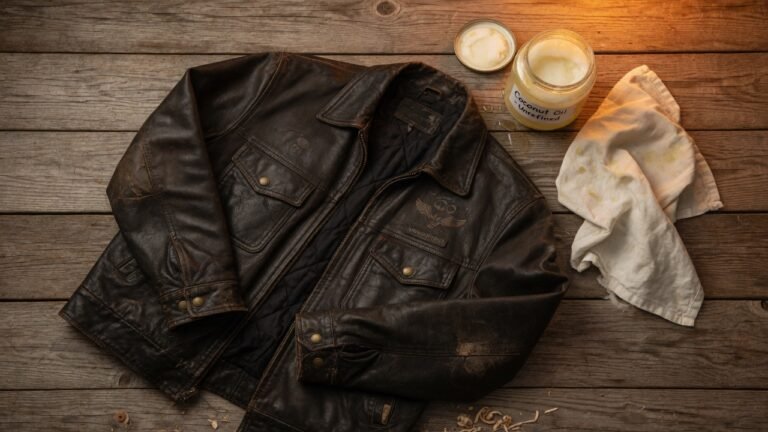
Certain natural oils offer both deep conditioning and a modest degree of UV protection for leather. If you prefer a chemical-free approach to leather care, you may want to Use Coconut Oil on a Leather Jacket as a natural moisturizer that also creates a subtle water and light-diffusing layer on the surface.
Other oils worth considering include neatsfoot oil and mink oil, both of which have long been used in traditional leather preservation. Apply sparingly and buff well, as over-application can darken leather or clog the pores.
4.10 Avoid Drying Leather in Direct Sunlight After Cleaning
After washing or conditioning your leather jacket, the instinct may be to hang it in the sun to dry quickly. This is one of the most damaging mistakes you can make. Wet leather is significantly more vulnerable to UV penetration and heat damage because moisture opens up the fiber structure, allowing radiation to reach deeper into the hide.
Always air-dry leather jackets indoors, in a shaded, well-ventilated area. Keep them away from radiators, hair dryers, or any direct heat source. Slow, ambient drying preserves the leather’s natural oils and prevents shrinkage or warping.
Best Products for UV Protection on Leather Jackets
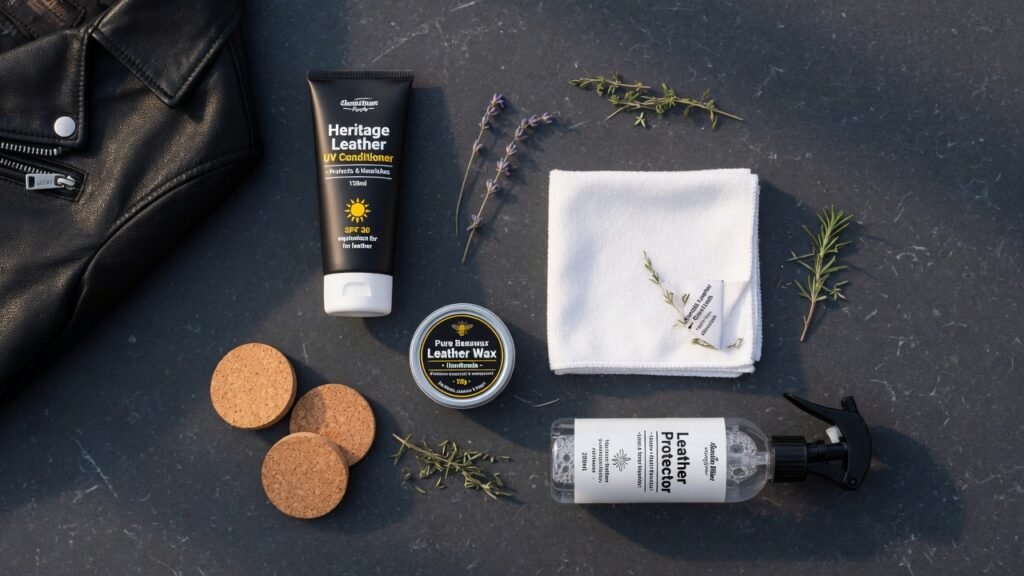
When shopping for sun-protection products for leather, consider these well-regarded categories:
- Conditioning sprays with SPF-equivalent formulas — Brands like Leather Honey, Bickmore, and Chamberlain’s offer UV-resistant conditioning solutions suitable for most leather types.
- Wax-based leather polish — Kiwi Leather Conditioner and Renaissance Wax are popular choices for their ease of application and surface protection.
- Leather protector sprays — Scotchgard Leather Protector and Apple Brand Garde create invisible shields against both moisture and UV radiation.
Always test any product on a small, inconspicuous area of the jacket before full application to check for color reactions or adverse effects.
How to Restore a Sun-Faded Leather Jacket
If your jacket has already sustained UV damage, full restoration is still possible in most cases. Follow this step-by-step process:
- Deep clean the jacket using a leather-safe cleaner or a gentle cleaning method.
- Assess the level of fading — minor fading can be addressed with a color-enhancing conditioner, while severe fading may require a full re-dye.
- Apply a leather rehydrator to restore lost oils and soften stiff fibers before any color treatment.
- Use a leather dye or color restorer matched to your jacket’s original shade.
- Seal the color with a leather finisher or protective wax.
- Apply a UV-protective conditioner as the final step to prevent recurrence.
For professional-grade restoration guidance, the Leather Research Laboratory offers detailed technical resources on leather preservation and UV protection chemistry trusted by conservators and manufacturers alike.
Seasonal Leather Care Routine
Adopting a seasonal care routine is the most sustainable way to prevent sun fading over the long term.
Spring/Summer: Apply UV-protective conditioner monthly. Avoid prolonged outdoor exposure during peak sunlight hours (10 AM – 4 PM). Store in a breathable bag when not in use.
Autumn/Winter: Deep clean to remove summer grime before storage. Apply a wax-based protector to seal moisture. Store in a cool, dark wardrobe.
Annual tasks: Full color assessment, re-dyeing faded patches if necessary, and replacing any cracked or peeling areas with professional leather repair kits.
FAQs About Sun Protection for Leather Jackets
Q: Can I use regular sunscreen on my leather jacket? A: No. Sunscreen products designed for skin contain chemicals like avobenzone and oxybenzone that can stain, discolor, or degrade leather. Always use products formulated specifically for leather.
Q: How long does UV protection last on leather? A: Most UV-protective conditioners and sprays offer effective protection for 4–8 weeks under regular use, depending on the product and how frequently the jacket is worn outdoors.
Q: Does black leather fade in the sun? A: Yes. Black leather is particularly prone to turning grey or greenish-brown under prolonged UV exposure. Regular conditioning and UV-protective treatments are essential even for darker-colored jackets.
Q: Is faux leather also vulnerable to sun fading? A: Yes. PU (polyurethane) and PVC-based faux leathers are also susceptible to UV damage, though they typically crack and peel rather than fade in color the way genuine leather does.
Conclusion
Protecting your leather jacket from sun fading is not a one-time task — it is an ongoing commitment to thoughtful care. By understanding how UV radiation damages leather at a molecular level, recognizing the early signs of sun damage, and implementing a consistent protective routine using the right products and storage habits, you can preserve the color, texture, and structural integrity of your jacket for decades.
Start with the basics: clean regularly, condition with a UV-blocking product, store away from light, and never dry leather in the sun. These simple habits, applied consistently, are the difference between a jacket that ages gracefully and one that fades into a shadow of its former self.