Summary
Leather jackets are timeless wardrobe investments that demand proper care. Many people don’t realize that effective leather cleaning solutions are already sitting in their kitchens and bathrooms. This article Household Products That Clean Leather Jackets Safely explores the safest household products for cleaning leather jackets, diving into the chemistry behind why they work, how to use them correctly, and what to absolutely avoid. From mild dish soap to white vinegar and baking soda, you’ll discover DIY leather care methods that protect your jacket’s finish, texture, and longevity — without expensive salon treatments.
Table of Contents
- Introduction — Why Leather Jacket Care Matters
- Understanding Leather Types Before Cleaning
- The Best Household Products to Clean a Leather Jacket Safely
- Step-by-Step Cleaning Method Using Household Products
- What Household Products to Avoid on Leather
- Post-Cleaning Conditioning — Why It’s Non-Negotiable
- Preventative Care Tips
- FAQs
- Conclusion
Introduction — Why Leather Jacket Care Matters
A leather jacket is more than outerwear — it’s an identity piece. Whether you own a rugged Black Leather Biker Jacket or a sleek bomber-style design, maintaining it is essential to preserving its structure, softness, and visual appeal. Over time, leather accumulates body oils, environmental pollutants, dust, sweat, and occasional spills. Ignoring this buildup doesn’t just affect how it looks — it accelerates the breakdown of the leather’s natural fibers.
The good news? Professional leather cleaning is not always necessary. Many effective, dermatologist- and material-tested solutions already exist inside your home. Understanding which household products work on leather — and the correct technique for applying them — can save you money while extending your jacket’s life by years.
Understanding Leather Types Before Cleaning
Before reaching for any household cleaner, it’s critical to identify what type of leather your jacket is made from. Not all leather responds the same way to cleaning agents, and using the wrong product on a delicate finish can cause irreversible damage.
Common Leather Jacket Types
Full-Grain Leather is the highest quality, most durable form of leather. It retains the natural grain of the hide and develops a rich patina over time. It is relatively forgiving during cleaning but still requires gentle products.
Top-Grain Leather is slightly sanded or buffed to remove imperfections. It has a more uniform surface but is less breathable than full-grain. It’s the most commonly used leather in fashion jackets.
Genuine Leather is a lower-grade material made from the layers remaining after the top sections are split off. It is more porous and susceptible to water staining and cleaning product damage.
Nubuck and Suede are the most delicate. These brushed leather textures should never be cleaned with liquid household products without specific patch-testing.
Bonded Leather contains only 10–20% actual leather fibers and peels easily. Minimal moisture should be used.
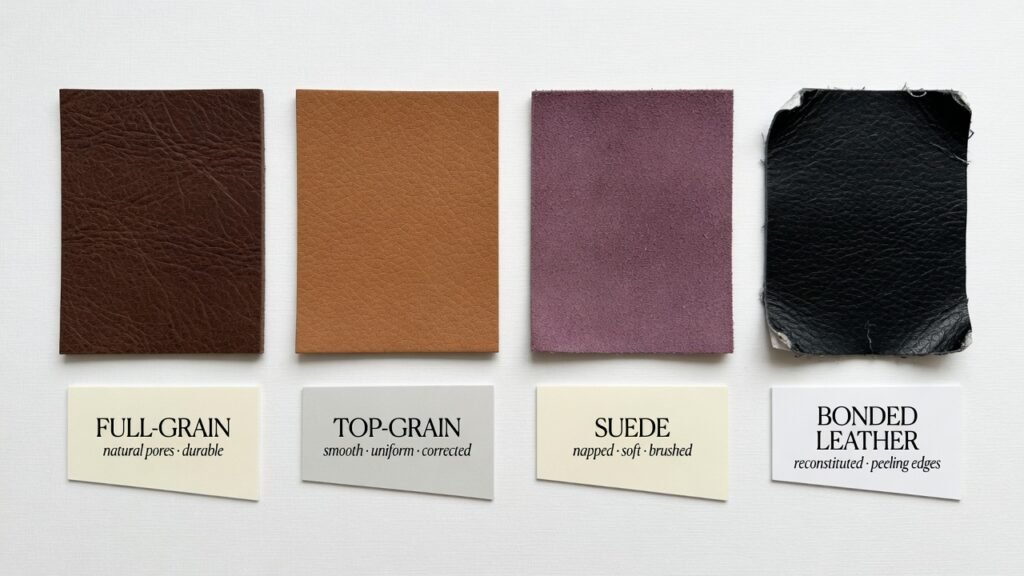
Always perform a patch test — apply any household cleaning solution to a hidden seam or interior section and wait 10–15 minutes to check for discoloration, stiffness, or surface reaction before proceeding.
The Best Household Products to Clean a Leather Jacket Safely
1. Mild Dish Soap and Warm Water — The Universal Leather Cleanser
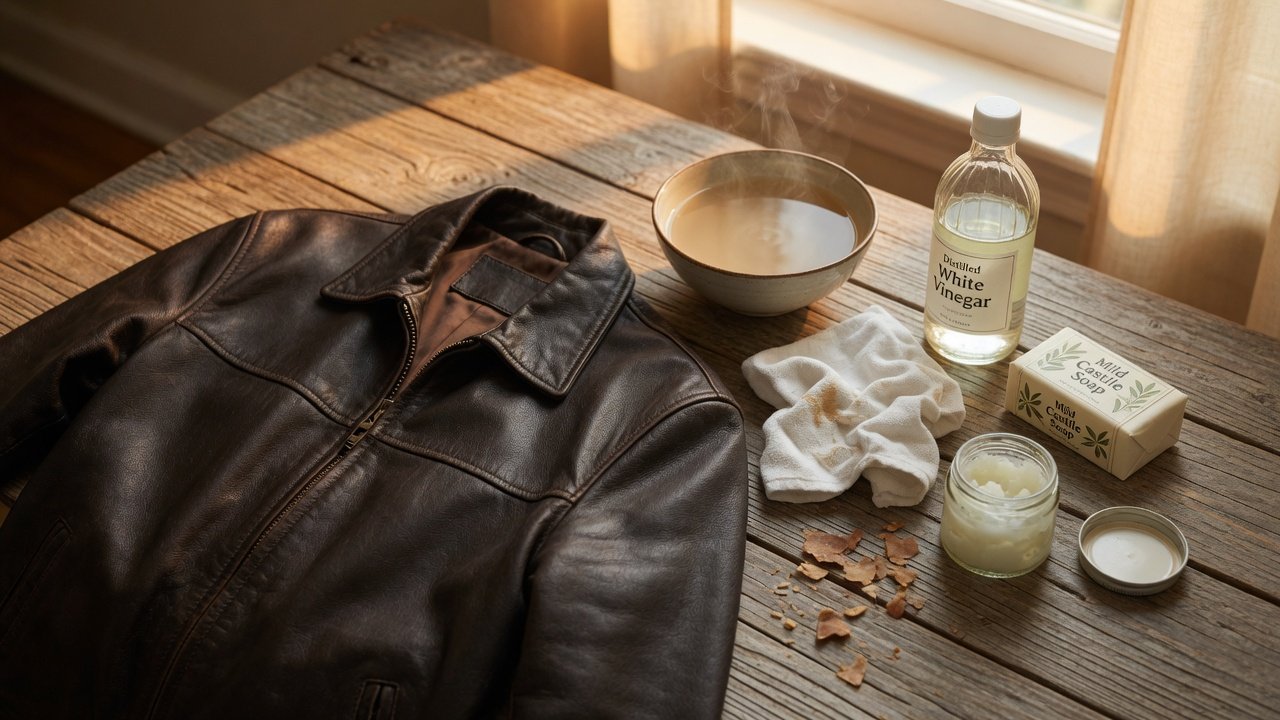
The most widely recommended and semantically safe household solution for leather cleaning is a diluted mild dish soap mixture. Products like Dawn or any pH-neutral dish soap work by gently emulsifying surface oils and environmental grime without stripping the leather’s natural oils.
How to Use It:
- Mix 2–3 drops of mild dish soap into one cup of lukewarm water
- Dip a clean microfiber cloth into the solution and wring it out until barely damp
- Gently wipe the leather in small circular motions
- Follow immediately with a separate damp cloth using only clean water
- Dry naturally away from heat sources
This method is ideal for general surface cleaning, removing light dust, and tackling everyday body oil accumulation. It is effective on full-grain and top-grain leather jackets.
2. White Vinegar Solution — Natural Disinfectant and Stain Lifter
White vinegar is a naturally acidic compound (acetic acid) that works as a mild disinfectant and stain-lifting agent on leather. Its low-competition power lies in its dual-action nature: it cleans AND helps neutralize mildew and bacterial odors trapped in leather fibers.
How to Use It:
- Dilute equal parts white vinegar and water (1:1 ratio)
- Apply to a soft cloth — never spray directly onto leather
- Gently dab stained areas — do not rub aggressively
- Wipe clean with a fresh, damp cloth and allow to air dry
White vinegar is particularly effective on light mold and mildew spots, a common problem for jackets stored in damp closets. It is also useful for breaking down salt residue stains from winter weather exposure.
⚠️ Caution: Never use undiluted vinegar. High acidity can dry out leather quickly. Always follow up with a leather conditioner.
3. Baking Soda — Targeted Grease and Oil Stain Remover
Baking soda (sodium bicarbonate) is a mild alkaline compound that absorbs oils and grease without the need for scrubbing. This makes it one of the most semantically relevant household products for oil-based stain removal on leather jackets.
How to Use It:
- Sprinkle a small amount of baking soda directly onto the grease stain
- Let it sit for 3–4 hours (or overnight for deep stains)
- Gently brush away with a soft-bristled toothbrush or a dry cloth
- Wipe the area clean with a barely damp microfiber cloth
This technique is especially effective on kitchen oil splashes, food grease, and cosmetic product marks. It requires no liquid application, which minimizes the risk of water spotting on sensitive leather finishes.
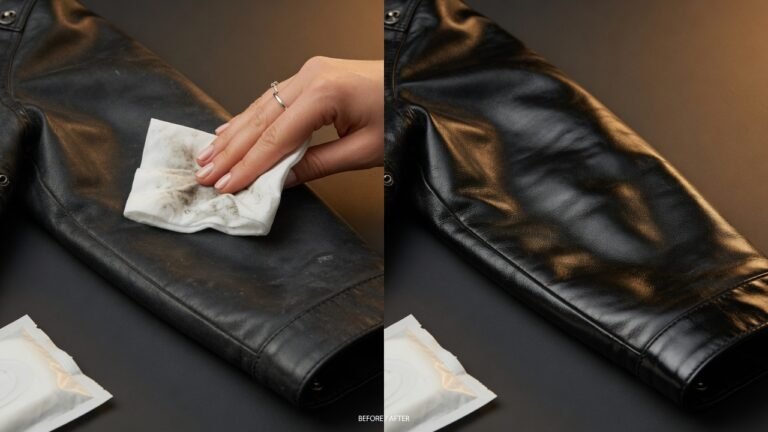
4. Baby Wipes — Convenient Spot Cleaner for Light Dirt
For quick, on-the-go cleaning, baby wipes are a popular low-commitment option among leather jacket owners. Their alcohol-free, hypoallergenic formula makes them gentle enough for most finished leather surfaces.
You can learn more about the complete method, benefits, and limitations in this dedicated guide: Use Baby Wipes to Clean a Leather Jacket.
Baby wipes work best for light surface dust, minor smudges, and fingerprint marks. They are not strong enough for set-in stains or oil-based grime. Always choose unscented, fragrance-free, alcohol-free baby wipes to avoid chemical reactions with leather dyes.
5. Rubbing Alcohol — Precision Cleaner for Ink, Mold, and Sticky Residue
Isopropyl alcohol (70% concentration) is one of the most powerful household spot-cleaning agents appropriate for leather when used with extreme care and precision.
Best Use Cases:
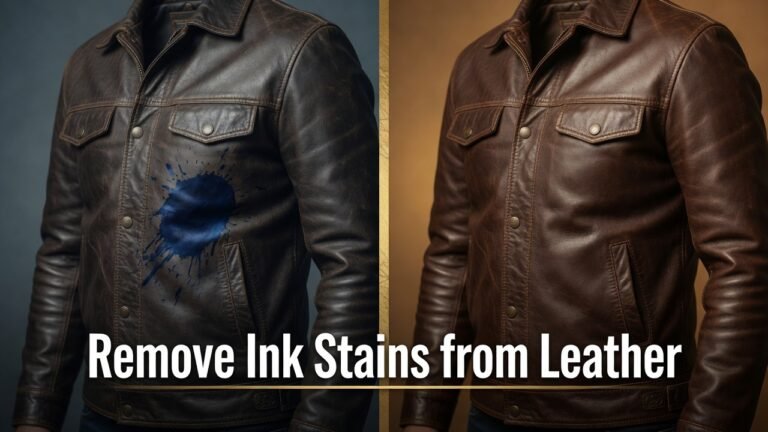
- Ink stains from pens or markers
- Mold and mildew patches (works alongside white vinegar)
- Sticky residue from labels or tape
How to Use It:
- Dip a cotton swab — not a cloth — into 70% isopropyl alcohol
- Apply only to the affected spot with controlled dabbing
- Let it evaporate naturally (do not wipe while wet)
- Condition the area immediately after
⚠️ Important: Rubbing alcohol is a drying agent. Never apply it to large surface areas or use it for general cleaning. Targeted, minimal application is the key to preventing leather from cracking or losing its natural oils.
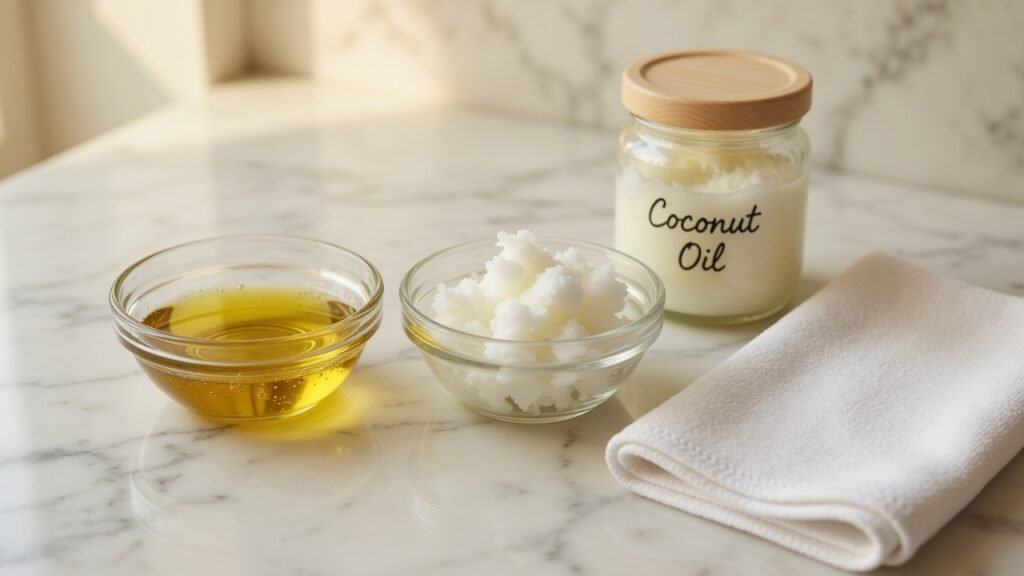
6. Olive Oil or Coconut Oil — Natural Leather Conditioning Agents
While not traditional “cleaners,” both olive oil and coconut oil function as natural conditioning and light buffing agents for leather. After cleaning, leather must be replenished with moisture to prevent cracking — and these kitchen staples can fill that role in a pinch.
How to Use:
- Apply a pea-sized amount to a soft cloth
- Work into the leather using gentle circular motions
- Allow to absorb for 20–30 minutes, then buff away excess with a clean cloth
These oils work best on dark leather since they may slightly darken the surface. Avoid overuse — excessive oil application clogs leather pores and attracts dust.
7. Lemon Juice and Cream of Tartar Paste — For Light Leather Discoloration
A paste made from equal parts lemon juice and cream of tartar is a little-known but semantically powerful natural remedy for addressing light discoloration and surface staining on lighter-colored leather jackets.
How to Use:
- Combine equal parts lemon juice and cream of tartar into a smooth paste
- Apply a thin layer to the discolored area using a soft cloth
- Leave on for 10 minutes maximum
- Wipe off gently with a clean, barely damp cloth
- Condition immediately after
This combination works through mild citric acid bleaching and the fine abrasive quality of cream of tartar. It’s only appropriate for light beige, tan, or white leather and should never be used on dark or richly dyed leather.
Step-by-Step Cleaning Method Using Household Products
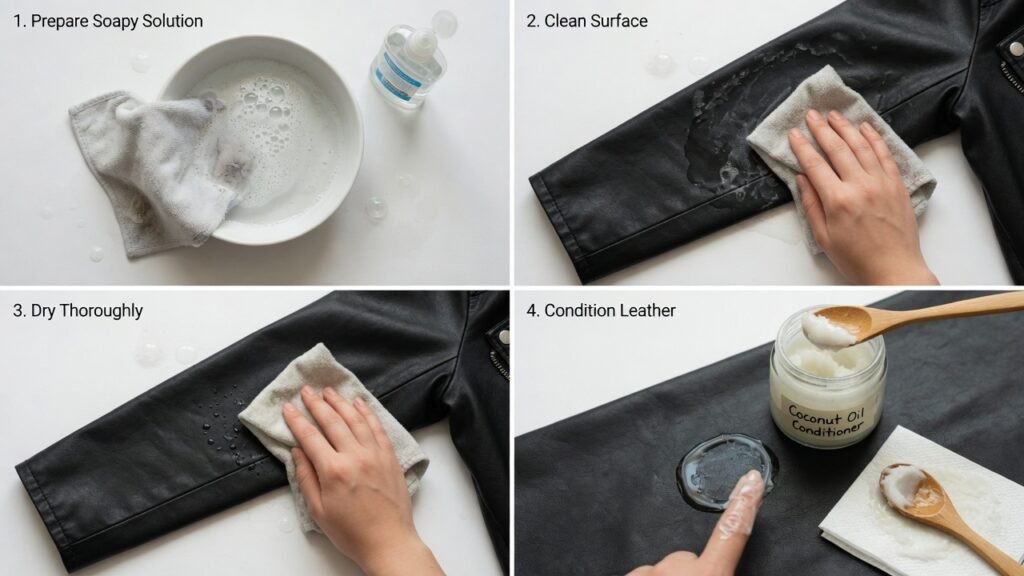
Follow this structured process for the safest, most effective household cleaning routine for any leather jacket:
Step 1 — Dry Brush First: Use a soft dry cloth or a soft-bristle brush to remove loose surface dust and debris. This prevents particles from being rubbed deeper into the leather during wet cleaning.
Step 2 — Identify Stain Types: Different stains require different solutions. Grease → baking soda. Ink → rubbing alcohol. General grime → dish soap solution. Mold → white vinegar.
Step 3 — Spot Treat Targeted Areas First: Always address specific stains before general cleaning to prevent spreading.
Step 4 — General Surface Clean: Use the mild dish soap and water solution on a barely damp microfiber cloth. Work in small sections, using light circular motions. Never saturate the leather.
Step 5 — Remove Soap Residue: Wipe the entire surface with a clean cloth dampened only with plain water.
Step 6 — Air Dry Naturally: Lay the jacket flat or hang it on a padded hanger away from direct sunlight, radiators, or hair dryers. Heat permanently damages the leather grain structure.
Step 7 — Condition: Once fully dry, apply a leather conditioner (commercial or natural oil alternative) to restore moisture and suppleness.
What Household Products to Avoid on Leather
Understanding what not to use is just as important as knowing what works. Some commonly available household products cause serious and irreversible leather damage:
- Bleach or Hydrogen Peroxide — Strips leather dyes and destroys fiber integrity
- Acetone or Nail Polish Remover — Dissolves surface finishes and causes cracking
- Ammonia-Based Cleaners (e.g., window sprays) — Chemically breaks down leather proteins
- Washing-Up Liquid in High Concentrations — Over-dries leather when used undiluted
- Hair Spray — Leaves sticky residue and builds up over time
- Wet Wipes with Alcohol — Causes dryness, fading, and surface cracking
Post-Cleaning Conditioning — Why It’s Non-Negotiable
Every cleaning session removes some of the leather’s natural oils. Without reconditioning, even a gentle clean can leave your jacket feeling stiff and looking dull over time. Commercial leather conditioners are ideal, but as established, natural alternatives like coconut oil and olive oil work in emergencies.
For longer-term jacket preservation, also consider how environmental exposure affects your leather. UV rays cause fading and surface dryness, and learning how to Protect a Leather Jacket from Sun Fading is an equally important part of complete leather jacket care.
According to the Leather Industries of America, proper conditioning after every clean cycle significantly extends the usable life of leather goods and maintains structural elasticity in the hide.
Preventative Care Tips
Prevention reduces how often intensive cleaning is needed. Adopt these habits to keep your jacket cleaner for longer:
- Store properly: Use a breathable garment bag, never a plastic cover. Plastic traps moisture and encourages mold.
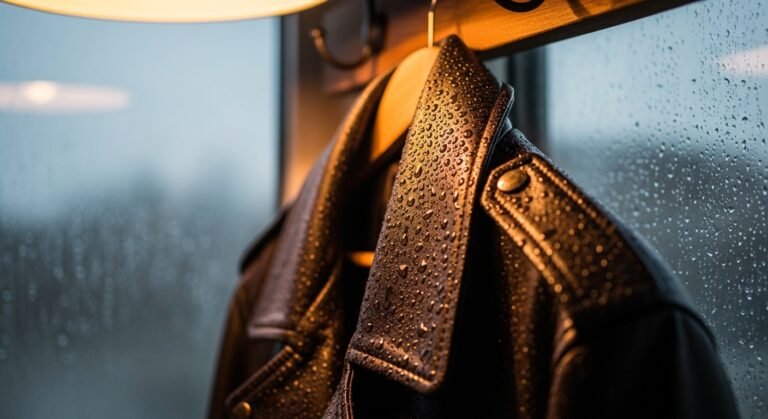
- Avoid prolonged rain exposure: If your jacket gets wet, blot — don’t rub — and allow it to dry naturally.
- Rotate use: Wearing the same jacket daily accumulates oils faster.
- Wipe after every wear: A quick pass with a dry microfiber cloth after each wear removes surface oils before they settle.
- Keep away from heat sources: Radiators, car dashboards in summer, and direct sunlight all accelerate leather aging.
FAQs
Can I use hand sanitizer to clean a leather jacket? No. Most hand sanitizers contain high concentrations of alcohol (60–70%) along with other drying agents that will strip leather’s natural oils and cause surface cracking.
How often should I clean my leather jacket? A light wipe-down after every few wears is ideal. A deeper clean using the dish soap method should be done every 2–3 months, depending on use frequency.
Can I machine wash a leather jacket after spot cleaning? Never. Machine washing — even on delicate cycles — causes irreversible warping, shrinking, and cracking of leather.
Is toothpaste safe for leather stain removal? White, non-gel toothpaste can be used with extreme caution as a very mild abrasive on scuffs — but it should be wiped off immediately and conditioner applied afterward.
Conclusion
Cleaning a leather jacket with household products is entirely achievable when you understand the properties of both the leather and the cleaning agent. Mild dish soap, white vinegar, baking soda, baby wipes, and careful applications of rubbing alcohol each address specific cleaning scenarios — from general grime to stubborn ink marks. The golden rule is always: dilute, dab gently, never saturate, and always condition afterward.
Your leather jacket is a long-term investment. With the right care routine using ingredients already in your home, it can remain supple, rich-looking, and structurally sound for decades. The difference between a jacket that lasts five years and one that lasts fifty is almost entirely in the maintenance.