Summary
Leather jackets are timeless wardrobe investments — but they are also vulnerable to water damage, staining, and premature aging when exposed to rain. Understanding how to protect leather jackets from rain involves a multi-layered approach: choosing the right waterproofing products, applying conditioners that reinforce the leather’s natural moisture barrier, practicing smart post-rain care routines, and knowing when professional restoration is needed.
This in-depth guide covers every aspect of leather jacket rain protection — from the science of leather porosity and water absorption to product-by-product comparisons, DIY methods, and long-term maintenance strategies. Whether you own a supple lambskin, a rugged cowhide, or a luxurious shearling piece, this guide will equip you with actionable knowledge to keep your jacket looking pristine through every season.
Outline
- Why Rain Is the Enemy of Leather
- Understanding Leather Porosity and Water Absorption
- Types of Leather and Their Rain Vulnerability
- Best Waterproofing Products for Leather Jackets
- Step-by-Step Guide: How to Waterproof a Leather Jacket
- Natural DIY Methods to Repel Water from Leather
- What to Do After Your Leather Jacket Gets Wet
- How Often Should You Re-Waterproof a Leather Jacket
- Common Mistakes That Damage Leather in Wet Weather
- Rain Protection for Shearling and Lined Leather Jackets
- Long-Term Leather Jacket Care and Storage
- Frequently Asked Questions
1. Why Rain Is the Enemy of Leather
Leather, at its core, is a natural, organic material derived from animal hide. While tanning processes and finishing treatments significantly enhance its durability, leather retains a degree of biological sensitivity — particularly to water. When rainwater penetrates the outer surface of a leather jacket, it disrupts the delicate internal fiber structure, causing issues that range from aesthetic damage to structural degradation.
The primary concern is the displacement of natural oils within the leather matrix. These oils are responsible for the material’s pliability, sheen, and resistance to cracking. Rainwater — especially acidic urban rain laden with pollutants — strips these oils away through a process of hydrolytic weakening. Over time, repeated water exposure leads to fiber delamination, surface cracking, mold and mildew growth, and permanent water staining, all of which diminish both the visual appeal and the structural integrity of the jacket.
Additionally, the drying process after wetting poses a secondary threat. When a leather jacket dries unevenly or too quickly — such as near a heat source — the differential contraction of leather fibers causes warping, shrinkage, and irreversible surface distortion. Understanding this chemistry is the foundation of effective rain protection.
2. Understanding Leather Porosity and Water Absorption
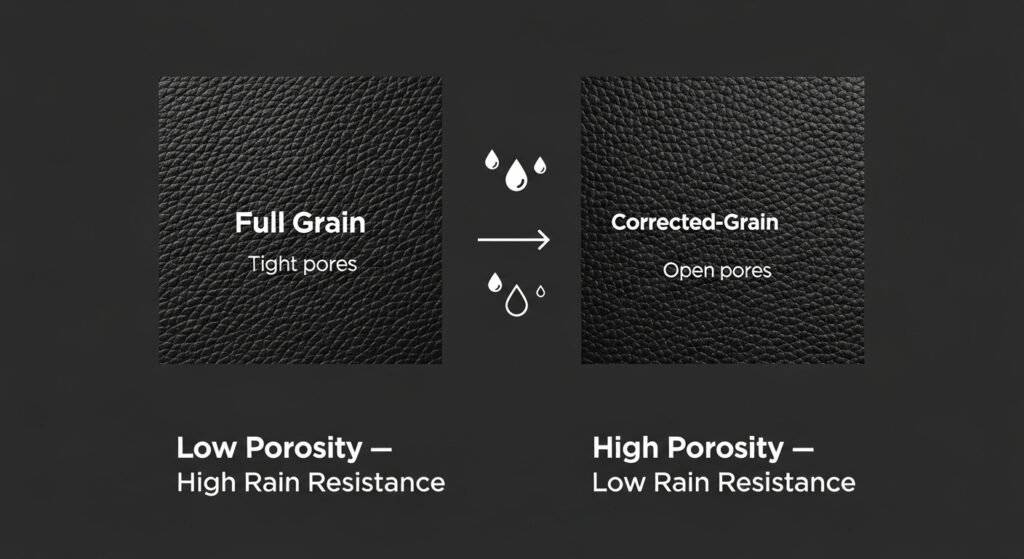
The concept of leather porosity is central to understanding why some jackets resist rain better than others. Porosity refers to the density and size of microscopic pores on the leather’s surface. Full-grain leather, which retains the outermost layer of the hide, has a tighter pore structure and is naturally more water-resistant than corrected-grain or split leather, which has an open, buffed surface.
Water absorption in leather follows a capillary action mechanism — moisture is drawn inward through pores and spreads through the interlocked collagen fiber network. The rate of absorption depends on the leather’s tanning method (vegetable-tanned vs. chrome-tanned), the presence or absence of a finish coat, and whether any waterproofing agents have previously been applied.
Chrome-tanned leather, the most common type used in fashion jackets, tends to have better initial water resistance due to chemical cross-linking of fibers. Vegetable-tanned leather, prized for patina and aging quality, is more porous and requires more diligent waterproofing maintenance. Knowing your leather type is the first step in selecting the right protective treatment.
3. Types of Leather and Their Rain Vulnerability
Full-Grain Leather
Full-grain leather is the gold standard for rain resistance among natural leathers. Its intact outer surface — complete with the natural grain pattern — acts as a semi-permeable barrier. With appropriate waterproofing treatments, full-grain leather can repel light rain effectively and dry without significant damage if properly maintained.
Top-Grain Leather
Top-grain leather has had its outermost layer sanded or buffed to remove imperfections. While it presents a uniform appearance, this process opens up more of the fiber structure, making it slightly more susceptible to moisture penetration. Regular conditioning and waterproofing are essential.
Suede and Nubuck
Suede and nubuck are the most rain-vulnerable leather types. Their raised, velvety fiber surface has enormous capillary surface area, allowing water to wick in almost instantly. These materials require specialized suede waterproofing sprays and are generally considered unsuitable for prolonged rain exposure without significant protective measures.
Shearling Leather
Shearling — leather with the wool still attached — presents a dual-surface challenge. The leather exterior needs waterproofing, while the wool interior is naturally somewhat water-repellent but prone to retaining moisture and developing odor if saturated. Premium shearling pieces, like the Jaketra Arctic Luxury Leather Shearling Jacket, benefit from dual-action treatments that protect both the leather shell and the wool lining simultaneously.
4. Best Waterproofing Products for Leather Jackets
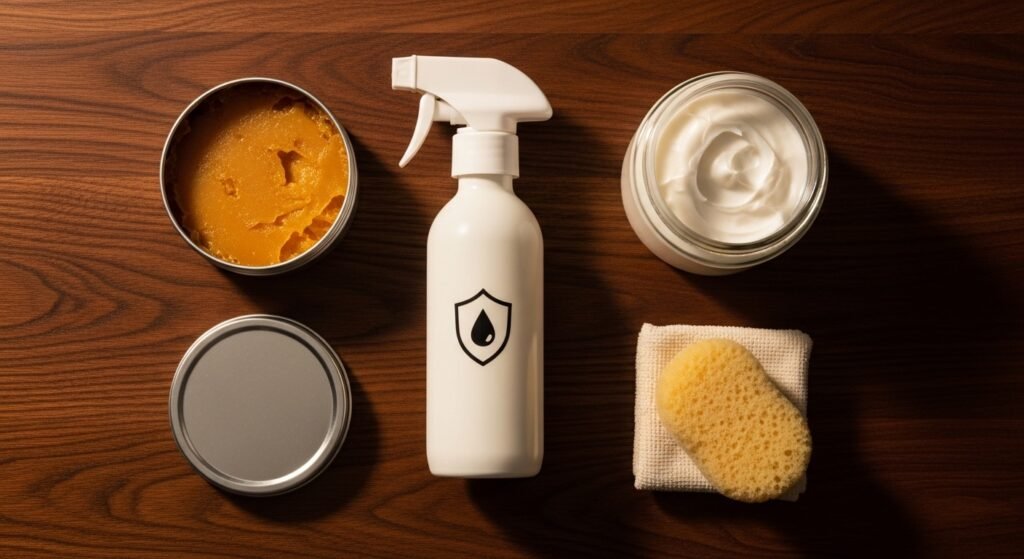
The market for leather waterproofing products is broad, spanning waxes, sprays, creams, and oils. Each category has distinct characteristics in terms of application ease, level of water repellency, effect on leather texture, and longevity.
Beeswax-Based Waterproofing Waxes
Beeswax products create a hydrophobic film over the leather surface by filling microscopic pores with a wax matrix. They offer excellent long-term waterproofing but can slightly darken the leather and require gentle buffing to avoid a greasy finish. Ideal for rugged cowhide and motorcycle-style jackets.
Silicone-Based Waterproofing Sprays
Silicone sprays create an invisible, breathable barrier on the leather surface through silicone polymer cross-linking. They are quick to apply, don’t significantly alter the leather’s appearance, and work well on fashion leather jackets, suede, and nubuck. However, they may reduce leather breathability over time with repeated use.
Fluoropolymer-Based Treatments
Fluoropolymer treatments — the same chemistry behind GORE-TEX and DWR coatings on technical outerwear — represent the premium tier of leather waterproofing. Water-based fluoropolymer dispersions bond with leather fibers at a molecular level, providing superior hydrophobicity without compromising breathability or flexibility.
Mink Oil and Leather Conditioners
Mink oil, neatsfoot oil, and leather conditioners don’t strictly waterproof leather — instead, they replenish the natural oil content that water exposure strips away. Used in conjunction with a dedicated waterproofing treatment, they prolong the leather’s suppleness, prevent cracking, and improve the overall resilience of the material. Applying conditioner before and after waterproofing is best practice.
5. Step-by-Step Guide: How to Waterproof a Leather Jacket
Applying waterproofing treatment correctly is as important as choosing the right product. Follow this systematic process to ensure comprehensive, even protection.
Step 1: Clean the Jacket Thoroughly
Begin with a clean surface. Use a damp cloth or leather-specific cleaner to remove surface dust, grease, and any previous product residue. Allow the jacket to dry naturally to room temperature. Never apply waterproofing to dirty leather — contaminants trapped under the protective layer accelerate fiber degradation.
Step 2: Condition the Leather
Before waterproofing, apply a thin, even layer of leather conditioner using a soft microfiber cloth. Work in circular motions to allow the conditioner to penetrate the fiber matrix. Let it absorb for 15–20 minutes, then buff away any excess. This step replenishes moisture and creates a receptive surface for the waterproofing agent.
Step 3: Apply the Waterproofing Treatment
Apply your chosen waterproofing product in thin, even coats. For sprays, hold the can 20–30 cm from the surface and use sweeping strokes to avoid pooling. For waxes or creams, use a clean applicator or fingertips to work small amounts into the leather, ensuring full coverage including seams, pockets, and collar folds where moisture tends to collect.
Step 4: Allow Full Curing Time
Allow the waterproofing to cure fully. Most spray treatments require 24 hours; wax treatments may need 48 hours in a well-ventilated area. During curing, keep the jacket away from direct sunlight, heat sources, and moisture.
Step 5: Buff and Inspect
Once cured, buff the jacket gently with a clean, dry cloth to remove any surface residue and restore the natural sheen. Inspect seams and high-flex areas (elbows, shoulders) for missed spots and reapply if necessary.
6. Natural DIY Methods to Repel Water from Leather
For those who prefer chemical-free approaches or need an emergency solution, several natural alternatives provide moderate water repellency.
Beeswax + Coconut Oil Blend: Melt equal parts beeswax and coconut oil, allow to cool slightly, and apply with a soft cloth. This homemade wax treatment offers reasonable hydrophobic properties and deep conditioning simultaneously.
Pure Lanolin: Derived from wool, lanolin is a natural wax ester that repels water while conditioning leather fibers. It’s gentle enough for delicate lambskin jackets and suede alternatives.
Petroleum Jelly (Vaseline): While not ideal for long-term use, a thin application provides emergency water resistance and prevents drying after unexpected rain exposure.
Olive Oil (Limited Use): A small amount of olive oil can condition and create a temporary surface barrier, but it can go rancid over time and should only be used as a short-term measure.
Note that DIY methods generally provide less durable and consistent protection than commercial waterproofing products. They are best used as interim measures or supplementary conditioning treatments.
7. What to Do After Your Leather Jacket Gets Wet
Even with proper waterproofing, unexpected heavy rain may saturate your jacket. The post-rain care routine is critical to preventing lasting damage.
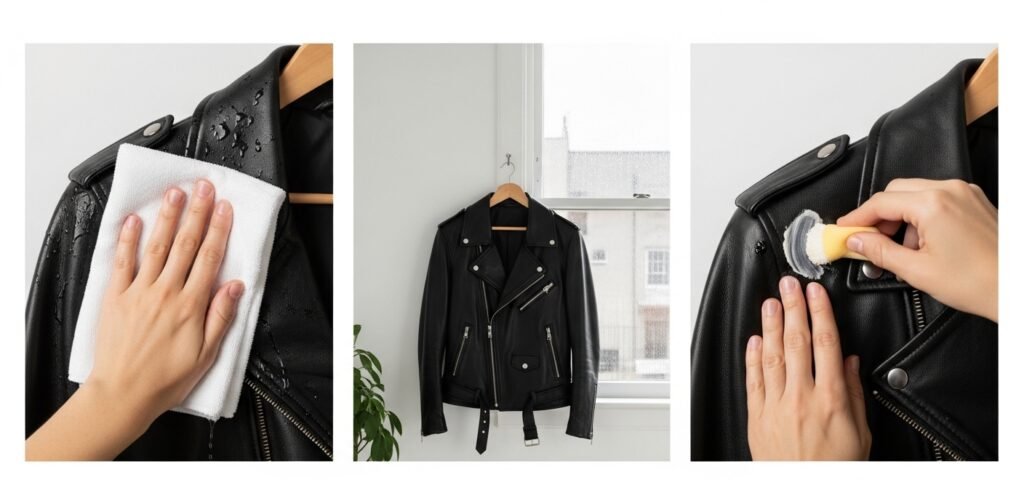
Immediate Action: Shake and Blot
Immediately after coming indoors, gently shake the jacket to remove surface water. Use a clean, absorbent cloth to blot — not rub — excess moisture from the surface. Rubbing spreads water deeper into the leather and can cause surface scuffing.
Dry Naturally at Room Temperature
Hang the jacket on a wide, padded hanger in a well-ventilated room away from direct sunlight, radiators, hairdryers, and any other heat sources. Allow it to air-dry naturally over 24–48 hours. Accelerated drying causes the leather fibers to contract unevenly, leading to stiffness and cracking.
Reshape and Stuff
While the jacket is still slightly damp (not wet), gently reshape the sleeves and collar to their natural form. You can lightly stuff the sleeves with acid-free tissue paper to help maintain shape during drying.
Recondition After Drying
Once fully dry, apply a leather conditioner to replenish the oils that water has removed. This is non-negotiable — even a single heavy rain event can significantly deplete the leather’s natural moisture content. After conditioning, consider reapplying a waterproofing treatment if the existing coating has been compromised.
8. How Often Should You Re-Waterproof a Leather Jacket?
Waterproofing is not a one-time treatment — it degrades with use, washing, and environmental exposure. The re-application frequency depends on several factors.
Usage Frequency: A jacket worn daily in wet climates should be re-waterproofed every 3–6 months. Occasional-use jackets may only need annual treatment.
Climate: High-humidity, high-rainfall environments demand more frequent reapplication than dry climates.
Product Type: Silicone sprays typically last 3–4 months; beeswax treatments can last 6–12 months; fluoropolymer treatments offer the longest durability at 12–18 months per application.
Visual Cues: When you notice that water no longer beads up and rolls off the surface but instead spreads and soaks in, it’s time to re-waterproof. This is called the “wet-out” indicator and is the most reliable signal regardless of time intervals.
Maintaining a seasonal care calendar — conditioning in autumn, waterproofing before the rainy season, and deep conditioning in spring — is the most systematic approach to long-term leather jacket preservation.
9. Common Mistakes That Damage Leather in Wet Weather
Many leather jacket owners inadvertently cause more harm than the rain itself through improper care practices. These are the most damaging mistakes to avoid.
Using a Tumble Dryer or Hairdryer: Rapid, concentrated heat causes leather fibers to dehydrate and crack irreversibly. Never apply direct heat to wet leather.
Hanging in a Plastic Bag While Damp: Plastic prevents airflow and creates a humid microenvironment ideal for mold and mildew growth. Always hang wet leather in the open air.
Wiping with Rough or Abrasive Materials: Paper towels, rough cloths, or abrasive sponges scratch and scuff the leather surface. Use only soft microfiber cloths.
Applying Waterproofing to Uncleaned Leather: Trapping dirt and oils under a protective layer accelerates fiber breakdown from within.
Ignoring Seams and Stitching: Water infiltrates most readily through stitched seams. Failing to apply waterproofing at these junctions creates invisible entry points for moisture.
Using Incompatible Products: Silicone sprays on vegetable-tanned leather, or oil-based conditioners on aniline-dyed surfaces, can cause irreversible discoloration. Always patch-test in an inconspicuous area before full application.
10. Rain Protection for Shearling and Lined Leather Jackets
Shearling and heavily lined leather jackets require a nuanced approach to rain protection because they combine materials with different water-absorption and drying properties.
For shearling jackets, the primary waterproofing should target the leather exterior, taking care not to over-saturate the wool lining with spray products. A wax-based treatment applied carefully to the exterior surface — avoiding direct application near the interior lining — provides effective hydrophobic protection without compromising the wool’s natural breathability and thermal insulation.
After rain exposure, shearling jackets should be dried at room temperature with the exterior facing outward. Avoid compressing the jacket, as flattened wool fibers lose their loft and insulating properties. Gently tease the wool back to its natural texture with a soft-bristle brush once the jacket has dried completely.
Investing in a premium piece like the Jaketra Arctic Luxury Leather Shearling Jacket also means taking special care with its storage when not in use. For guidance on safe seasonal storage, see our complete guide on How to Store Leather Jackets Properly in Winter.
11. Long-Term Leather Jacket Care and Storage
Rain protection is part of a broader ecosystem of leather jacket care. Long-term preservation requires attention to storage conditions, cleaning routines, and seasonal maintenance cycles.
Proper Storage Conditions
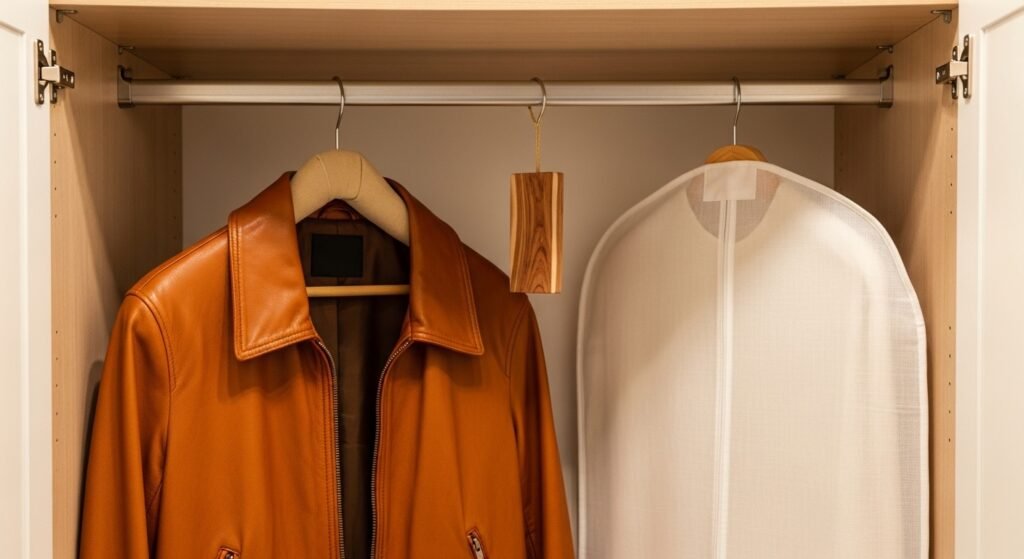
Store leather jackets in a cool, dry, well-ventilated space away from direct sunlight. UV radiation degrades the surface dyes and weakens the leather’s fiber structure over time. Use a breathable garment bag — never plastic — and a wide, padded hanger to maintain the jacket’s shoulder shape.
Climate and Humidity Control
Leather thrives at a relative humidity of 45–55%. Environments that are too dry cause fiber dehydration and cracking; environments that are too humid promote mold growth. In particularly dry climates, a humidifier in the storage room can prevent premature aging.
Professional Leather Cleaning
Annual professional leather cleaning — carried out by a specialist leather restorer or dry cleaner experienced with leather — removes deep-seated grime, refreshes the surface finish, and allows trained eyes to detect early signs of degradation before they become irreversible.
For an authoritative, research-backed perspective on leather care science, the Leather Conservation Centre’s guide to leather preservation offers expert insights used by professional conservators worldwide.
12. Frequently Asked Questions
Can I use a regular umbrella instead of waterproofing my leather jacket?
An umbrella helps, but it doesn’t eliminate exposure. Splash-back, sleeve exposure, and collar moisture are common even under umbrellas. Waterproofing provides a comprehensive safety net that passive measures cannot replicate.
Will waterproofing change the color of my leather jacket?
Most modern silicone and fluoropolymer sprays are color-neutral. Beeswax and oil-based treatments can slightly deepen or darken the leather, which many wearers find enhances the richness of darker shades. Always patch-test in an inconspicuous area — such as an inner hem — before full application.
Can I waterproof a vintage leather jacket?
Yes, with caution. Vintage leather is often more fragile due to decades of oil depletion. Begin with a thorough conditioning treatment before applying any waterproofing product. Use the gentlest available option and consider consulting a professional leather restorer for particularly valuable pieces.
Is there a waterproof leather jacket that doesn’t need treatment?
Some modern leather jackets feature factory-applied DWR (Durable Water Repellent) coatings or hybrid leather-textile constructions. However, even these coatings degrade over time and require periodic renewal through appropriate care products.
Does rain damage leather permanently?
A single rain event, properly managed with post-rain care, typically does not cause permanent damage. Repeated, unaddressed water exposure — particularly without reconditioning — causes cumulative, irreversible damage to leather fibers. The key is prompt action and consistent maintenance.