
Summary
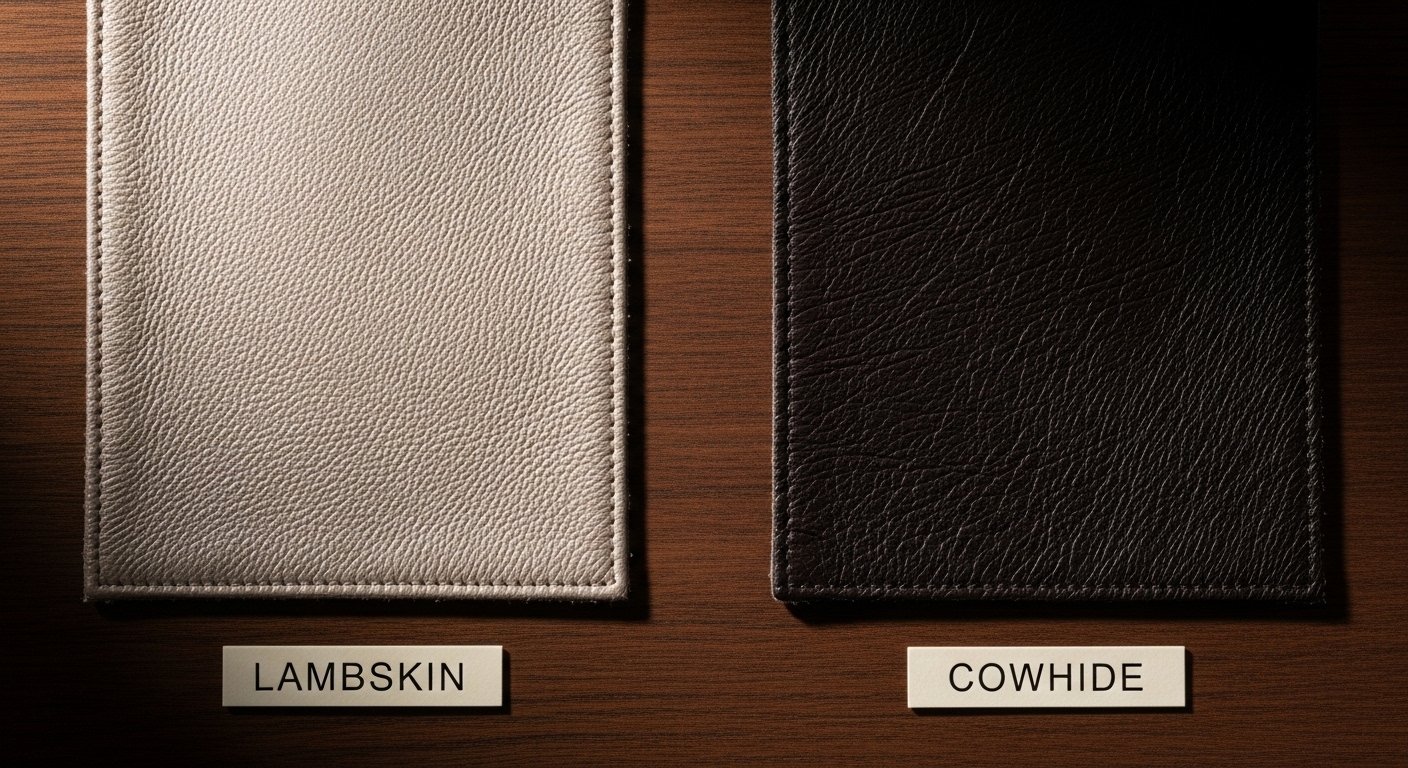
When it comes to choosing the right leather for jackets, bags, gloves, or accessories, the debate between lambskin vs cowhide leather is one of the most important decisions a buyer can make. Both are premium natural leathers, but they serve different purposes, lifestyles, and style aesthetics. Lambskin is celebrated for its buttery softness and luxurious drape, making it a top choice for fashion-forward outerwear. Cowhide, on the other hand, is revered for its rugged durability, structural integrity, and resistance to the elements.
This in-depth guide compares both leathers across every meaningful dimension — texture, durability, weight, care requirements, pricing, and real-world use cases — so you can make a confident, informed purchase. Whether you’re shopping for your first leather jacket or upgrading your wardrobe, this article will give you everything you need to know.
Outline
- Introduction: Why the Lambskin vs Cowhide Debate Matters
- What Is Lambskin Leather? (Origin, Characteristics, Properties)
- What Is Cowhide Leather? (Origin, Characteristics, Properties)
- Lambskin vs Cowhide: Head-to-Head Comparison
- Lambskin for Leather Jackets: Pros and Cons
- Cowhide for Leather Jackets: Pros and Cons
- Which Leather Is Better for Your Lifestyle?
- How to Care for Lambskin vs Cowhide Leather
- Sustainability and Ethical Considerations
- Final Verdict: Which Should You Choose?
- FAQs
- Meta Information & Image Prompts
Lambskin vs Cowhide Leather: Which Is Better?
Introduction: Why Choosing the Right Leather Actually Matters
Leather is not a monolithic material. The hide’s source animal, tanning process, grain type, and finishing method all influence how a garment looks, feels, and ages over time. Among the most frequently compared leather types in the fashion and outerwear world are lambskin and cowhide — two fundamentally different materials that appeal to entirely different buyers.
Semantic concepts like softness vs toughness, luxury vs utility, and fashion vs function sit at the heart of this comparison. Understanding where each leather excels — and where it falls short — allows you to align your purchase with your actual lifestyle rather than marketing language.
Let’s break it all down.
What Is Lambskin Leather?
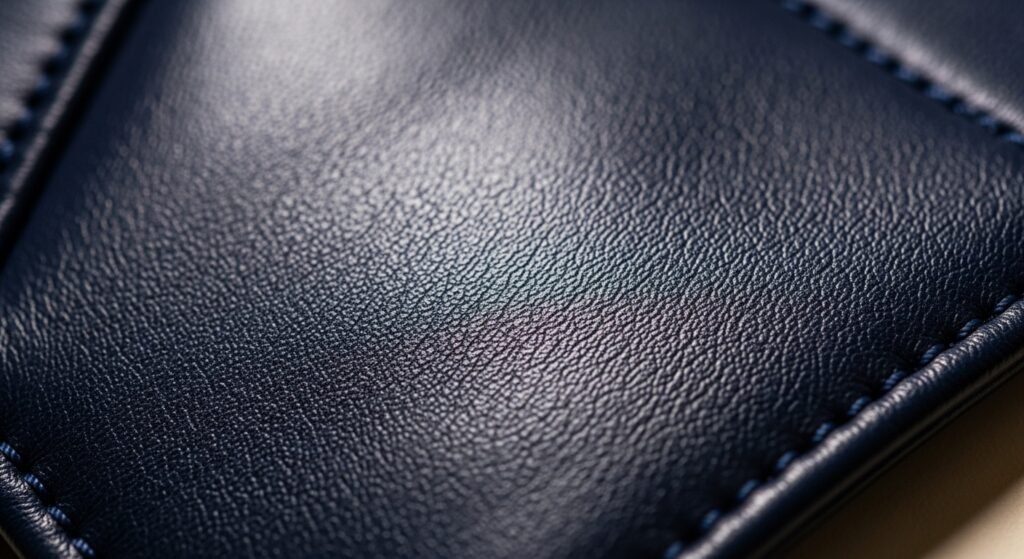
Lambskin leather is derived from the hide of young sheep, typically less than one year old. Because the animal is young and the fibers have not been subjected to years of environmental stress, the resulting hide is exceptionally fine, thin, and supple.
Key Characteristics of Lambskin
- Grain structure: Ultra-fine, tight-knit grain with minimal natural markings
- Surface texture: Smooth, almost velvety to the touch
- Thickness: Typically 0.6mm–1.0mm
- Weight: Lightweight, rarely exceeding 400–500 grams per square meter
- Drape: Falls naturally and conforms closely to the body’s silhouette
- Sheen: Naturally lustrous with a subtle gloss
Lambskin is widely used in high-end fashion jackets, luxury gloves, upscale handbags, and delicate accessories. Brands like Chanel, Versace, and Saint Laurent have long favored lambskin for its ability to achieve a couture-level finish. Its tightly woven fiber structure makes it ideal for structured cuts and close-fitting silhouettes.
What Is Cowhide Leather?
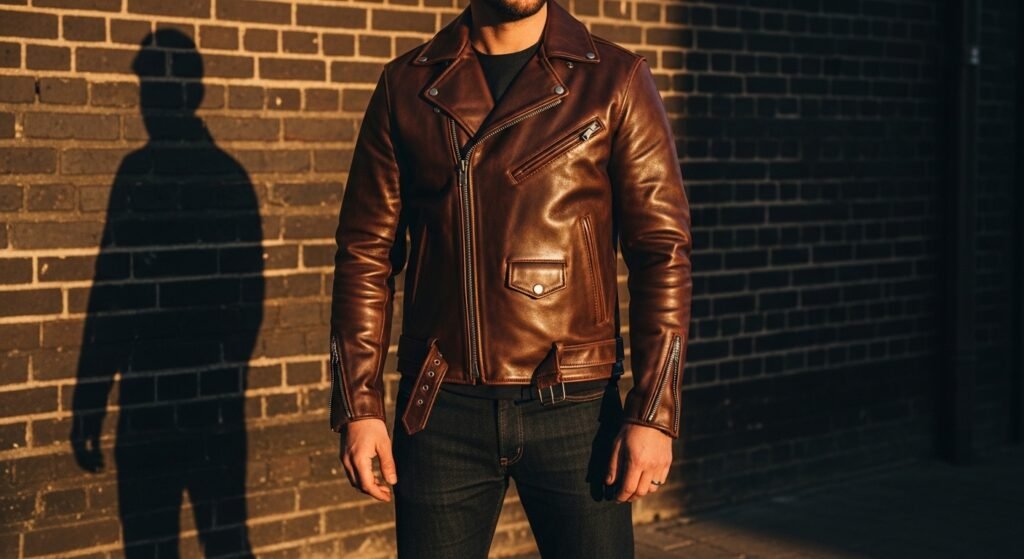
Cowhide leather is sourced from mature cattle and represents the most widely used leather in the world. Its abundance, structural thickness, and natural resilience make it the dominant material for leather goods across almost every price point and product category.
Key Characteristics of Cowhide
- Grain structure: Broader, more visible grain with natural character marks and wrinkles
- Surface texture: Firm, slightly textured, tactilely rich
- Thickness: Typically 1.0mm–4.0mm, depending on the split and finish
- Weight: Heavier than lambskin, ranging from 600g to over 1,000g per square meter
- Drape: Holds its shape well; less body-conforming in full thickness
- Sheen: Matte to semi-gloss depending on finish
Cowhide is the leather of choice for motorcycle jackets, work boots, belts, wallets, saddles, upholstery, and rugged outerwear. Its structural integrity under stress, combined with its wide availability, makes it a practical and economical choice for long-lasting leather goods.
Lambskin vs Cowhide: Head-to-Head Comparison
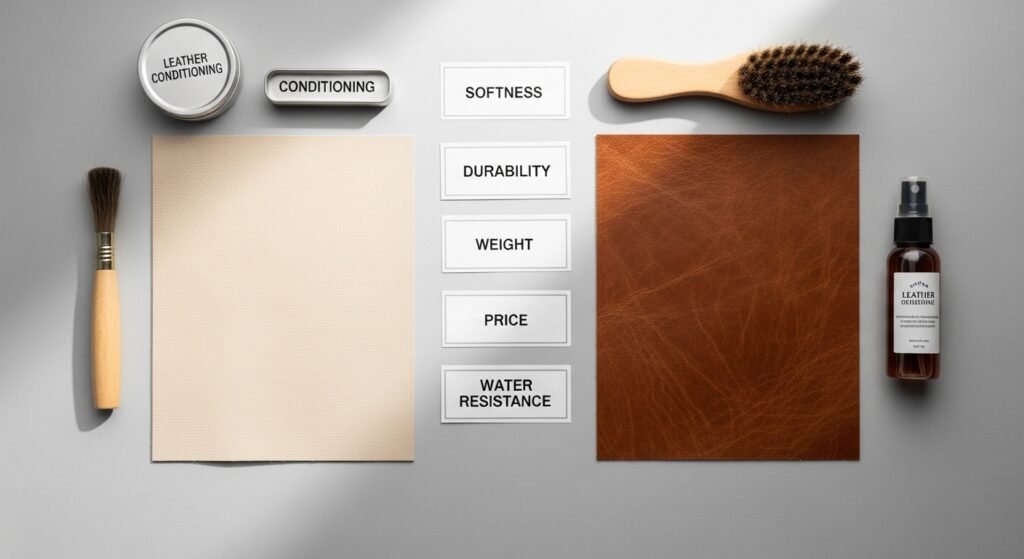
Texture and Feel
This is where lambskin wins decisively for most fashion consumers. Lambskin’s silky, cloud-like softness is unmatched among natural leathers. It feels like a second skin the moment you put it on — no break-in period required. Cowhide, while pleasantly rich in texture, tends to feel stiffer initially and requires weeks to months of regular wear before it softens and molds to your body.
For those who prioritize sensory comfort and immediate wearability, lambskin is the clear winner. For those who enjoy the ritual of breaking in leather and appreciate a material that tells a story over time, cowhide offers a deeply satisfying tactile journey.
Durability and Longevity
Here, cowhide has a commanding advantage. Its dense fiber matrix resists scratches, abrasions, punctures, and tearing far better than the delicate fibers of lambskin. A well-maintained cowhide leather jacket can last 20 to 40 years without significant structural degradation.
Lambskin, while durable enough for regular dress use, is more susceptible to scratching, scuffing, and tearing. It requires more careful handling and is not ideal for active lifestyles involving rough environments.
According to the Leather Working Group, leather durability is significantly influenced by both the source hide and the tanning process. Cowhide, due to its fiber density and thickness, consistently outperforms finer hides in abrasion resistance testing.
Weight and Wearability
Lambskin’s lightweight nature makes it supremely comfortable for all-day wear and layering. It doesn’t add bulk, doesn’t weigh down the shoulders, and is ideal for travel. Cowhide, depending on its thickness, can feel heavier — which some wearers find reassuring (a sense of substance and protection), while others may find it fatiguing on long wear days.
For urban commuters, office-to-dinner wearers, or anyone who values comfort and mobility, lambskin scores higher on functional wearability. For those seeking a jacket with presence, weight, and physical protection — particularly motorcyclists and outdoor enthusiasts — cowhide is far more appropriate.
Appearance and Aesthetic Appeal
Both leathers can look extraordinary, but they project different aesthetics. Lambskin lends itself to sleek, minimalist, high-fashion silhouettes — think razor-sharp seams, glossy surfaces, and a polished, editorial look. Cowhide’s rugged grain and natural character give it an organic, timeless appeal that pairs well with distressed details, vintage washes, and workwear-inspired styling.
If your wardrobe leans toward tailored, contemporary fashion, lambskin aligns naturally with your aesthetic. If you gravitate toward classic Americana, biker culture, or heritage workwear, cowhide is your material.
Water and Abrasion Resistance
Cowhide leather is significantly more water-resistant due to its thicker cross-section and denser fiber structure. While no natural leather is truly waterproof without treatment, cowhide repels light moisture far more effectively than lambskin. Lambskin absorbs moisture quickly and can be damaged or stained by even moderate rainfall if not treated with a quality leather conditioner and waterproofing spray.
Breathability
Both leathers breathe naturally, but lambskin’s thinner profile allows for better airflow, making it slightly more comfortable in moderate temperatures. Cowhide, especially at higher thicknesses, can feel warmer — which is either a pro or a con depending on your climate.
Price and Value
Lambskin typically commands a higher price per square foot due to the limited hide size of young sheep and the more labor-intensive tanning process required to preserve its delicate structure. However, because lambskin jackets require smaller panels and less material per garment, the finished garment price varies widely.
Cowhide is more affordable at the raw material level due to its sheer abundance and the larger surface area per hide. High-quality full-grain cowhide jackets, while still a significant investment, often offer better long-term cost-per-wear value thanks to their superior durability.
Lambskin for Leather Jackets: Pros and Cons
Pros
- Unparalleled softness and comfort from day one
- Elegant, refined aesthetic ideal for fashion and formal settings
- Lightweight for all-day comfort
- Drapes beautifully over the body
- Premium perceived value and luxury appeal
Cons
- More vulnerable to scratches and abrasions
- Requires careful storage and regular conditioning
- Not suitable for heavy-duty or motorcycle use
- Higher sensitivity to moisture and rain
- May show wear faster in high-friction areas
If you’re looking for a show-stopping fashion piece, consider a premium option like the Jaketra Flight Luxury Dark Brown Leather Bomber Jacket — a masterfully crafted example of how fine leather construction can elevate everyday outerwear into something genuinely luxurious.
Cowhide for Leather Jackets: Pros and Cons
Pros
- Exceptional durability and scratch resistance
- Ages beautifully, developing a rich patina over the years
- Excellent abrasion and weather resistance
- Ideal for motorcycle riding and active outdoor use
- Wide variety of finishes, weights, and styles
Cons
- Heavier than lambskin, it can feel cumbersome in thick gauges
- Requires a break-in period before it molds to the body
- Stiffer feel initially
- Less refined aesthetic for high-fashion contexts
- May feel warm in mild weather
Which Leather Is Better for Your Lifestyle?
The honest answer is: it depends entirely on how you live and dress.
Choose lambskin if you:
- Prioritize softness, comfort, and luxury aesthetics
- Wear your jacket to dinners, events, or urban settings
- Prefer a close-fitting, fashion-forward silhouette
- Are willing to invest extra care in maintenance
- Want a jacket that looks stunning from day one
Choose cowhide if you:
- Need a jacket that can take real-world punishment
- Ride motorcycles or spend time in rugged outdoor environments
- Prefer leather that builds character and patina over decades
- Want long-term durability over short-term softness
- Are interested in vintage-style, heritage, or Americana aesthetics
It’s also worth noting that fit plays a major role in how both materials perform on the body. Before choosing your leather type, reading about Slim Fit vs Regular Fit Leather Jackets will help you pair the right cut with the right material for your build and style goals.
How to Care for Lambskin vs Cowhide Leather
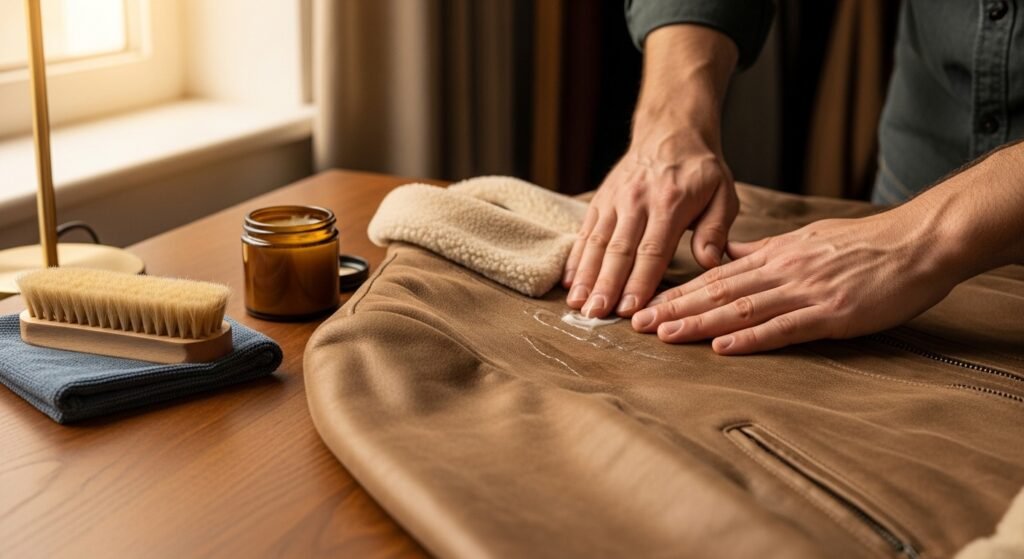
Caring for Lambskin Leather
- Condition regularly — Use a specialized leather conditioner every 4–6 weeks to keep the fibers supple and prevent cracking.
- Avoid moisture — Keep away from rain; if wet, blot dry with a soft cloth and allow to air-dry naturally.
- Store properly — Hang on a padded hanger in a breathable garment bag; never fold.
- Clean gently — Use a soft, damp cloth for surface dirt; avoid alcohol-based cleaners.
- Waterproof spray — Apply a leather-safe waterproofing spray before the season begins.
Caring for Cowhide Leather
- Condition seasonally — Every 3–4 months is sufficient for most climates.
- Embrace the patina — Natural marks and creases are a feature, not a flaw.
- Clean with leather soap — A pH-balanced leather soap removes deeper grime without stripping oils.
- Protect from prolonged sun exposure — UV rays fade and dry out even the toughest hides.
- Polish occasionally — A quality leather cream polish restores color and adds protection.
Sustainability and Ethical Considerations
Both lambskin and cowhide are byproducts of the meat and wool industries, meaning the hides used for leather are largely sourced from animals already raised for other purposes. From an ethical standpoint, neither is inherently more problematic than the other, though lambskin does involve younger animals.
Consumers seeking more sustainable options should look for brands that use vegetable-tanned leather (which avoids harsh chromium tanning chemicals), are certified by the Leather Working Group, and practice transparent supply chains. Both lambskin and cowhide can be produced responsibly when sourced from certified tanneries with environmentally conscious practices.
Final Verdict: Which Leather Is Better?
There is no objectively superior leather — only the right leather for the right person and purpose.
Lambskin is better for fashion, luxury, comfort, and style-first buyers who want the finest sensory experience and are prepared to care for their investment with diligence.
Cowhide is better for durability-focused, active, and heritage-style buyers who want a jacket that grows with them across decades of real-world use.
The ideal wardrobe, frankly, has room for both: a sleek lambskin jacket for elevated occasions, and a sturdy cowhide piece for the days when life demands something tougher.
Frequently Asked Questions
Q: Is lambskin leather more expensive than cowhide? A: Lambskin is generally more expensive per square foot due to its rarity and delicate processing requirements. However, the final product price depends on the brand, finish, and construction quality.
Q: Does lambskin leather last as long as cowhide? A: No. With proper care, cowhide can outlast lambskin by decades. Lambskin typically lasts 5–15 years with careful maintenance, while cowhide can last 20–40+ years.
Q: Can lambskin leather get wet? A: It can withstand light moisture if pre-treated with a waterproofing spray, but prolonged exposure to rain can cause damage, staining, and fiber breakdown.
Q: Which leather is better for a first leather jacket? A: Cowhide is often recommended for first-time buyers due to its forgiving nature, durability, and lower maintenance requirements.
Q: What is the softest type of leather? A: Lambskin is widely considered the softest commercially available leather. Nappa leather (which can be made from lamb or other fine hides) is similarly renowned for softness.
