Summary
Salt water is one of the most underestimated threats to leather jackets. Whether you’re walking along a coastal boardwalk, sweating through a long ride, or caught in winter road-salt spray, your leather jacket faces a silent, compounding enemy. This article Does Salt Water Damage Leather Jackets explores the chemical and physical mechanisms by which salt water degrades leather, how to identify early damage, proven prevention strategies, and step-by-step restoration methods. It covers natural leather types, coated leathers, and shearling combinations — giving you everything you need to protect your investment.
Table of Contents
- Introduction — The Hidden Threat of Salt Water on Leather
- What Happens Chemically When Salt Contacts Leather?
- Types of Salt Exposure That Damage Leather Jackets
- How Different Leather Types React to Salt Water
- Visual Signs of Salt Damage on Leather
- Short-Term vs. Long-Term Salt Damage
- How to Remove Salt Stains from a Leather Jacket
- Prevention Strategies: Protecting Leather Before Exposure
- Conditioning and Restoration After Salt Exposure
- Special Case: Leather Shearling Jackets and Salt Water
- When to See a Professional Leather Restorer
- FAQs
- Conclusion
Introduction — The Hidden Threat of Salt Water on Leather
Leather jackets are built to last decades — but only when they’re given the right care. Among the many environmental hazards that leather faces, saltwater stands out as one of the most damaging and least discussed. From ocean mist and beach trips to sweat-soaked summer rides and icy road spray loaded with de-icing salt, leather encounters saline environments far more often than most owners realize.
The damage is rarely immediate or dramatic. Instead, it’s a slow, progressive degradation — stiff patches here, white crystal deposits there, eventually cracking and structural breakdown. Understanding why salt harms leather and how to interrupt that process is the difference between a jacket that ages beautifully and one that deteriorates prematurely.
This guide is your comprehensive, semantically rich resource on saltwater and leather jacket damage — covering everything from the molecular chemistry of tanning to practical at-home restoration techniques.
What Happens Chemically When Salt Contacts Leather?
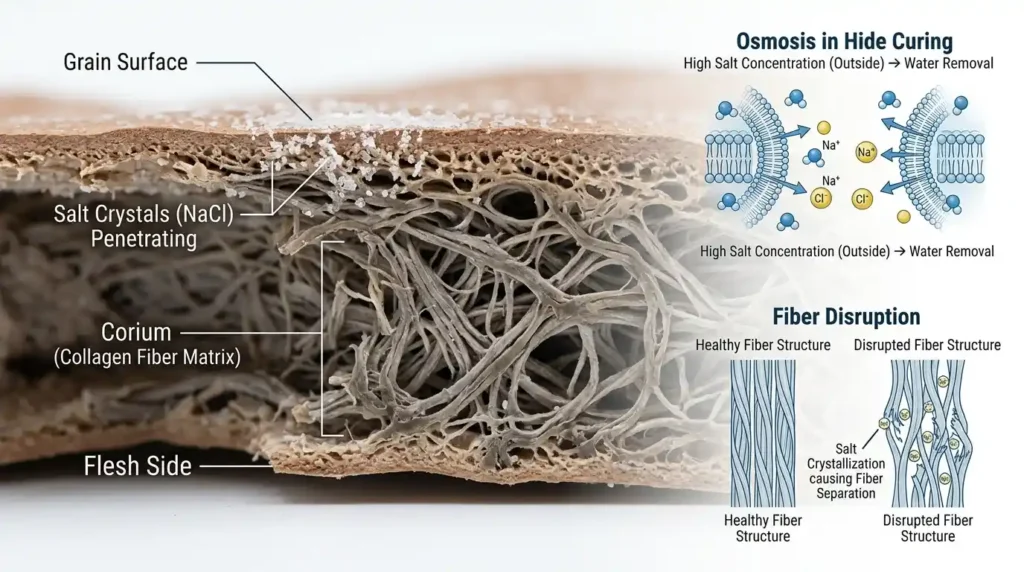
To understand salt damage, you need to understand how leather is made. Raw animal hides are processed through a tanning process — either vegetable tanning (using plant-based tannins) or chrome tanning (using chromium salts). Both methods work by chemically cross-linking the protein fibers (primarily collagen) in the hide, creating a flexible, durable, and rot-resistant material.
When sodium chloride (NaCl) — common salt — contacts leather, it begins a multi-stage chemical disruption:
Osmotic Dehydration
Salt is hygroscopic, meaning it naturally draws moisture toward itself. When a saline solution penetrates the leather grain, it competes with the leather’s own natural moisture content. Through osmotic action, salt pulls water out of the collagen fiber bundles, leaving the leather dehydrated and brittle.
Ionic Disruption of Tannin Bonds
The cross-linked tannin-collagen bonds that give leather its integrity are sensitive to ionic interference. Salt ions — particularly sodium and chloride ions — disrupt these chemical bridges over time, loosening the fiber matrix. This leads to a measurable reduction in tensile strength and flexibility, phenomena well-documented in leather conservation science.
Crystal Formation and Mechanical Stress
As water evaporates from salt-saturated leather, salt crystals form inside the fiber structure. These growing crystals exert internal mechanical pressure, physically pushing fibers apart. This is analogous to how ice crystals damage porous stone — a process called subflorescence. The result is microcracking that eventually becomes visible surface cracking.
pH Disruption
Healthy leather maintains a mildly acidic pH (around 3.5–5.5), which supports fiber integrity. Salt water — especially ocean water, which has a pH of approximately 8.1 — disrupts this balance, creating an alkaline environment that accelerates fiber hydrolysis (the breakdown of collagen proteins by water molecules).
Types of Salt Exposure That Damage Leather Jackets
Not all salt exposure is equal. Understanding your specific risk helps you build targeted prevention habits.
Ocean and Seawater Exposure
Direct contact with seawater is the most aggressive form. Ocean water contains approximately 3.5% salinity, along with magnesium, calcium, and sulfate ions that compound the damage beyond pure sodium chloride. Coastal mist and sea spray can deposit salt on leather without the jacket ever touching the water.
Road Salt (De-icing Salt)
Winter road salt — primarily calcium chloride (CaCl₂) and magnesium chloride (MgCl₂) — is chemically more aggressive than table salt. It’s used in enormous volumes on roads and sidewalks and typically contacts jackets via splash from vehicles or boot/leg contact. Motorcyclists face particularly high exposure risk.
Sweat and Body Salt
Human perspiration contains sodium chloride, potassium, and lactic acid — a combination that is particularly harmful to leather because it’s warm (accelerating absorption), slightly acidic (causing initial pH stress), and continuous. High-wear zones like the collar, underarms, and wrist cuffs are most vulnerable.
Saltwater Swimming or Rain in Coastal Areas
Even light rain in a coastal environment carries dissolved sea salt. Extended exposure to rain near the ocean combines salt damage with moisture saturation — a compounding threat.
How Different Leather Types React to Salt Water
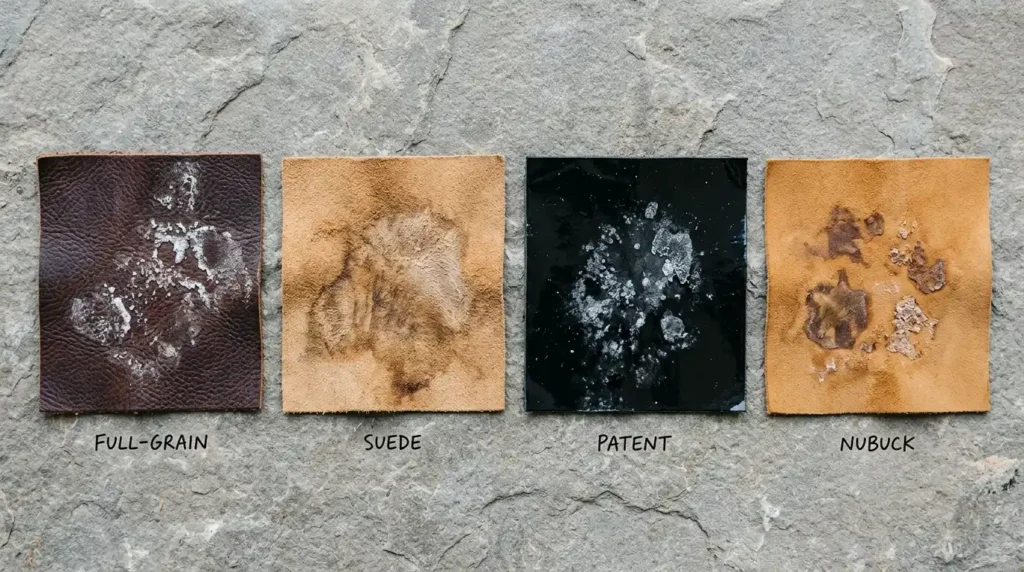
Not all leather responds identically to saline exposure. The leather’s grain type, finish, and treatment determine how quickly damage sets in.
Full-Grain Leather
Full-grain leather retains the natural surface of the hide, including its tight, dense outer grain layer. While this layer provides some resistance to liquid penetration, salt still damages full-grain leather over repeated exposure. The key risk is the edges and seams, where the grain is broken and absorption is faster.
Top-Grain and Corrected-Grain Leather
These leathers have been sanded or buffed and often have a synthetic coating. The coating provides temporary water and salt resistance, but once it breaks down (which salt accelerates), the underlying leather is highly vulnerable.
Suede and Nubuck
These open-grain leathers are the most vulnerable to salt damage. Their surface structure is entirely porous, allowing rapid salt penetration. Salt stains on suede are notoriously difficult to remove without professional intervention.
Bonded Leather
Bonded leather — made from leather fiber scraps bonded with polyurethane — has very little resistance to salt or moisture. Salt exposure typically causes rapid delamination and surface peeling.
Patent Leather
The high-gloss polyurethane coating on patent leather offers the most protection against salt water short-term, but salt can still damage the material at seams and where the coating has micro-cracks.
Visual Signs of Salt Damage on Leather
Identifying salt damage early is critical for effective remediation. Look for these semantically related indicators:
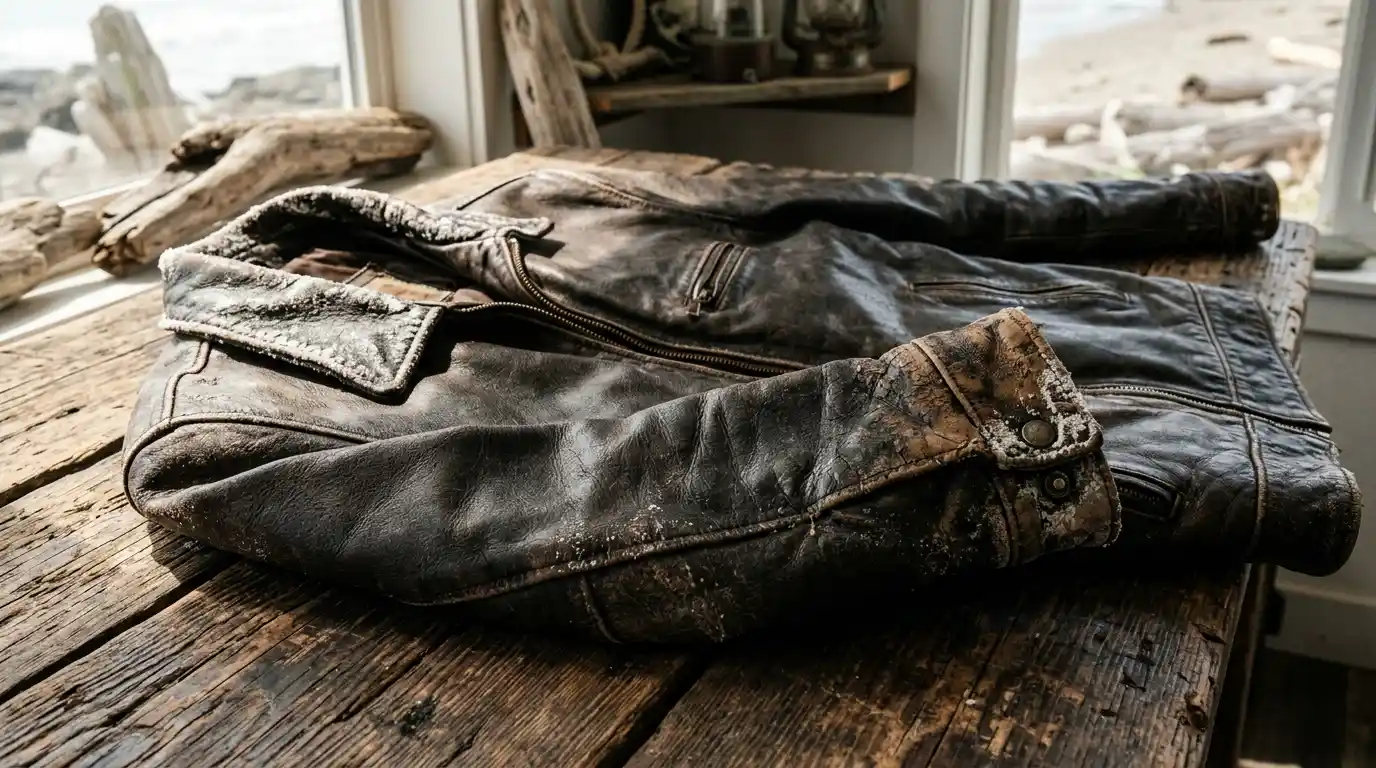
- White crystalline deposits or powdery residue along seams, collar, and surface — this is the most classic salt stain presentation
- Tide-line marks: curved, faint discoloration lines where a liquid boundary evaporated
- Stiffness or rigidity in previously supple areas — especially after drying
- Surface dulling or loss of natural sheen
- Fine cracking (commonly called “checking”) beginning at high-flex points like elbow creases
- Color lightening or uneven fading in exposed zones
- Flaking or peeling in top-grain and bonded leathers
Short-Term vs. Long-Term Salt Damage
Short-Term Exposure (Single Incident)
A single exposure to salt water — being caught in coastal rain or a splash from a puddle — typically causes surface-level salt deposits that can be treated at home. The leather may feel slightly stiff, and white marks may appear as it dries, but fiber integrity is usually intact if treated promptly.
Long-Term or Repeated Exposure
Repeated salt exposure without remediation is cumulative and progressively structural. Over weeks and months, the collagen fiber network weakens, natural oils are displaced, the pH balance shifts, and microscopic crystal damage accumulates. By the time visible cracking appears, significant internal degradation has already occurred.
How to Remove Salt Stains from a Leather Jacket
Step 1 — Act Quickly
Fresh salt deposits are far easier to address than dried, crystallized salt that has been sitting for days. As soon as you notice salt exposure, begin treatment.
Step 2 — Dry Brushing First
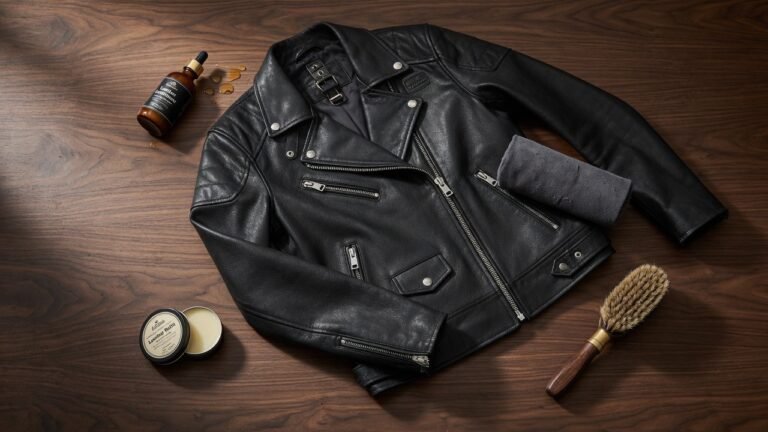
Using a soft-bristled brush (a horsehair shoe brush is ideal), gently brush away any loose surface salt crystals. Do not rub aggressively — this pushes crystals further into the grain.
Step 3 — Diluted Solution Wipe-Down
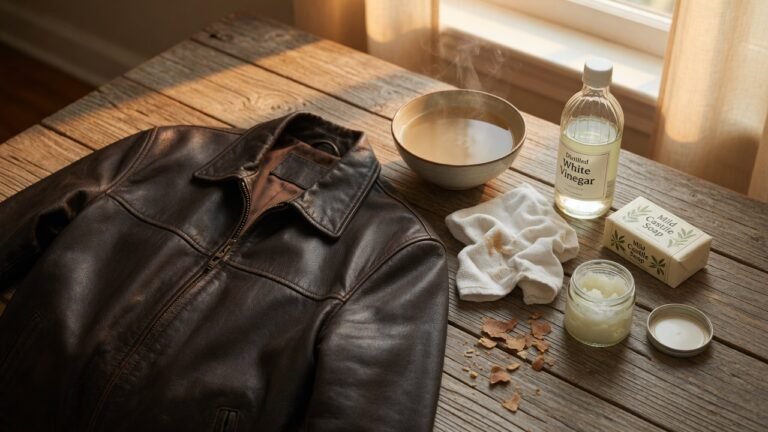
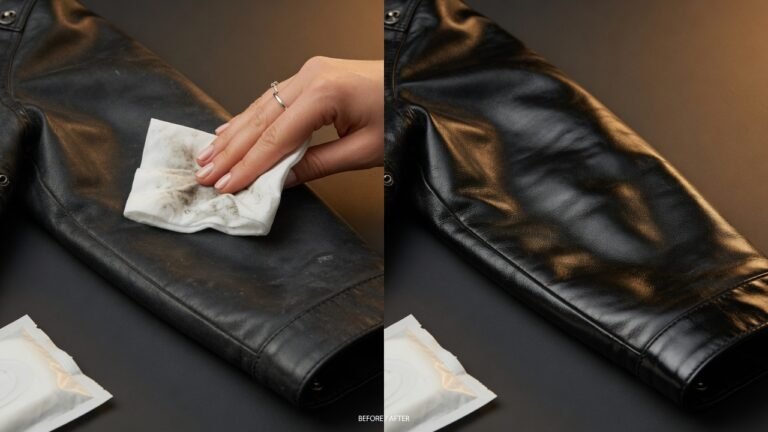
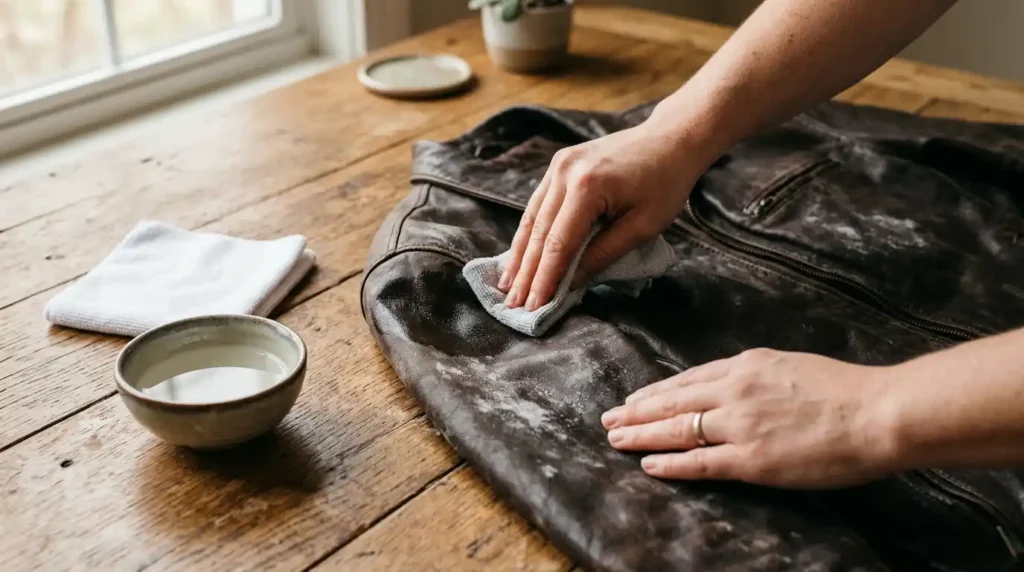
Mix one part white distilled vinegar with two parts distilled water. This mildly acidic solution helps neutralize the alkalinity introduced by salt and dissolves crystalline deposits. Using a clean microfiber cloth, gently wipe the affected areas in small circular motions. Do not soak the leather.
Step 4 — Saddle Soap or Leather Cleaner
Follow with a quality leather cleaner or a small amount of saddle soap worked into a light lather. This lifts residual salts from the grain. Wipe clean with a damp cloth.
Step 5 — Allow to Dry Naturally
Never use heat sources (hairdryers, radiators, direct sunlight) to dry leather after cleaning. Allow it to dry slowly at room temperature. Rapid drying causes the same kind of dehydration that salt initiates.
Step 6 — Condition Immediately
Once dry, apply a high-quality leather conditioner generously. Mink oil, lanolin-based conditioners, or beeswax-based products replenish the lipid content that salt has stripped away and help restore suppleness.
Prevention Strategies: Protecting Leather Before Exposure
Prevention is always more effective — and cheaper — than restoration.
Apply a Water-Repellent Treatment
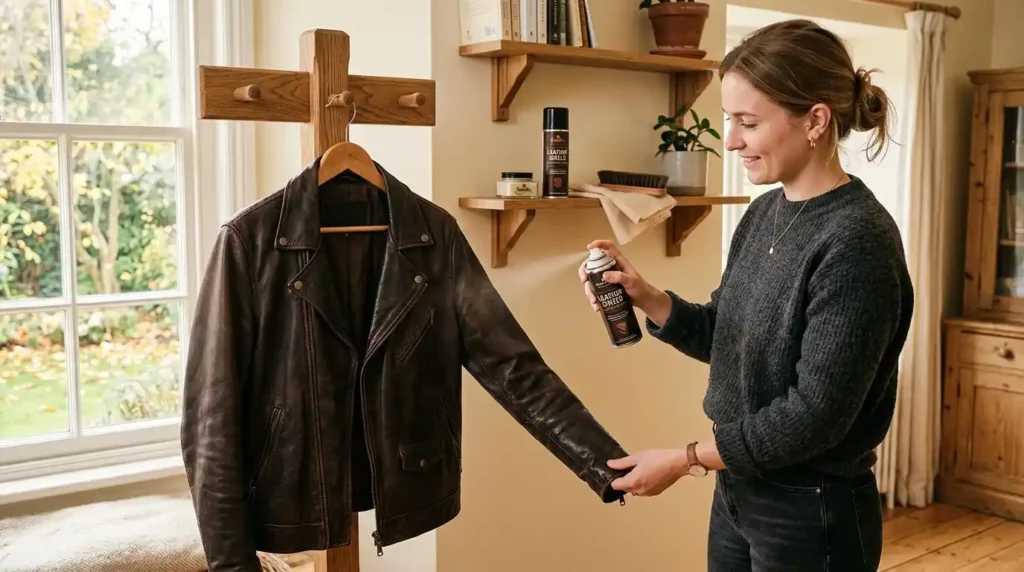
Purpose-formulated leather water-repellent sprays (based on fluoropolymer or silicone chemistry) create a hydrophobic barrier on the grain surface that significantly slows salt-water penetration. These should be reapplied every 3–6 months, depending on wear frequency.
Regular Conditioning Keeps Leather Resilient
Well-conditioned leather is less porous and more resistant to both water and salt penetration. A leather that’s already rich in natural oils provides better natural barrier function. Condition your jacket every 2–3 months with routine wear, or seasonally.
Avoid Prolonged Coastal or Winter Road Exposure
If you know you’ll be in high-salt environments, choose a jacket with a protective coating or use a wax-based product that forms a physical barrier over the leather surface.
Rinse After Exposure
If your jacket is exposed to ocean mist or road salt, a quick wipe-down with clean distilled water (not tap water, which contains minerals) followed by conditioning removes surface deposits before they can crystallize and penetrate.
Conditioning and Restoration After Salt Exposure
For comprehensive advice on post-exposure care rituals — especially if you own a delicate lambskin jacket — refer to this detailed guide on How to Care for a Lambskin Leather Jacket, which covers conditioning schedules, product selection, and storage best practices.
Restoration after significant salt damage typically follows this hierarchy:
- Clean — remove all surface contaminants
- Neutralize — balance pH with a mild acidic solution
- Rehydrate — deep conditioning with penetrating oils
- Protect — seal with wax or a water-repellent product
- Maintain — establish a regular care schedule going forward
For deep restoration of cracked leather, specialized leather fillers (such as those in the Leather Master or Collonil product lines) can repair surface checking before a finishing coat is applied.
Special Case: Leather Shearling Jackets and Salt Water
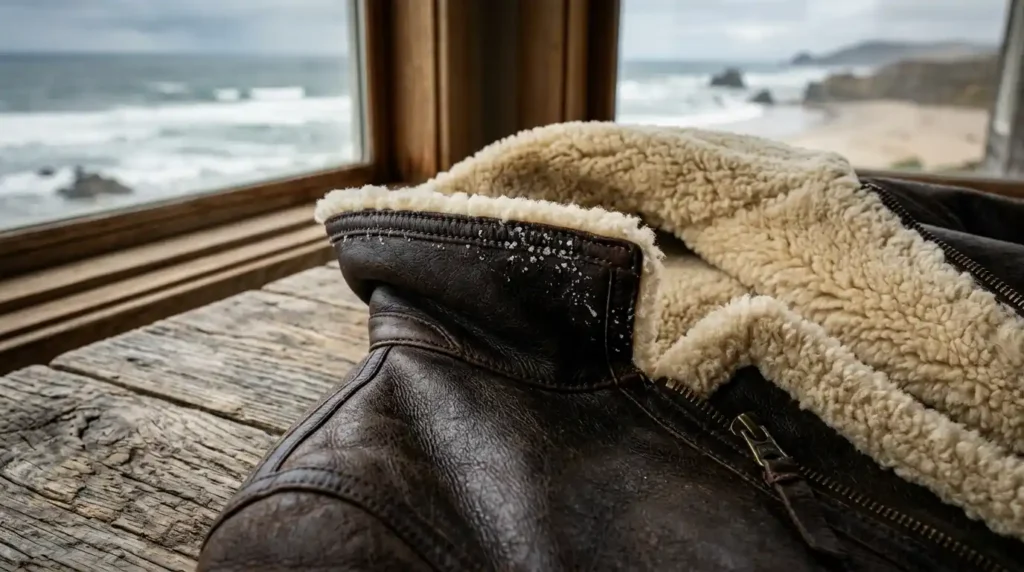
Shearling jackets — those combining a leather outer shell with an intact wool-and-skin interior — face a compounded threat from salt water. The two materials have fundamentally different vulnerabilities:
The leather shell faces all the chemical threats described above. The shearling (wool) interior, meanwhile, absorbs saline moisture readily, and salt deposits in wool fiber are extremely difficult to remove without professional wet-cleaning. Wet shearling also shrinks, mats, and loses its loft if dried improperly.
If you’re investing in a premium piece like the Leather Shearling Jacket from Jaketra’s Arctic Luxury line, salt management becomes even more critical. The combination of full-grain leather and genuine shearling requires:
- Immediate surface treatment after any salt exposure
- Specialist shearling conditioners (not standard leather conditioner, which can mat the wool)
- Professional cleaning for significant salt saturation
- Proper storage away from salty coastal environments when not in use
Never submerge a shearling jacket in water for cleaning, and never use a washing machine. Spot treatment and professional care are the only safe routes for salt removal on shearling pieces.
For further guidance on shearling care from an authoritative source, the Leather Research Laboratory at the University of Northampton offers peer-reviewed resources on leather preservation chemistry that underpin many professional care recommendations.
When to See a Professional Leather Restorer
Some salt damage exceeds what DIY treatment can address safely. Seek professional leather restoration when you observe:
- Deep cracking or fracturing of the grain surface
- Widespread flaking or delamination
- Salt stains that have penetrated through to the lining
- Color loss over large areas
- Shearling saturation or wool matting
- Any jacket of significant monetary or sentimental value
Professional leather conservators use pH-buffered cleaning agents, vacuum impregnation for deep conditioning, and specialist dye-matching systems that go far beyond consumer products.
FAQs
Can I wear my leather jacket to the beach? You can, but minimize direct water and salt spray contact, treat the jacket with a water repellent beforehand, and clean and condition it immediately after.
Does rain damage leather the same way salt water does? Regular rain causes moisture saturation but lacks the ionic disruption and crystal formation of salt water. Coastal rain is more problematic because it carries dissolved salt. Rain damage is generally less severe but still requires prompt drying and conditioning.
Will salt water ruin a leather jacket permanently? A single incident, treated promptly, rarely causes permanent damage. Repeated or untreated exposure over time leads to irreversible structural degradation. Early intervention is always key.
Does vinegar really help with salt stains? Yes — diluted white vinegar (mild acetic acid) helps dissolve salt deposits and neutralize the alkalinity introduced by seawater or road salt. Always follow with conditioning, as vinegar can temporarily dry the leather.
How do I know if my leather jacket needs reconditioning after salt exposure? The leather will feel stiffer than normal, may show white residue, and may look dull or matte in areas that were previously glossy. These are all indicators that the natural oils have been depleted.
Conclusion
Salt water is a serious and multifaceted threat to leather jackets — working through osmotic dehydration, ionic fiber disruption, crystal-induced mechanical stress, and pH imbalance. The damage compounds over time, making early intervention and consistent prevention the most effective approach. Whether you’re dealing with ocean spray, winter road salt, or chronic sweat exposure, understanding the specific mechanisms at work empowers you to protect your jacket intelligently.
The good news: with the right care routine, most salt-related damage is preventable, and early-stage damage is fully reversible. Keep your leather conditioned, treat it promptly after exposure, and invest in quality prevention products — and your jacket will remain a supple, beautiful, and structurally sound piece for years to come.