Summary
Lambskin leather is among the most luxurious and delicate of all leather types. Its buttery softness and lightweight drape make it a prized fashion investment — but that same fine-grained texture makes it highly susceptible to moisture, oils, scratches, and improper cleaning. This article, How to Care for a Lambskin Leather Jacket, is a comprehensive, semantically rich guide covering every dimension of lambskin leather jacket care: from daily maintenance rituals and deep conditioning techniques to stain removal, storage best practices, and professional restoration. Whether you own a classic black biker jacket or a tailored lambskin blazer, this guide will help you protect your investment for years to come.
Table of Contents
- What Makes Lambskin Leather Unique (and Delicate)
- Essential Tools and Products for Lambskin Care
- How to Clean a Lambskin Leather Jacket Step by Step
- Deep Conditioning: Keeping Lambskin Supple and Crack-Free
- How to Handle Common Stains on Lambskin
- Waterproofing and Weather Protection
- Proper Storage for Lambskin Leather Jackets
- What to Avoid: Common Mistakes That Ruin Lambskin
- Professional Cleaning vs. DIY Care
- Lambskin vs. Other Leather Types: Why Care Differs
- Long-Term Maintenance Schedule
- FAQs About Lambskin Leather Jacket Care
What Makes Lambskin Leather Unique (and Delicate)
Lambskin leather is derived from the hide of young sheep, making it one of the thinnest and most pliable of all natural leather varieties. Its ultra-fine grain structure, lightweight feel, and velvety smooth texture are what place it in the premium tier of leather goods — favored by luxury fashion houses and discerning buyers alike.
However, these very qualities are what make lambskin uniquely vulnerable. Unlike full-grain cowhide or vegetable-tanned leather, lambskin has a lower fiber density, which means it absorbs liquids faster, creases more easily, and loses its natural oils more quickly when exposed to environmental stressors. It is not a “workhorse” leather — it is a refined material that rewards attentive, gentle care.
Understanding the semantic properties of lambskin — its porous surface, its sensitivity to pH-imbalanced cleaners, and its tendency toward color transfer — is the first step toward caring for it correctly.
Essential Tools and Products for Lambskin Leather Care
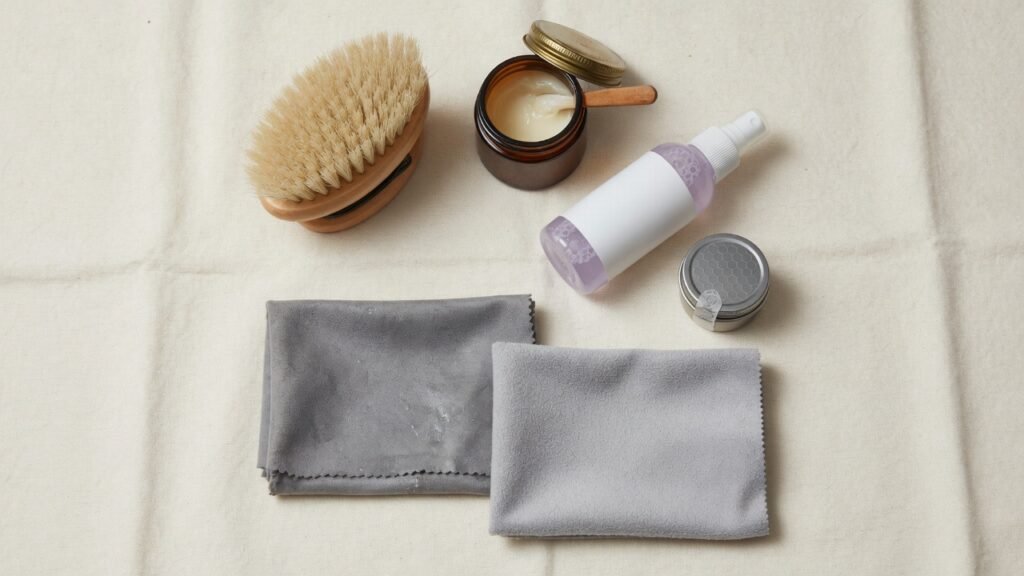
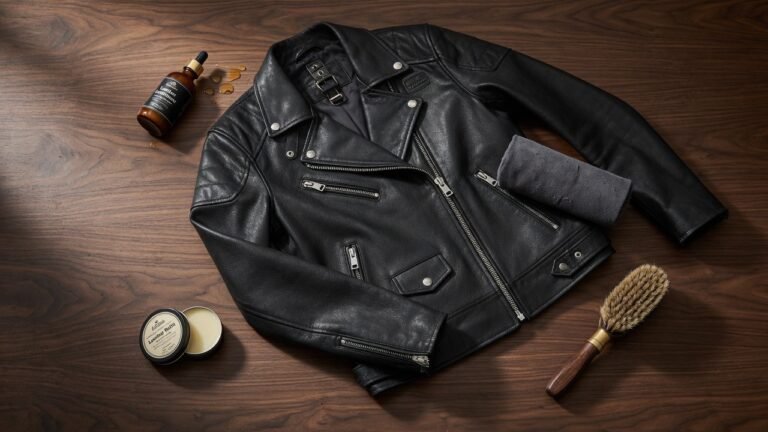
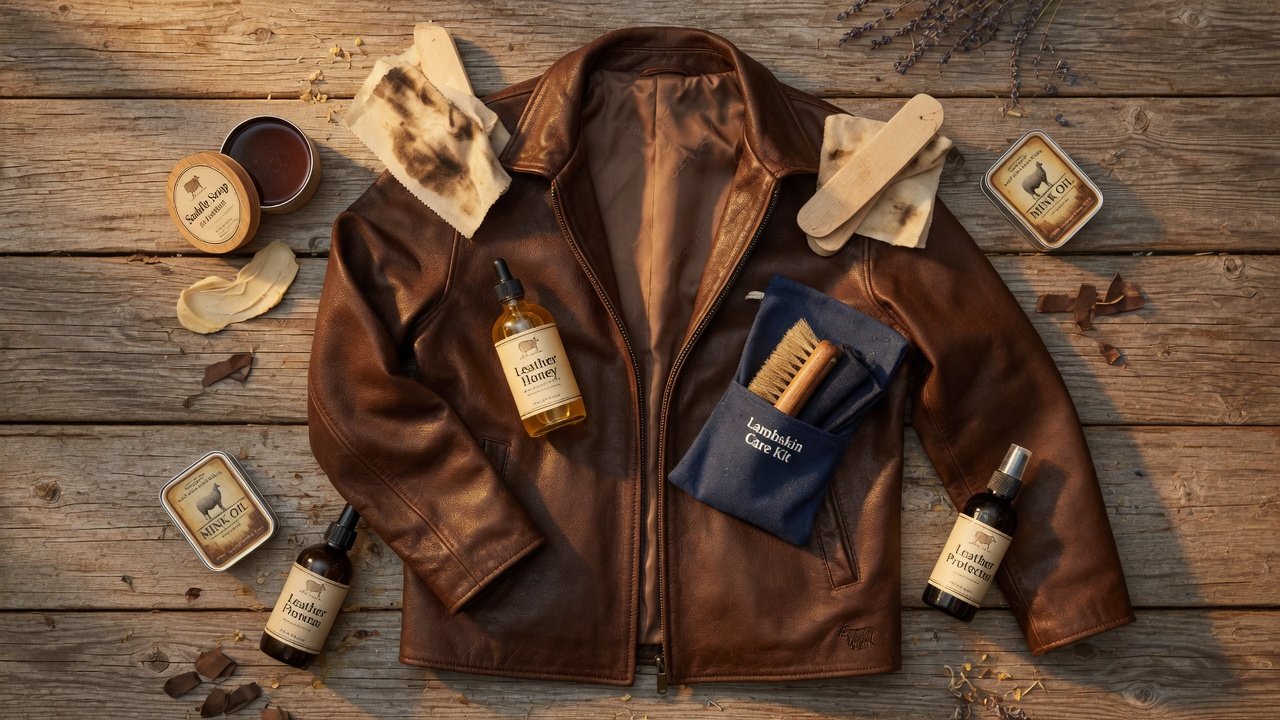
Before you begin any cleaning or conditioning process, assemble the right toolkit. Using the wrong materials — even seemingly harmless household substances — can cause irreversible discoloration, drying, or surface breakdown on lambskin.
Recommended Products
- pH-neutral leather cleaner — specifically formulated for delicate leathers; avoid anything alkaline or solvent-based
- Lanolin-based or mink oil conditioner — these mimic the natural oils in animal skin and absorb without leaving greasy residue
- Soft microfiber cloths — lint-free, non-abrasive; critical for application and buffing
- Horsehair brush — for dusting and light surface debris removal
- Leather-specific waterproofing spray — avoid silicone sprays, which clog pores
- Beeswax cream — optional but excellent for long-term surface protection
What to Avoid
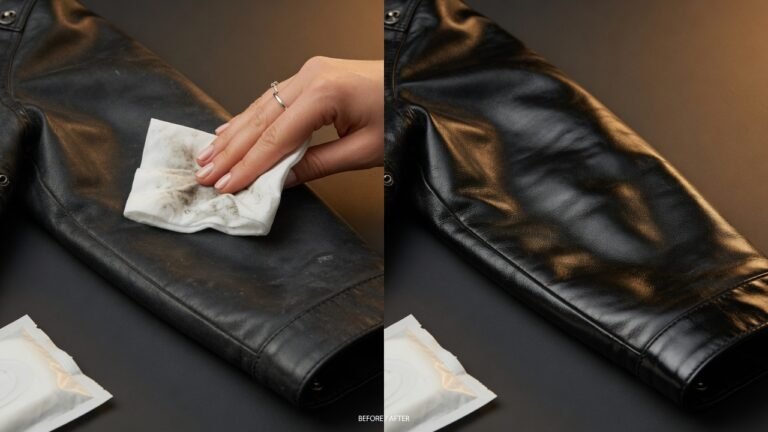
- Baby wipes, wet wipes, or antibacterial wipes (contain alcohol and surfactants)
- Olive oil or coconut oil (darkens leather and goes rancid over time)
- Saddle soap (too harsh for lambskin’s delicate surface)
- Hairdryers or heat guns (strip moisture rapidly)
For a detailed breakdown of which everyday items are safe to use, read our guide on What Household Products Can Clean a Leather Jacket Safely — it covers pH-safe alternatives you may already have at home.
How to Clean a Lambskin Leather Jacket Step by Step
Routine cleaning is the foundation of long-term lambskin preservation. The goal is to remove surface dirt, body oils, and environmental pollutants without introducing moisture imbalance or chemical stress to the hide.
Step 1 — Dry Dusting
Begin with a soft horsehair brush or a dry microfiber cloth. Using gentle, circular motions, sweep away loose dust and surface debris. Pay particular attention to seams, pockets, and collar folds where particulate matter accumulates.
Step 2 — Spot Test Your Cleaner
Always perform a patch test on an inconspicuous area — inside the collar or hem — before applying any cleaner to visible surfaces. Apply a small amount, wait 5 minutes, and check for discoloration or texture change.
Step 3 — Apply pH-Neutral Leather Cleaner
Dampen (do not soak) a microfiber cloth with your pH-neutral cleaner. Work in small sections using light, circular motions. Do not scrub — lambskin’s surface fibers can be disrupted by aggressive rubbing, leading to scuffing or bald patches.
Step 4 — Wipe Away Residue
Use a second clean, slightly damp cloth to wipe away cleaner residue. Follow immediately with a dry cloth to absorb any surface moisture.
Step 5 — Air Dry Naturally
Hang the jacket on a wide, padded hanger in a well-ventilated area away from direct sunlight and heat sources. Allow it to dry completely before conditioning or storing. This may take several hours.
Deep Conditioning — Keeping Lambskin Supple and Crack-Free
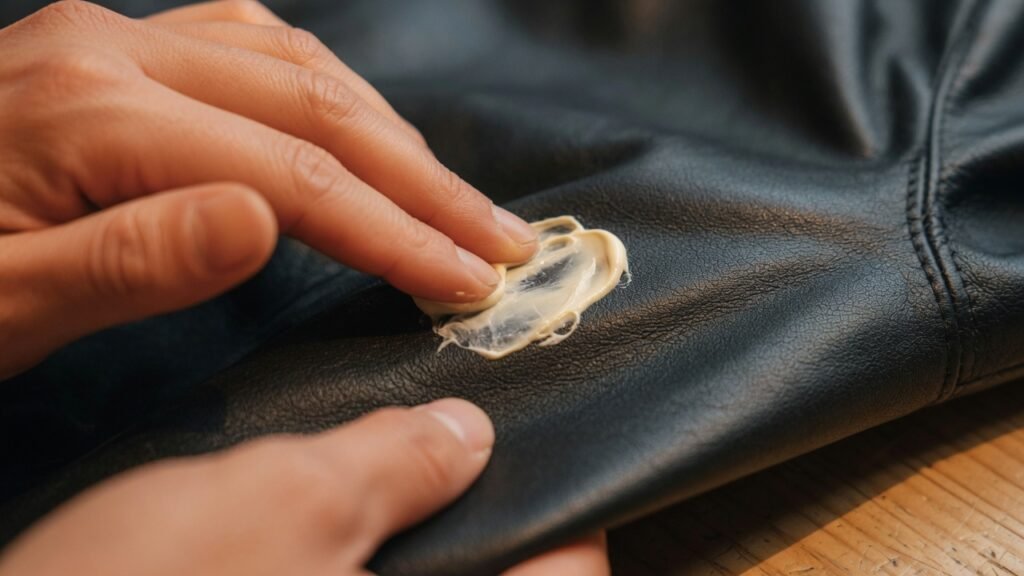
Conditioning is arguably the most important aspect of lambskin leather jacket care. Leather is a natural material that loses moisture over time — especially in dry climates or with seasonal temperature changes. When lambskin loses its internal oils, it becomes brittle, stiff, and prone to cracking and peeling.
How Often to Condition
- Every 3–4 months under normal use
- Every 6–8 weeks in dry or arid climates
- After every cleaning session
- After exposure to rain or prolonged humidity
How to Apply Conditioner
Apply a pea-sized amount of lanolin-based conditioner to a soft cloth. Work it into the leather using slow, circular motions, covering the entire surface, including seams. Allow it to absorb for 10–15 minutes, then buff gently with a clean dry cloth to remove excess. The jacket should feel noticeably more supple within minutes.
According to the Leather Conservation Centre, a leading authority on leather preservation, conditioning with appropriate emollients is the single most effective preventive measure against leather degradation — more impactful than any cleaning technique. Their leather care guidance is an authoritative resource for understanding the material science behind leather maintenance.
How to Handle Common Stains on Lambskin
Water Stains
Counterintuitively, water stains on lambskin are best treated with more water. Dampen the entire panel (not just the stain) with a slightly damp cloth to even out the moisture level, then allow it to air dry uniformly. Spot-drying creates tide marks.
Oil and Grease Stains
Apply a small amount of cornstarch or talcum powder directly to the stain. Leave it for several hours — ideally overnight — to absorb the oil. Brush away gently and repeat if necessary. Do not use water on fresh grease stains, as this pushes the oil deeper into the pores.
Ink Stains
Ink is notoriously difficult on lambskin. A small amount of isopropyl alcohol (70%) on a cotton swab, dabbed — not rubbed — onto the ink mark, can lift fresh stains. Always follow with conditioning afterward, as alcohol is dehydrating to leather. For set-in ink, professional cleaning is recommended.
Mold and Mildew
If you notice white or grey fuzzy patches, your jacket has developed surface mold — typically a result of damp storage. Mix equal parts white vinegar and water, apply sparingly with a cloth, and wipe clean. Allow to dry completely and condition immediately. Store in a breathable garment bag going forward.
Waterproofing and Weather Protection
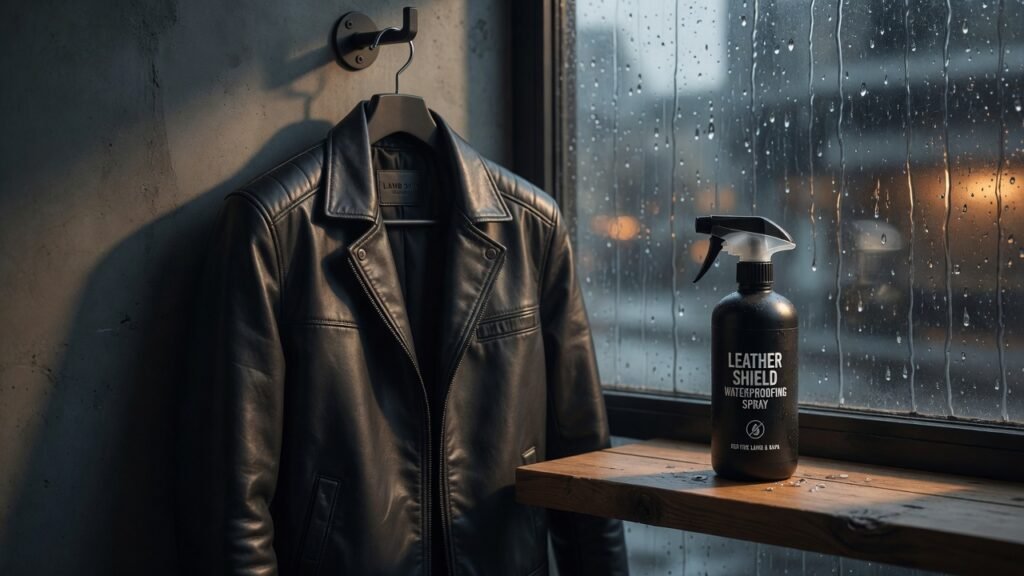
Lambskin is not inherently water-resistant. Unlike waxed or treated cowhide, it has an open pore structure that readily absorbs moisture. Prolonged exposure to rain can cause watermarks, stiffening, and in severe cases, structural fiber damage.
How to Waterproof Lambskin
Use a water-based, leather-specific waterproofing spray — never silicone-based products, which suffocate the material. Apply in a thin, even coat from 20–25 cm distance. Allow to dry for 30 minutes and apply a second coat. Reapply every 3–6 months or after deep cleaning.
What to Do After Getting Caught in the Rain
If your jacket gets wet, do not panic. Blot (do not rub) excess water with a dry cloth. Reshape the jacket and hang it on a padded hanger. Allow it to dry at room temperature. Once fully dry, apply conditioner — rain exposure accelerates moisture loss from the fibers.
Proper Storage for Lambskin Leather Jackets
How you store lambskin during off-seasons or between wears has a significant cumulative impact on its longevity.
The Right Hanger
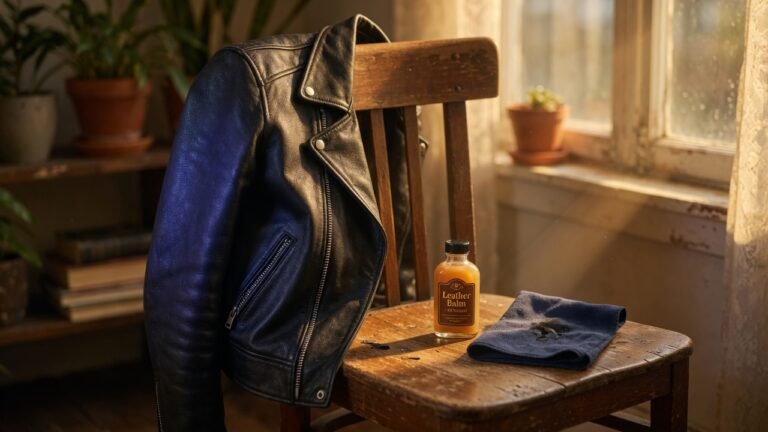
Always use a wide, padded, or contoured hanger. Wire hangers create pressure points at the shoulders that permanently distort lambskin’s shape. The jacket should hang naturally without stress on any seam.
Garment Bags
Store lambskin in a breathable fabric garment bag — cotton or muslin. Avoid plastic bags or sealed containers, which trap humidity and promote mold growth. If storing long-term, add a cedar block or silica gel packet to regulate moisture levels.
Climate and Light
Store away from direct sunlight, which causes color fading and surface drying. Ideal storage conditions are cool (15–20°C), dry, and dark. Avoid attics, basements, and cars — environments with extreme temperature fluctuation.
What to Avoid — Common Mistakes That Ruin Lambskin
- Machine washing or tumble drying — the agitation and heat will destroy the grain structure
- Ironing directly — use a cool iron through a cloth if absolutely necessary, or hang in a steamy bathroom to release creases
- Folding for long-term storage — fold lines become permanent creases in lambskin
- Overloading closets — compression from neighboring garments creates pressure marks
- Perfume or hairspray contact — alcohol and aerosol propellants cause discoloration
Professional Cleaning vs. DIY Care
For routine maintenance — dusting, light cleaning, conditioning — DIY care is entirely sufficient and preferable, as it lets you control the products and methods used.
However, professional leather cleaning is warranted for:
- Deep-set stains (ink, dye transfer, oil saturation)
- Structural damage (torn seams, delamination)
- Color restoration or re-dyeing
- Mold remediation beyond the surface layer
When seeking professional services, always choose a specialist leather cleaner rather than a standard dry cleaner. Ask specifically whether they have experience with lambskin or nappa leather, as these require different techniques than cowhide.
Lambskin vs. Other Leather Types — Why Care Differs
If you also own or are considering a Shearling Jacket, it’s worth understanding how care requirements differ. Shearling combines leather on one side with wool fleece on the other — requiring a hybrid care approach that addresses both the outer hide and inner fiber layer. Lambskin, being a single-material surface, responds more predictably to standard leather care protocols — but is considerably more sensitive to moisture and abrasion than the thicker, toughened leather used in shearling outerwear.
Full-grain cowhide is far more forgiving — it has a higher fiber density and a thicker cross-section that resists scratching and moisture penetration. Suede and nubuck, while also fine-grained, have a napped surface requiring brush-based care entirely different from smooth lambskin. Understanding your specific leather type is critical because applying the wrong care product to the wrong leather type is a leading cause of preventable damage.
Long-Term Maintenance Schedule
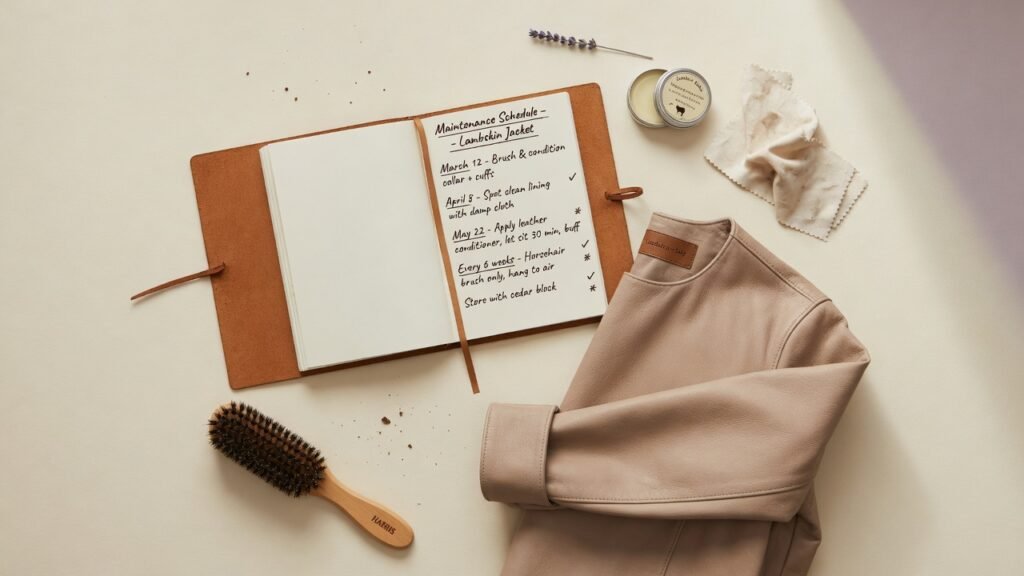
| Frequency | Action |
| After every wear | Wipe with a dry microfiber cloth; reshape on the hanger |
| Monthly | Light cleaning with pH-neutral cleaner |
| Every 3–4 months | Full conditioning treatment |
| Every 6 months | Waterproofing spray application |
| Annually | Professional inspection; consider re-dyeing if fading |
FAQs About Lambskin Leather Jacket Care
Can I use Vaseline on lambskin leather?
Petroleum jelly is occasionally cited as a leather conditioner, but it is not recommended for lambskin. It can darken the color, clog the pores over time, and attract dust. Use a purpose-formulated lanolin or beeswax conditioner instead.
How do I soften a stiff lambskin jacket?
Stiffness is usually a sign of moisture depletion. Apply a generous conditioning treatment and hang the jacket at room temperature overnight. Repeat if necessary. Avoid applying heat to accelerate softening — it will worsen the dehydration.
Can lambskin leather be repaired if it cracks?
Surface micro-cracks can often be treated with a leather repair filler and reconditioned back to an acceptable appearance. Deep cracks through the grain are more difficult to reverse and may require professional color matching and filler application.
Is lambskin leather durable for everyday use?
Lambskin is best suited to moderate, occasion-based wear rather than heavy daily use. If you need a leather jacket for everyday commuting or outdoor activity, a thicker cowhide or buffalo leather will offer greater abrasion resistance and longevity.
Conclusion
Caring for a lambskin leather jacket is less about complicated routines and more about consistent, gentle attention. Clean regularly with the right products, condition before the leather shows any signs of stiffness, store thoughtfully on the right hanger, and protect it from moisture. Treat it as the luxury material it is, and a quality lambskin jacket can remain a wardrobe centerpiece for a decade or more. The key is building a care habit — small, regular efforts that prevent the kind of damage that is expensive or impossible to reverse.