Summary
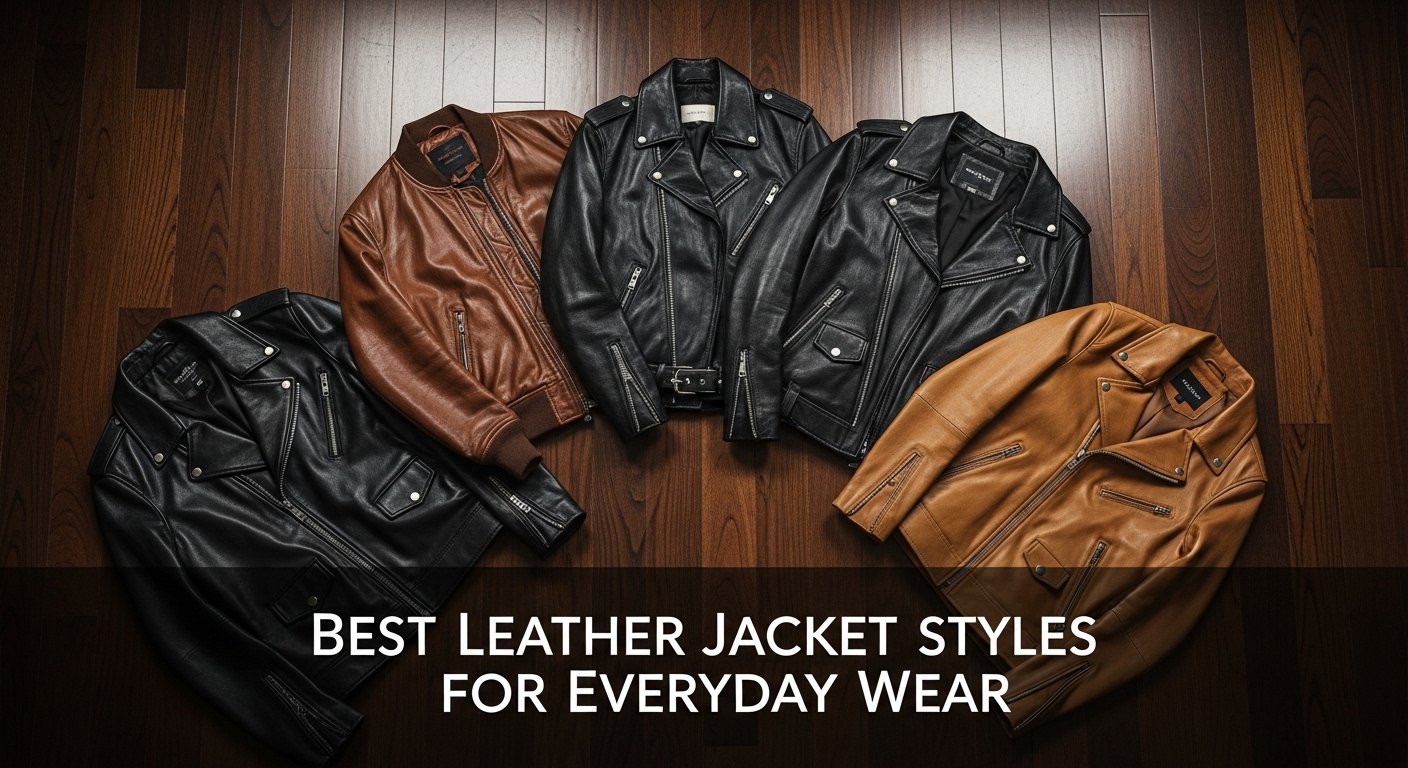
A leather jacket is more than a garment — it is a wardrobe investment, a cultural symbol, and a functional layer that works across seasons, occasions, and personal styles. Whether you are drawn to the rugged silhouette of a biker jacket, the clean tailoring of a café racer, or the relaxed drape of a bomber, knowing which leather jacket style suits your daily lifestyle can save you money, elevate your personal brand, and deliver decades of wear. This in-depth guide covers every major leather jacket style for everyday wear — from iconic silhouettes to emerging minimalist cuts — including the best leather types, fit guidance, care routines, styling tips, and smart buying considerations.
Outline
- Introduction — Why Leather Jackets Remain a Wardrobe Essential
- Understanding Leather Types Before You Choose a Style
- The Classic Biker / Moto Jacket
- The Timeless Bomber Jacket
- The Sharp Café Racer Jacket
- The Versatile Trucker / Western-Style Leather Jacket
- The Minimalist Leather Blazer
- The Relaxed Leather Shirt Jacket (Shacket)
- How to Choose the Right Leather Jacket for Your Body Type
- Leather Jacket Fit Guide — What to Look For
- Best Leather Types for Daily Wear
- How to Style a Leather Jacket for Everyday Outfits
- Leather Jacket Care and Longevity
- Sustainable and Ethical Leather Choices
- Price vs. Quality — What to Expect at Each Budget Tier
- Final Buying Checklist
- Conclusion
- Meta Title & Description
- Image Prompts
Introduction — Why Leather Jackets Remain a Wardrobe Essential
Few garments have held their cultural relevance as stubbornly or as stylishly as the leather jacket. From the rebellious subcultures of the 1950s to the runway collections of today’s most influential designers, the leather jacket has continuously reinvented itself while maintaining its core identity — bold, durable, and unmistakably cool.
For everyday wear, a well-chosen leather jacket offers a rare combination of practical utility and effortless style. It functions as a transitional layer in spring and autumn, a wind-resistant shell on cool summer evenings, and a mid-layer under heavier coats in winter. Beyond function, it communicates personality. The style of leather jacket you wear — its silhouette, hardware, colour, and texture — sends a clear aesthetic signal long before you speak a word.
The challenge for most buyers is the sheer range of options. What are the best leather jacket styles for everyday wear? Which leather type is most durable for daily use? How do you balance fit, budget, and long-term value? This guide answers all of these questions with semantic depth, covering every relevant style category, fit consideration, material science, and care principle a modern buyer needs.
Understanding Leather Types Before You Choose a Style
Before discussing individual jacket silhouettes, it helps to understand the foundational material science behind what you are buying. The leather type determines not only the jacket’s texture and appearance but also its weight, break-in period, longevity, and suitability for daily use.
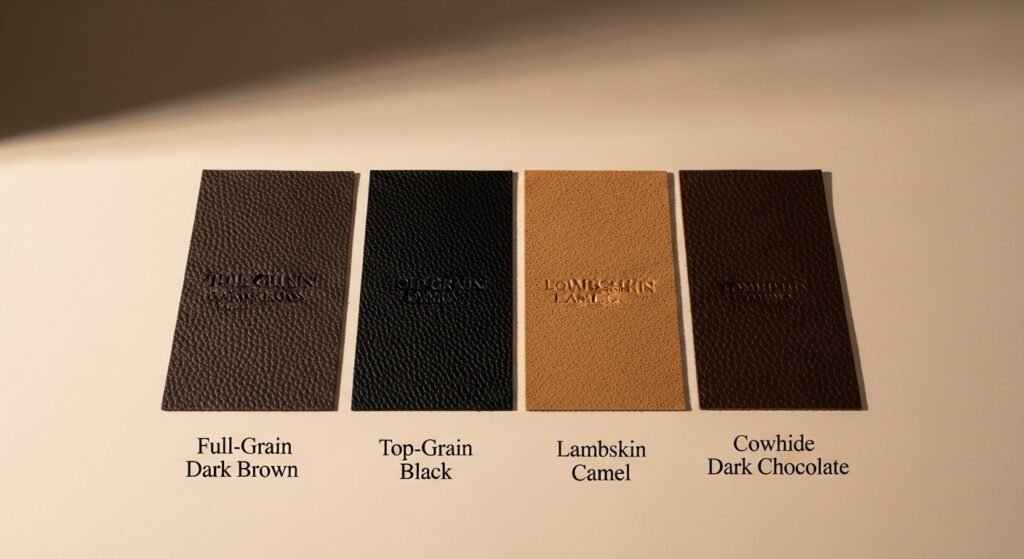
Full-Grain Leather
Full-grain leather is considered the highest quality tier in the leather hierarchy. It retains the complete outer layer of the hide, which contains the tightest, most densely packed fibres. This makes it exceptionally strong and resistant to moisture. Full-grain leather develops a rich patina over time — meaning it actually improves in appearance with age and use — making it the ideal choice for a lifelong everyday jacket.
Top-Grain Leather
Top-grain leather has had the very outer surface sanded or buffed to remove natural imperfections. It is thinner and more uniform in appearance than full-grain, making it easier to work with for manufacturers producing precise silhouettes. Most premium ready-to-wear leather jackets use top-grain leather. It is softer from day one, easier to break in, and still highly durable for regular wear.
Lambskin Leather
Lambskin is the softest and most luxurious of all common leather types. Its ultra-fine grain and buttery texture make it a favourite for high-fashion and luxury leather jackets. However, it is more delicate than cowhide — it marks more easily and requires greater care in daily use. If you want to understand the deeper differences between these two dominant leather types, the guide on Lambskin vs Cowhide Leather: Which Is Better provides an authoritative breakdown that will help you make a well-informed decision before you buy.
Cowhide Leather
Cowhide is the most common leather used in jackets designed for everyday wear. It is thicker, stiffer in its raw state, but extremely resistant to abrasion, moisture, and general wear and tear. It has a longer break-in period but rewards patience with exceptional durability. Motorcycle jackets, workwear-inspired styles, and rugged everyday jackets almost universally rely on cowhide.
The Classic Biker / Moto Jacket
The asymmetrical zip biker jacket is arguably the single most iconic leather jacket silhouette in existence. Originally engineered for motorcycle riders in the early twentieth century, the biker jacket was designed with functional intent — the cropped length prevents it from riding up, the angled front zip deflects wind, the snap-down lapels offer adjustable coverage, and the rigid construction provides abrasion resistance in falls.
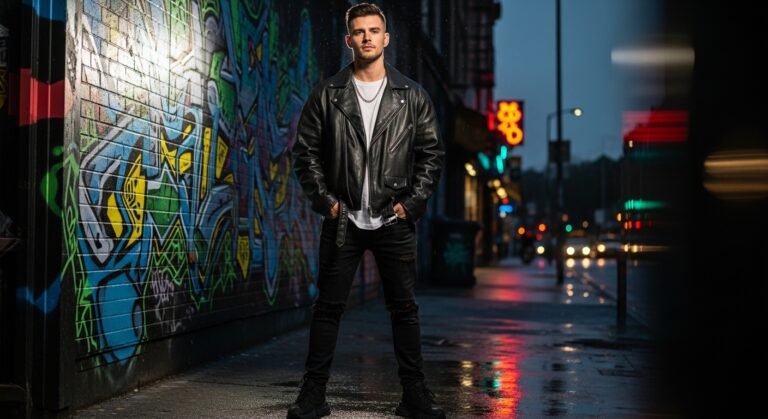
For everyday wear, the biker jacket has transcended its origins. Today it serves as a universal off-duty layering piece that works equally well over a plain white t-shirt and jeans, a slip dress, a hoodie, or a tailored shirt. Its structured shoulders and fitted waist create a silhouette that flatters a wide range of body types.
Key features that define a quality biker jacket include a YKK or equivalent heavy-duty asymmetric zipper, quilted panels on the shoulders and elbows, a belted waist, and D-ring hardware details. The Jaketra Rider Luxury Black Leather Biker Jacket is a strong example of how this classic silhouette can be executed in premium materials with refined construction details, making it equally appropriate for daily urban wear and weekend outings.
Everyday Styling — Biker Jacket
The biker jacket’s versatility in daily dressing is unmatched. Pair it with slim-cut dark denim, a tucked-in crew neck, and Chelsea boots for a complete smart-casual outfit. Over a floral midi dress and ankle boots, it creates the classic contrast-dressing effect that has been a street-style staple for decades. In autumn, layer it over a chunky knit sweater for warmth without bulk.
The Timeless Bomber Jacket
The leather bomber jacket, derived from the MA-1 military flight jacket, is one of the most universally flattering leather silhouettes for everyday wear. Its defining features include a ribbed collar, ribbed cuffs and hem, a straight front zip, and a slightly boxy or relaxed body that sits at the hip.
Unlike the structured rigidity of the biker jacket, the bomber offers a more relaxed, approachable silhouette. In leather form — particularly in supple lambskin or soft top-grain cowhide — it feels and moves with the body rather than against it. This makes it especially suitable for those who want leather’s aesthetic and durability without the structured formality.
Brown leather bombers have seen a significant resurgence in recent seasons, particularly in cognac, tan, and vintage-distressed finishes that reference classic American workwear heritage. Black remains the most versatile colourway for daily use.
Who Should Wear a Leather Bomber
The bomber is one of the most body-type-inclusive jacket silhouettes. Its boxy shape adds volume to slim frames and skims over broader ones without clinging. It works well for both men and women in contemporary fashion contexts. For petite wearers, a cropped bomber variant that hits at the natural waist rather than the hip is a more proportionally flattering choice.
The Sharp Café Racer Jacket
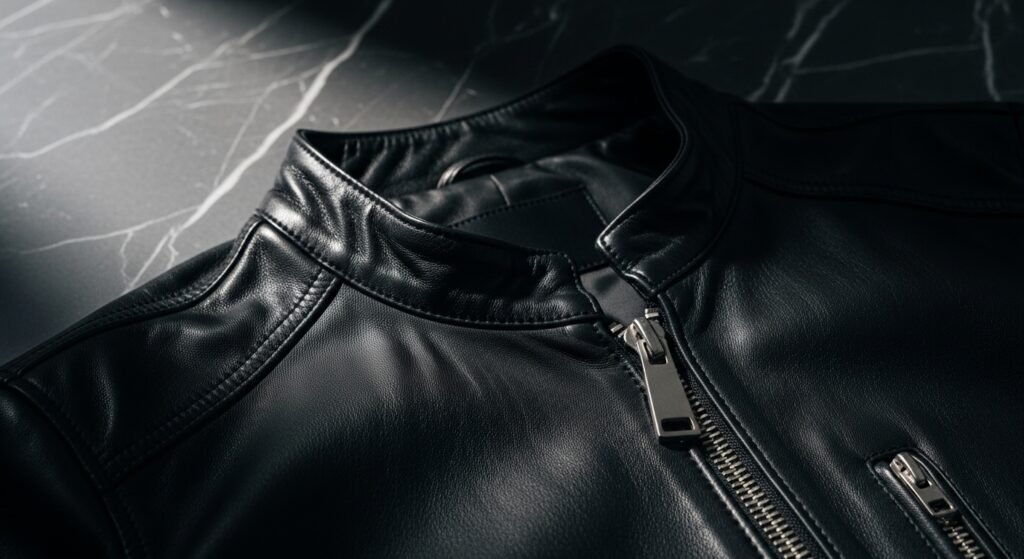
The café racer is the most minimalist and perhaps most sophisticated of all leather jacket styles. Named after the stripped-down motorcycles favoured by British riders in the 1960s who raced between cafés, the café racer jacket is characterised by its collarless band neck, clean front zip, and absence of decorative hardware.
This simplicity makes it extraordinarily versatile for everyday professional and smart-casual contexts where a biker jacket might feel too loud. A slim-cut black café racer over an Oxford shirt and tailored trousers works in creative professional environments. Over a fine knit and chinos, it reads as refined casual. The café racer is the leather jacket that bridges the gap between street style and understated elegance most successfully.
Quality café racer jackets are typically made from smooth top-grain or full-grain leather with minimal puckering at seams. The fit should be close — not tight — through the chest and shoulders, with sleeves ending precisely at the wrist bone.
The Versatile Trucker / Western-Style Leather Jacket
The leather trucker jacket is the leather world’s answer to the classic denim jacket. Characterised by its chest pockets, point collar, front button placket, and slightly boxy fit, the leather trucker brings workwear ruggedness to a premium material context.
It works particularly well in tan, cognac, and whiskey-brown colourways where the leather’s natural characteristics — including vegetable-tanned grain patterns and natural variations — are celebrated rather than concealed. For everyday casual wear, the leather trucker is arguably the most effortless layering piece in this list. It pairs naturally with everything from band tees and raw denim to dresses and wide-leg trousers.
Distressed or vintage-finish leather truckers have strong semantic associations with Americana, road-trip aesthetics, and heritage fashion — a growing consumer interest segment that shows no signs of slowing.
The Minimalist Leather Blazer
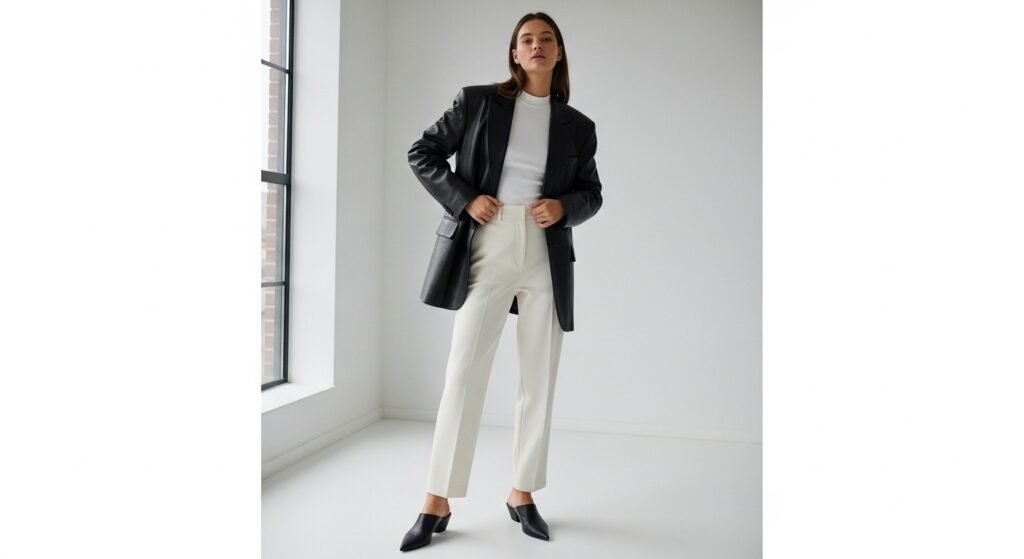
The leather blazer represents the intersection of tailoring and outerwear. Cut in classic blazer proportions — notched lapels, structured shoulders, two-button front, patch or welt pockets — but executed in smooth leather, it functions as a sophisticated layering piece for smart-casual to business-casual dress codes.
Black leather blazers have become a core component of elevated everyday dressing for both men and women. In a soft lambskin or buffed top-grain leather, a well-cut leather blazer over a white shirt is one of the most powerful, minimal outfits in contemporary wardrobes.
For women, the oversized leather blazer worn with cycling shorts or a mini skirt is a high-fashion silhouette that has migrated steadily into mainstream everyday wear. For men, the leather blazer over tailored trousers and loafers occupies the same visual register as a sport coat — dressed up enough for work, relaxed enough for dinner.
The Relaxed Leather Shirt Jacket (Shacket)
The leather shirt jacket — often called a “leather shacket” — is the newest silhouette in mainstream everyday leather wear. It takes its cues from classic work shirts: a point collar, front button placket, chest pockets, and a relaxed straight-hem cut. Executed in soft, lightweight leather (typically a thin top-grain or washed lambskin), it occupies the space between a shirt and a jacket — worn open like a shirt over a tee, or closed as a light jacket on mild days.
The leather shacket has a strong appeal for style-aware consumers who want leather’s aesthetic with maximum casual versatility. It has performed exceptionally well in brown, tan, and deep burgundy colourways. For everyday wear in transitional seasons, it is one of the most practical and underrated options in the leather category.
How to Choose the Right Leather Jacket for Your Body Type
Choosing the best leather jacket for your specific body type significantly impacts how the garment looks and feels in daily use. Leather does not stretch or give the way fabric does — fit is everything.
For slim or lean frames, the biker jacket’s structured silhouette adds visual volume and broadens the shoulder line effectively. Avoid oversized or boxy cuts that will overwhelm the frame.
For athletic or muscular builds, the bomber and trucker provide more room through the chest and shoulders without distorting. Café racers in this context should be sized for chest comfort — some excess through the waist is acceptable.
For larger or fuller frames, the leather blazer and bomber offer the most flattering lines. The straight-hem bomber skims the body without cinching, while the blazer’s structured cut creates clean vertical lines.
For petite frames, cropped silhouettes — cropped biker, cropped bomber, or a well-fitted café racer — maintain proportion. Full-length or hip-length jackets risk cutting the height line unfavourably.
Leather Jacket Fit Guide — What to Look For
Even within a single jacket style, fit variation is enormous. Here are the key fit checkpoints for any leather jacket worn daily:
Shoulder seam — should sit at the natural shoulder, not drooping onto the arm. This is the single most important measurement and cannot be easily altered in leather.
Chest — should allow you to close the jacket comfortably with one or two fingers of space. Too tight restricts movement; too loose looks sloppy.
Sleeve length — should reach the wrist bone, showing a small amount of cuff if wearing a shirt underneath.
Back panel — should lie flat without pulling or wrinkling across the shoulder blades when arms are in resting position.
Length — varies by style (biker sits at hip, bomber at hip, café racer slightly shorter), but should never expose the lower back when arms are raised.
Best Leather Types for Daily Wear
For genuine, hardwearing everyday use, full-grain and top-grain cowhide represent the best balance of durability, appearance, and long-term value. They withstand the friction of bags, seat backs, and incidental contact that daily wear inevitably involves. They develop character over time rather than simply ageing poorly.
For those prioritising softness and luxury aesthetics over raw durability, a high-quality lambskin jacket treated with a good protective conditioner can serve daily wear well — it simply requires more mindful handling. According to the Leather Industries of America, properly cared-for genuine leather outperforms most synthetic alternatives by decades, making the initial investment in quality leather a cost-effective long-term choice.
Avoid bonded leather (also labelled “reconstituted leather” or “bicast leather”) for any jacket you intend to wear regularly. It delaminates within two to three years of regular use and cannot be repaired or reconditioned.
How to Style a Leather Jacket for Everyday Outfits
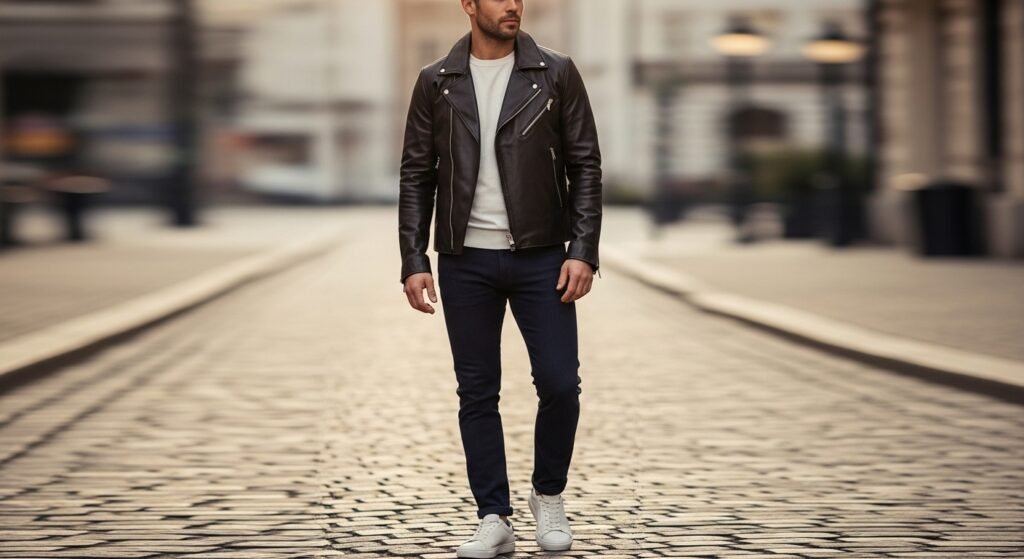
The leather jacket’s greatest everyday asset is its capacity to elevate simpler garments beneath it. A plain white t-shirt and blue jeans is a complete, polished outfit the moment a quality leather jacket is added. This “third piece” effect — where the outerwear transforms a basic two-piece foundation — is the core of how leather jackets function in real daily wardrobes.
For smart casual contexts, pair a café racer or leather blazer over a roll-neck sweater, straight-leg trousers, and clean leather boots or loafers. For weekend casual, a biker or bomber over a graphic tee, relaxed jeans, and chunky trainers is the quintessential modern off-duty look. For transitional season dressing, layer a leather jacket over a lightweight hoodie or fine-knit sweater for warmth without visual heaviness.
Colour coordination matters. Black leather jackets are the most universally versatile — they work with every colour palette. Brown leather jackets pair particularly well with earth tones, creams, camel, and olive. Tan leather works beautifully in summer and spring palettes with white, light denim, and muted pastels.
Leather Jacket Care and Longevity
A quality leather jacket worn daily requires a simple but consistent care routine to maintain its appearance and structural integrity over the years of use.
Conditioning — Apply a leather conditioner every three to six months to prevent drying and cracking. This is especially important in dry climates or during winter when central heating reduces ambient humidity.
Water exposure — Most quality leather is naturally somewhat water-resistant, but prolonged soaking will stain and distort the hide. A silicone-based water repellent spray applied seasonally provides additional protection.
Storage — Store leather jackets on wide, padded hangers — never folded. Folding creates permanent creases in leather. In long-term storage, use a breathable cotton garment bag, never plastic.
Cleaning — For surface dust and light dirt, a soft, damp cloth is sufficient. For stains, use a dedicated leather cleaning product appropriate for the leather type. Avoid household cleaning products, which often contain solvents that damage leather finishes.
Professional cleaning — For deep cleaning or conditioning of high-value garments, a specialist leather cleaning service is worthwhile every two to three years.
Sustainable and Ethical Leather Choices
Conscious consumerism is an increasingly significant factor in leather jacket purchasing decisions. Buyers who prioritise sustainability should look for hides sourced as by-products of the food industry (avoiding hides from animals raised exclusively for leather), manufacturers with LWG (Leather Working Group) certification, and brands committed to vegetable tanning processes over chromium-based tanning.
Vegetable-tanned leather is tanned using plant-based tannins rather than chromium salts. It is more environmentally stable, ages with richer patina, and is biodegradable at end-of-life. It does tend to be stiffer initially and requires a longer break-in period.
The longer a leather jacket remains in active use — through quality of construction and appropriate care — the lower its environmental impact per year of use. Buying well once is the most sustainable leather strategy.
Price vs. Quality — What to Expect at Each Budget Tier
Under $150 — At this price point, bonded leather, PU leather, or very thin genuine leather with weak construction are the norm. These jackets look appealing initially, but rarely last more than one to two seasons of daily wear. Not recommended for genuine everyday investment.
$150–$400 — Entry-level genuine leather jackets from mid-tier brands. Construction quality varies widely. Look for full lining, YKK zippers, and top-grain leather at a minimum. Some excellent value options exist in this range from established heritage brands.
$400–$900 — This is the sweet spot for quality everyday leather jackets. At this tier, you should expect top-grain to full-grain leather, quality hardware, properly finished seams, and full lining. Jackets at this price point, with proper care, should last ten to twenty years.
$900 and above — Luxury tier. Full-grain or lambskin, often made-to-order or in small production runs. Designer names, artisan craftsmanship, and premium hardware at this level. For the right buyer with specific aesthetic requirements, this tier delivers lifelong value.
Final Buying Checklist
Before purchasing any leather jacket for everyday wear, verify the following: the leather type and grade (ask for specifics — vague terms like “genuine leather” without grade specification are a red flag), the lining material (acetate lining is scratchy; viscose and polyester are acceptable; full silk or cupro lining signals premium quality), hardware quality (pull the zipper and feel its resistance — quality zippers move smoothly without catching), seam finishing (look inside — raw unfinished seams indicate lower construction standards), and the return/exchange policy (leather jackets should be tried on in person where possible, or ordered from retailers with generous return windows for size exchange).
Conclusion
The best leather jacket style for everyday wear is ultimately the one that aligns most naturally with your personal aesthetic, your daily lifestyle context, and your budget for quality. The biker jacket delivers maximum personality and versatility for casual everyday use. The café racer bridges smart and casual effortlessly. The bomber is the most universally flattering silhouette. The leather blazer elevates everyday dressing into the professional register. The trucker and shacket deliver relaxed, practical versatility for weekend-focused wardrobes.
What unites all of the best options is the quality of the leather and the precision of the construction. A well-made leather jacket in the right silhouette is one of the most cost-effective long-term additions to any everyday wardrobe — it becomes more characterful, more personal, and more beautiful with every year of careful wear.